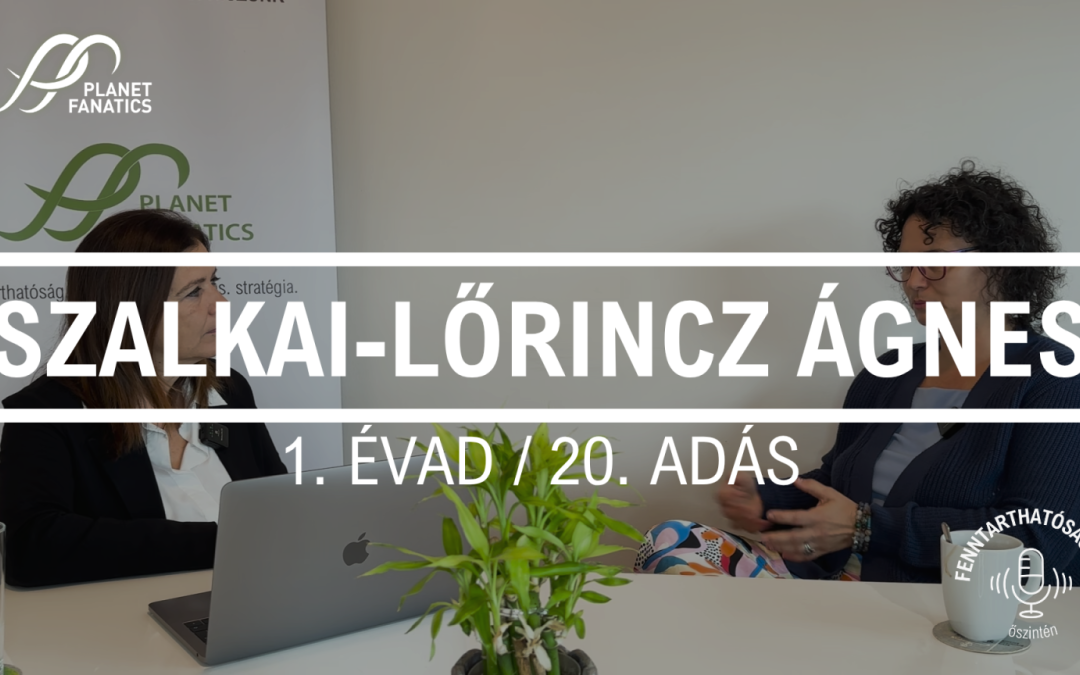
The guest on the latest episode of the An Honest Conversation About Sustainability podcast is Ágnes Szalkai-Lőrincz, an expert in the Community Energy Programme at the National Society of Conservationists – Friends of the Earth Hungary (MTVSZ), and a professional staff member at Community Energy Service Provider Nonprofit Ltd. Originally working in communications and PR, Ágnes has been involved in renewable energy and energy efficiency since 2016. Since 2022, she has been dedicated to developing energy communities in Hungary and putting them into practice.
The podcast recording can be watched on our YouTube channel and listened to on Spotify.
In this episode, we explored the technical, accounting, and social models of shared energy production and consumption. Ágnes Szalkai-Lőrincz and Katalin Szomolányi discussed why keeping energy local is so important, how annual net metering differs from gross billing, and what lessons can be learned from Austria’s independent data exchange platform, which serves thousands of energy communities. They examined the links between tackling energy poverty and encouraging conscious behavioral change, highlighting the comprehensive energy-efficiency and awareness-raising improvements implemented at the Pesti Road nursing home. They also explored the relationship between large corporations and energy communities, discussing why multinational companies cannot become direct members of residential communities—avoiding the “ant and elephant” effect—and how they can instead establish internal employee energy communities based on micro-investment, creating genuine ESG value. Other topics included Budapest’s untapped solar potential, façade and gable-wall solar panels, balcony solar systems, and solar canopies over parking lots. The conversation concluded by highlighting the strongest safeguards against greenwashing: transparency and committed local action.
An episode about local renewable energy sharing, internal corporate green initiatives, and practical energy awareness, demonstrating why the principle of “think locally and act locally” can lead to genuine sustainability.
KS
In the previous episode, we learned how the Community Energy Service Provider (KESZ) operates. But why is electricity sharing both the most technically logical approach and one of the greatest challenges?
ASL
Entering the market with energy production is relatively straightforward, but shared energy production and consumption present the real professional challenge. If we cannot use the electricity generated by solar panels locally and instead have to transport it through the grid and transform it to higher voltage levels, this results in substantial grid losses and places an enormous burden on the infrastructure. The goal should be to consume energy where it is generated or as close to the point of generation as possible. To achieve this, however, the consumption profiles of households, municipalities, and businesses need to be coordinated so that surplus energy can be used where and when demand is greatest.
KS
Which international example demonstrates that this sharing model can work on a large scale, and why have we made so little progress in implementing it in Hungary?
ASL
Austria is a textbook example. Since 2017, nine years of deliberate development have gone into establishing an independent data exchange platform known as EDA. All distribution system operators, energy traders, and energy communities are represented on this platform, making it possible to calculate precisely who transfers surplus energy to whom. More than 4,000 energy communities are already operating there.
Austria benefited from an organic development process: after individual solar installations, they introduced energy sharing within apartment buildings and then built a larger system on that foundation. Our biggest mistake was skipping the intermediate step of sharing energy within apartment buildings and trying to jump straight to the most complex model: sharing electricity through the public distribution grid. As a result, market participants and grid operators lack the necessary experience and established practices.
KS
The green transition is not just an environmental issue; it is also a social one. How can community energy help alleviate energy poverty, and what does the example of the Pesti Road nursing home demonstrate?
ASL
Education and conscious behavioral change alone can reduce household energy consumption by as much as 20%. The nearly 65 kW solar installation at the Pesti Road Nursing Home is our largest investment to date. Residential care facilities for older people and homeless people operate around the clock, and disinfection, washing, and ironing consume enormous amounts of energy.
Alongside installing the solar panels, we conducted an energy audit and are helping the facility identify equipment unnecessarily left switched on and drawing power. The funds freed up through the energy generated and saved can be reinvested directly by the institution in improving the quality of its care services.
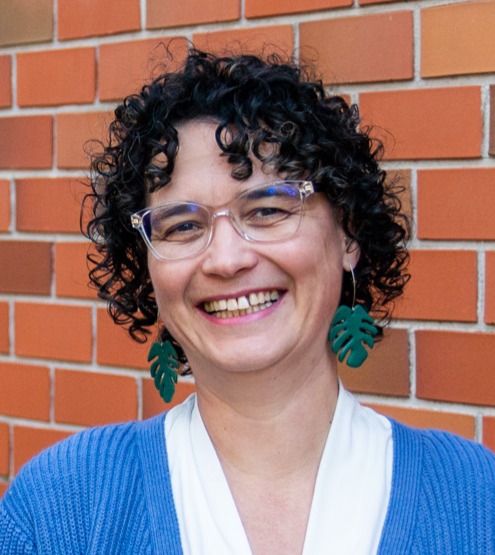
Ágnes Szalkai-Lőrincz
Ágnes Szalkai-Lőrincz is an expert in the Community Energy Program of the National Society of Conservationists (MTVSZ) and a professional staff member at the Community Energy Service Provider Nonprofit Ltd. (KESZ). Ágnes originally worked in communications and PR before turning her focus specifically to energy efficiency and renewable energy around 2016. Since 2022, she has been working on the development of energy communities in Hungary. KESZ, established by four civil society organizations – MTVSZ, the Ecological Studio Foundation, Consultants for Sustainable Development, and SZÖVET – launched one of Hungary’s first officially registered energy community pilot projects at Jurányi House in Budapest at the end of 2023. Our guest played a key role in preparing and implementing the project.
KS
You previously took a firm stance against allowing large corporations to become members of residential energy communities. Why is this risky, and what can a company do within its own organization instead?
ASL
With their billion-forint revenues and considerable market power, large corporations could easily overwhelm grassroots residential initiatives. This is a classic case of “the ant and the elephant.” Instead of imposing themselves on a local community from above, however, companies can establish internal energy communities among their own employees.
For example, employees could invest HUF 100,000 each in energy-saving projects, such as motion-sensor lighting or solar panels. Employees could then jointly decide how to distribute the money saved: they might opt for a gym membership, an extra day off, or even use their returns to pay for items at the company cafeteria. This is a paperless approach to delivering genuine ESG results.
KS
How much untapped solar potential does Budapest have, and which surfaces should we be using instead of building on green spaces?
ASL
Budapest’s energy demand is literally off the charts, yet the city is full of underutilized surfaces. I am firmly opposed to building ground-mounted solar farms on green spaces. Because the sun sits lower in the sky during winter, the façades and gable walls of brick buildings and prefabricated apartment blocks can generate significantly more electricity. They also look better than advertising banners.
Balcony solar systems that can be installed on the balconies of housing estates offer enormous potential, too. The same goes for solar canopies covering paved parking lots at shopping centers and industrial parks. These structures can protect cars from the elements while simultaneously providing EV charging and generating electricity.
KS
What is currently the biggest obstacle preventing residents and businesses from making a genuine commitment to the green transition, and what could be the key to overcoming it?
ASL
The biggest obstacles are greenwashing and the widespread lack of trust it has created. People have often been disappointed in the past, so the only effective remedy is complete transparency: never promise what you cannot deliver, but always fulfill every promise you make!
Rather than trying to solve global problems all at once, neighboring industrial parks and municipalities should connect with one another and share energy locally. As the saying goes: “Think locally and act locally!”
The podcast recording can be watched on our YouTube channel and listened to on Spotify.
In two weeks, we’ll be talking to Dr. Emese Gulyás, co-founder and president of the Association of Conscious Consumers, about greenwashing and the related regulations.
The Planet Fanatics’ Network Podcast
Welcome to our new series!
Sustainability, Honestly is the biweekly podcast of the Planet Fanatics’ Network. Our host, Katalin Szomolányi, sits down with renowned experts and decision‑makers to uncover the most pressing questions of our time.
What is the show about?
We don’t settle for surface‑level answers.
We look into what really drives markets and our planet—from global trends to shifting value systems and the technologies shaping our future.
Our aim is to provide an authentic picture of sustainability from both a business and a human perspective.
Where can you follow us?
Don’t miss the next episode!
Subscribe to our YouTube channel, follow us on Facebook and Spotify, and visit the Sustainable Headshot blog for background insights.
Join us on the journey toward the future!
If you missed it, you can access our previous episodes here:
Sustainability, Honestly with Péter Küllői (Episode 1)
Sustainability, Honestly with Péter Küllői (Episode 2)
Sustainability, Honestly with Éva Somorjai (Episode 3)
Sustainability, Honestly with Éva Somorjai (Episode 4)
Sustainability, Honestly with Zsolt Jamniczky (Episode 5)
Sustainability, Honestly with Zsolt Jamniczky (Episode 6)
Sustainability, Honestly with Sipos Katalin (Episode 7)
Sustainability, Honestly with Sipos Katalin (Episode 8)
Sustainability, Honestly with Dr. Ádám Guld (Episode 9)
Sustainability, Honestly with Dr. Ádám Guld (Episode 10)
Sustainability, Honestly with Dr. Andrea Czirók (Episode 11)
Sustainability, Honestly with Dr. Andrea Czirók (Episode 12)
Sustainability, Honestly with Viktor Lénárt (Episode 13)
Sustainability, Honestly with Viktor Lénárt (Episode 14)
Sustainability, Honestly with Miklós Mormer (Episode 15)
Sustainability, Honestly with Miklós Mormer (Episode 16)
Sustainability, Honestly with Rita Fontányi (Episode 17)
Sustainability, Honestly with Rita Fontányi (Episode 18)
Sustainability, Honestly with Ágnes Szalkai-Lőrincz (Episode 19)