
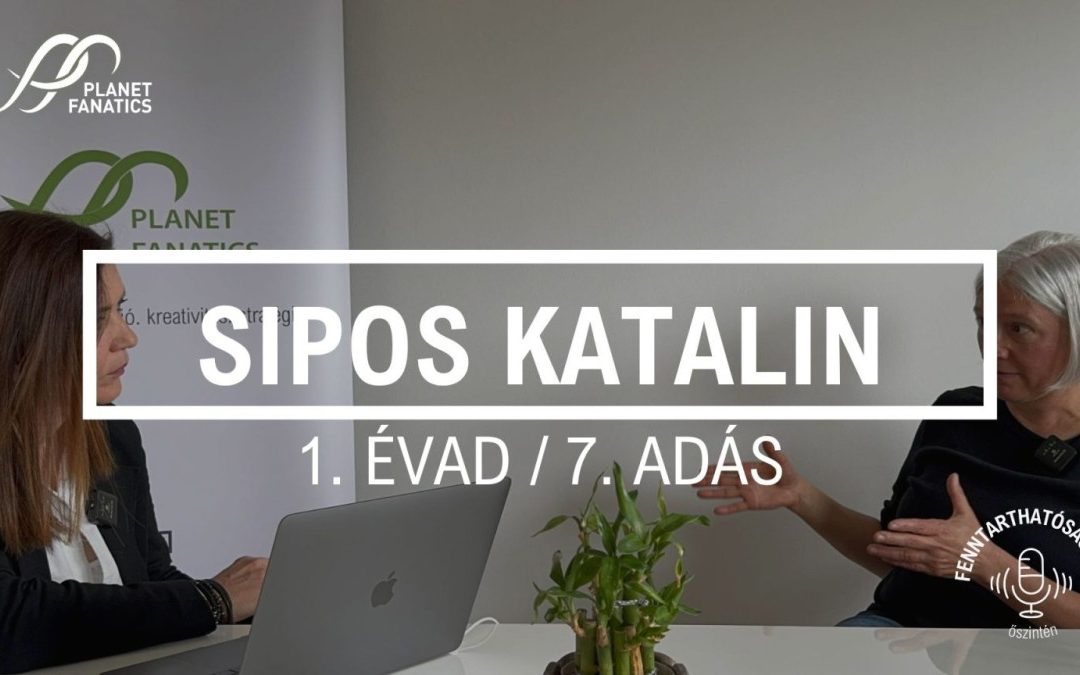
The guest of the seventh episode of the Sustainability, Honestly podcast is Katalin Sipos, Director of WWF Hungary.
The podcast recording is available to watch on our YouTube channel and to listen to on Spotify.
In this episode, we explored the largely invisible biodiversity crisis and the global as well as domestic opportunities for restoring natural systems. Katalin Sipos and Katalin Szomolányi discuss why poorly designed irrigation strategies worsen water scarcity in Hungary, how tipping points such as the degradation of the Amazon threaten the global water cycle, and what unique challenges nature conservation faces in a heavily transformed cultural landscape like the Carpathian Basin.
An episode about the sharp tensions between economic systems and planetary boundaries, the reasons behind the failure to meet global biodiversity targets, and why nature-based solutions and the drawing of strict red lines provide the most reliable foundation for our future security.
SZK
According to WWF’s latest (2024) Living Planet Report, populations of wild vertebrate species declined by an average of 73% between 1970 and 2020. What does this shocking figure mean in practice, and how do we perceive it in everyday life?
SK
The decline is actually happening in a largely invisible way. The key is not only to focus on species, but on their habitats. What’s happening is the gradual disappearance of forests, grasslands, and shelters where living organisms can survive and reproduce. While the decline of certain species that have learned to live alongside humans—such as swallows—does reach everyday awareness, most sensitive and rare plants, animals, and fungi disappear in a way that almost no one notices apart from biologists.
SZK
We see that companies and individuals are already familiar with the climate crisis, but the biodiversity crisis seems to be overshadowed by it. What is the relationship between the two crises?
SK
Climate change is a more straightforward story, since it involves measurable and calculable emissions that ultimately lead to warming. In contrast, biodiversity loss is an extremely complex phenomenon, the result of many different pressures—pollution, urban development, fertilization—that are hard to trace back to a single cause. However, the two crises are strongly interconnected and reinforce each other. As rising carbon dioxide emissions make weather patterns more extreme, the destruction of habitats—such as forests and soils—undermines the very natural systems that could absorb these gases.
SZK
Out of the nine planetary boundaries defined by scientists at the Potsdam Institute, six have already been crossed, with biodiversity in the most critical state. We also hear a lot about tipping points such as the degradation of the Amazon. What do these boundaries tell us?
SK
When a species goes extinct or we cross a planetary boundary, the world doesn’t suddenly fall apart the next day. Instead, we steadily lose nature’s resilience and predictability. It’s like driving faster and faster with the window down and no seatbelt. In the case of tipping points, such as the Amazon, if the forest declines beyond a certain point, we lose one of the planet’s largest “water pumps.” While it’s difficult to define exact thresholds or percentages, the trends are clear—and it would be far better not to push ourselves into such an irreversible state.
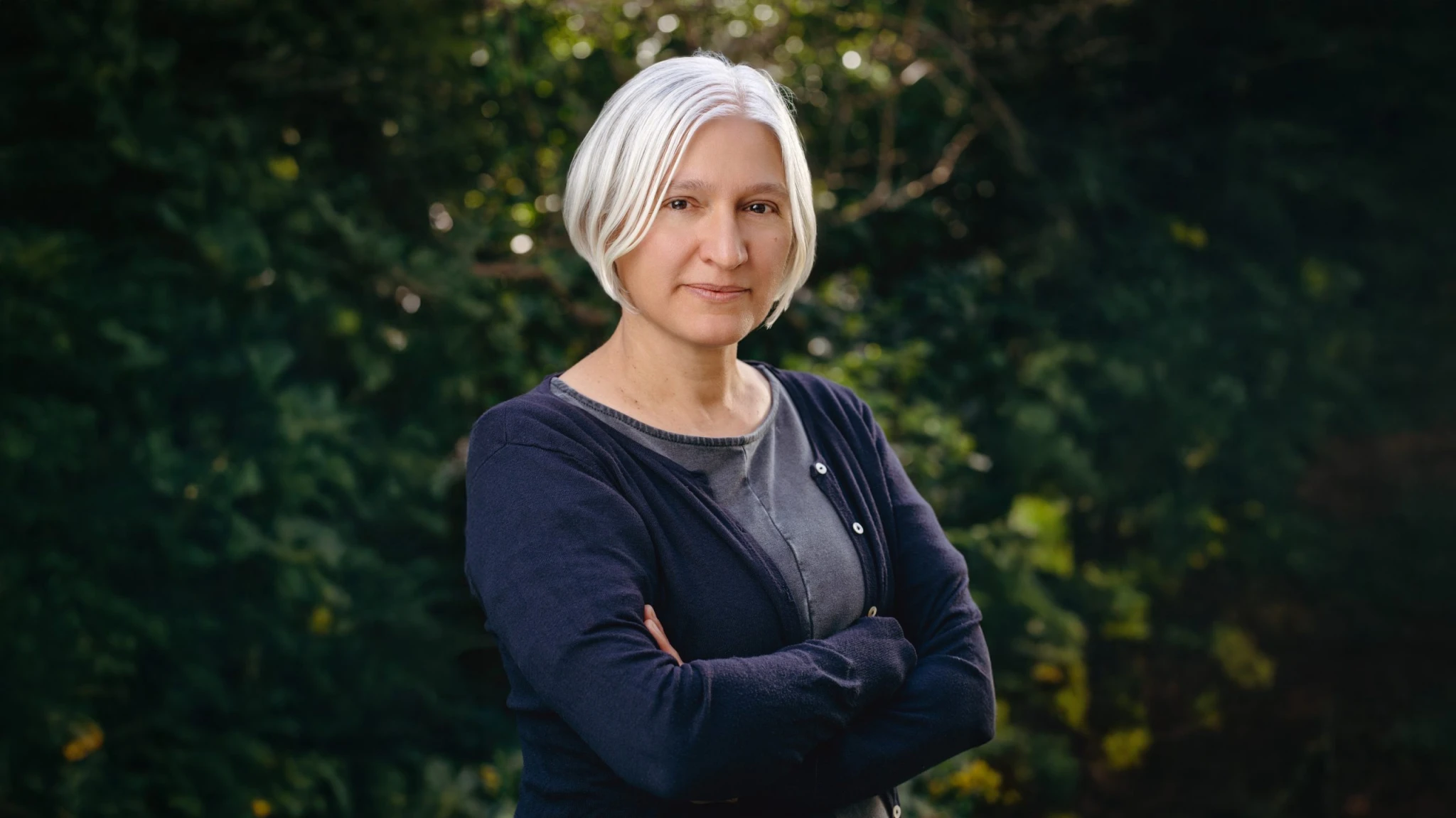
Sipos Katalin
Katalin Sipos, Director of WWF Hungary, has been working at the forefront of nature conservation for more than 30 years. She began her career at the Duna–Ipoly National Park Directorate. Since 2015, she has been leading WWF Hungary. Under her leadership, the organization has successfully won and advanced several nationally significant nature conservation initiatives. With her presentations on biodiversity, she regularly participates in Hungary’s largest ESG and green finance conferences.
SZK
Let’s turn to Hungary! We know that the Carpathian Basin has special characteristics. What makes it unique, and what proportion of it is currently in a truly natural state?
SK
The Carpathian Basin, also known as the Pannonian biogeographical region, is essentially an inland island where, over the course of evolution, many endemic species and unique habitat types—such as alkali steppes—have developed. Within this region, Hungary bears the greatest responsibility. The biggest challenge is that our landscape is a heavily transformed cultural landscape. Even though 21% of the country is under some form of nature protection, the share of areas that are truly close to natural conditions is certainly below 15%. This is why we should not think in terms of isolated reserves, but rather rebuild and restore nature through changes in land use.
SZK
This land use is closely connected to agriculture, while Hungary’s biggest challenge is increasingly severe drought. Where are we currently going wrong in addressing this, and what would be the natural solution?
SK
We have already eliminated more than 95% of our surface wetlands, thereby losing the landscape’s water storage capacity. A major problem is what we call maladaptation, when our response to drought is to irrigate from already declining groundwater resources. We spread this water on the surface, where it evaporates, while the groundwater is not replenished due to the lack of wetlands. The solution would be to recreate wetlands, grasslands, and reedbeds on economically vulnerable, low-lying agricultural lands, which could store water at the lowest cost.
SZK
Today we try to express many things in terms of money or risk. What priorities and red lines should be set in corporate and regulatory decision-making to protect habitats in Hungary?
SK
The natural environment does not work like a transactional exchange. Instead of trying to calculate the monetary value of services such as microclimate regulation or dust capture, I would approach it from the perspective of future risks and draw strict red lines. In Hungary today, two main priorities are essential: first, we must protect the remaining natural habitats by all possible means and reduce all harmful pressures on them locally. Second, during restoration, priority should be given to areas where water retention plays a key role in combating drought.
The full conversation is available on our YouTube channel and can be listened to on Spotify:
In two weeks, Katalin Sipos, Director of WWF Hungary, will again be our guest, continuing the discussion on biodiversity-related regulations and the role of companies.
Planet Fanatics’ Network podcast
Welcome to our new series! Honestly About Sustainability is a biweekly podcast by Planet Fanatics’ Network. Our host, Katalin Szomolányi, sits down with recognized experts and decision-makers to explore the most pressing issues of our time.
What is the show about? We don’t settle for superficial answers. We examine what truly drives markets and our planet—whether global trends, shifts in values, or future technologies. Our goal is to provide an authentic picture of sustainability from both a business and human perspective.
Where can you follow us? Don’t miss the next episode! Subscribe to our YouTube channel, follow us on social media (LinkedIn, Facebook, Spotify), and read the Fenntartható Fejlövés blog for background materials.
Join us on the journey into the future!
If you missed it, you can find previous episodes here:
Sustainability, Honestly with Péter Küllői (Episode 1)
Sustainability, Honestly with Péter Küllői (Episode 2)
Sustainability, Honestly with Éva Somorjai (Episode 3)
Sustainability, Honestly with Éva Somorjai (Episode 4)