
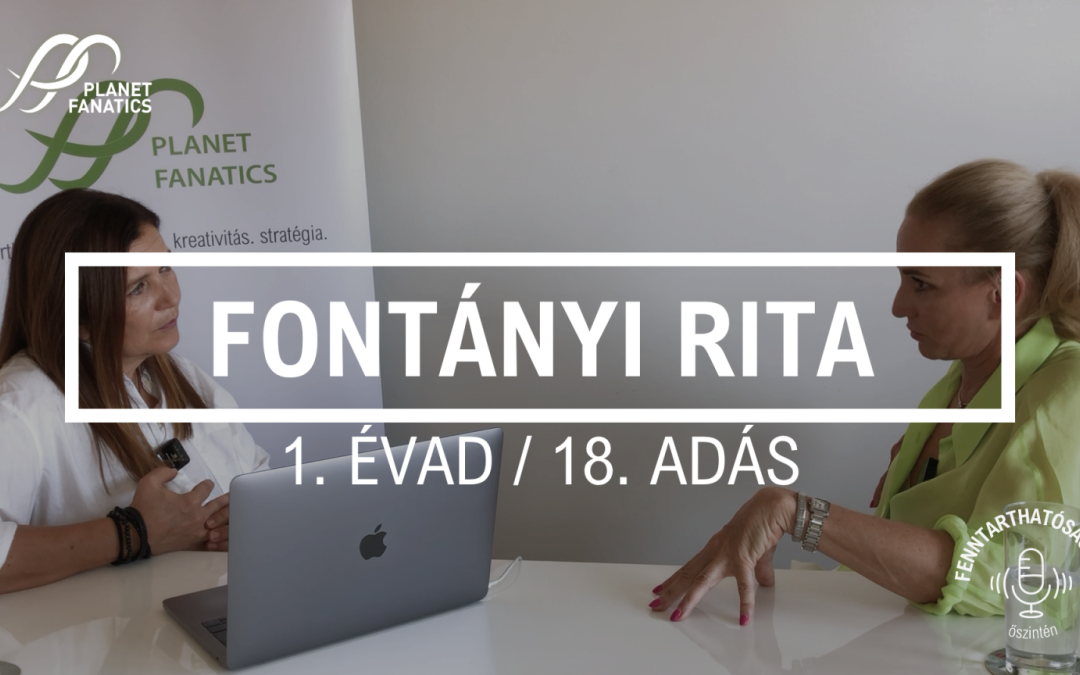
The latest episode of the Sustainability, Honestly podcast features Rita Fontányi, founder and CEO of P & B Aqua Zrt., who works every day with her company to modernize Hungary’s water management, upgrade drinking water infrastructure, and advance the digitalization of public water utilities.
The podcast recording can be watched on our YouTube channel and listened to on Spotify.
In this episode, we explore the future of Hungary’s lakes, the sustainability of water quality, and the pressing challenges surrounding water replenishment. Rita Fontányi and Katalin Szomolányi take an in-depth look at the true condition of Lake Balaton, explaining why the greatest threats are not fluctuations in water levels, but deteriorating water quality, algal blooms, the removal of reed beds, and sewage discharges caused by failures in the wastewater network. They also discuss a major project that has successfully modernized drinking water supply in the Balaton region by incorporating the Mura River water source, reducing the burden on energy-intensive surface water treatment plants.
The conversation examines the critical situation of Lake Velence, which reached a historic low in the summer of 2026 and has already earned the nickname “rice field” among sailors, as well as the vulnerability of Lake Fertő, where preserving the natural balance and strictly enforcing regulations—not concreting over the shoreline—is presented as the way forward. The episode also addresses how a water crisis could put Hungarian businesses at risk, why regional-level strategic cooperation is becoming unavoidable, and why major water consumers need to prepare for the worst: in a crisis, the state is likely to protect the public drinking water supply by restricting industrial water use.
An episode about the ecological balance of our lakes, the unavoidable physical risks posed by climate change, and why companies and water-sector professionals need to come together around the same table before we reach the point of no return.
SZK
Let’s start with our largest lake, Lake Balaton. Every summer, the water level takes center stage. How serious is the actual problem, and how do you view the regulation of the Sió Canal and the issue of water quality?
FR
There is still no complete consensus among experts when it comes to assessing Lake Balaton’s water level. The lake’s water level is regulated through the Sió Canal, whose reference level was previously raised from 110 to 120 centimeters. Although many people were alarmed when water was released into the Sió, this resulted in a decrease of just one-quarter of a centimeter in Lake Balaton’s water level. Personally, I support water replenishment. However, the greatest threat is not whether the water reaches knee or waist height, but the deterioration of water quality and algal blooms. Lake Balaton has a good capacity for natural renewal, but the removal of reed beds and sewage discharges caused by the delayed reconstruction of the drainage and sewer network pose serious risks to the lake’s ecological balance.
SZK
You also mentioned your drinking water supply project in the Balaton region. How did you manage to modernize such a huge system, and why was incorporating the Mura River water source so important?
FR
This is a vast area spanning four counties and 96 municipalities, where drinking water was previously supplied by just two karst wells and five surface water treatment plants. From a sustainability perspective, the problem was not the amount of water extracted itself, but the operation of the surface water treatment plants. Producing drinking water from Lake Balaton water that remains at around 28°C throughout the summer and contains some algae requires enormous amounts of energy. That is why we incorporated bank-filtered water extracted from the gravel terraces of the Mura River, for which we also obtained environmental approval from the Croatian side for an annual volume of 19 million cubic meters. This makes it possible to replace the costly surface water treatment plants while preserving our karst water resources as a strategic reserve.
SZK
Turning to our other lakes: in the summer of 2026, Lake Velence reached its lowest water level ever recorded, while Lake Fertő is also extremely vulnerable. Are we dealing with a temporary crisis, or have we reached the point of no return?
FR
This is already a prolonged crisis—we really have reached the point of no return. It is no coincidence that sailors have started referring to Lake Velence as a “rice field.” In the 1970s, an artificial water replenishment system was established here, with reservoirs and canals, and I support water replenishment in this case as well. In the case of Lake Fertő, we need to strictly enforce the rules and eliminate wasteful water use. Instead of concreting over the shoreline, we need to preserve the natural balance. Among the many different professional proposals, the fairest way to reach a decision is for experts to sit down around the same table and not leave until a consensus has been reached.
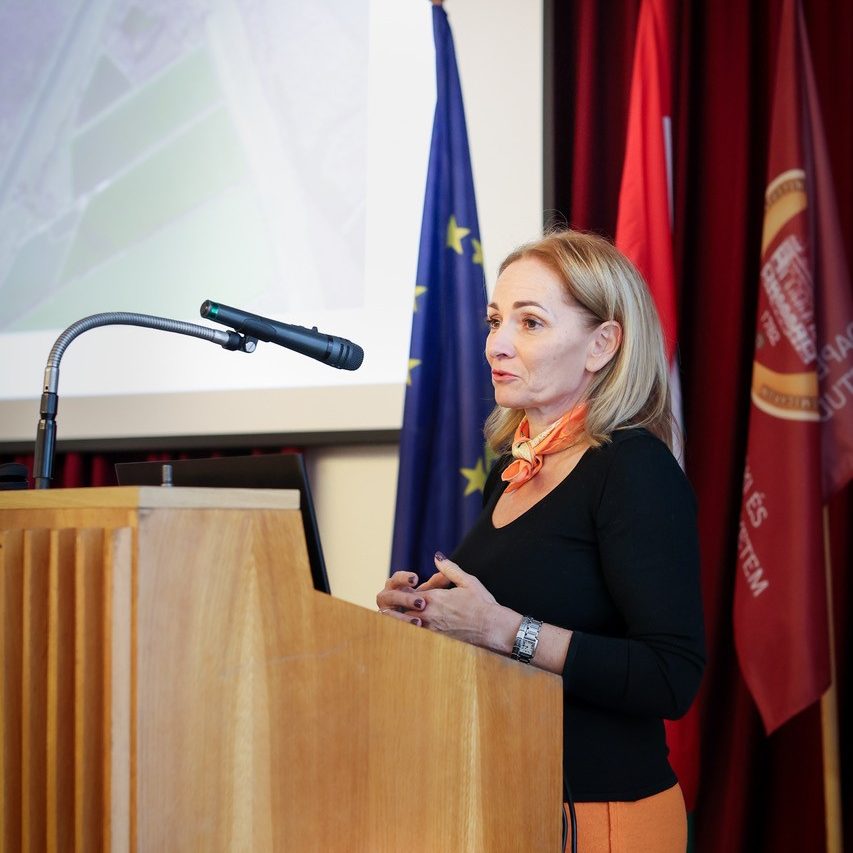
Rita Fontányi
Rita Fontányi is the founder and CEO of P&B Aqua Zrt. P&B Aqua is a research, development and engineering consultancy company whose mission is to modernize water management, including the modernization of drinking water supply systems, improving water balances, applying renewable energy sources in water management, and digitalizing water utilities. Our guest therefore does not view the challenges facing Hungary’s water resources from the outside; she works with them every day, from both a technical and an innovation perspective.
SZK
Alongside lakes and drinking water, let’s talk about the economy as well. How does the water crisis affect large industrial facilities and companies?
FR
If there is no water, there is nothing; a water crisis puts everything at risk. In addition to nuclear power plants and major pharmaceutical manufacturers, there are the new battery factories, whose daily water demand can reach 10,000 cubic meters, making them unable to operate without a reliable water supply. At the same time, water utility providers are also affected by enormous fluctuations in residential and industrial demand, as well as the tremendous energy requirements associated with them. Companies need to understand that water is not an infinitely available resource, but one of the most critical prerequisites for their operations.
SZK
What can companies do in this situation? How can a business prepare for physical climate risks and potential water shortages?
FR
Large water-consuming companies need to be prepared for the possibility of a complete water shortage lasting as long as 30–60 days. We have to recognize that if an absolute water shortage occurs, the government will not take drinking water away from households; instead, it will have to shut down or restrict industrial users—for example, a pharmaceutical plant. That is why, wherever possible, companies should build their own water storage capacity to ensure their ability to withstand a crisis.
SZK
Finally, how can we develop a sustainable strategy that will allow both businesses and the water management sector to remain resilient in the years ahead?
FR
The solution lies in thinking and planning together at the regional level. It is not enough to address companies individually: within each region, the major water consumers and relevant experts need to come together. They must jointly develop a strategy that can ensure the continued operation of companies in an emergency, without shutdown becoming the only option. I firmly believe in collaborative thinking, because sustainability is fundamentally about this kind of system-level cooperation.
The podcast recording can be watched on our YouTube channel and listened to on Spotify.
In two weeks, we’ll be joined by Ágnes Szalkai-Lőrincz, an expert in community energy, to discuss the present and future of energy communities
The Planet Fanatics’ Network Podcast
Welcome to our new series!
Sustainability, Honestly is the biweekly podcast of the Planet Fanatics’ Network. Our host, Katalin Szomolányi, sits down with renowned experts and decision‑makers to uncover the most pressing questions of our time.
What is the show about?
We don’t settle for surface‑level answers.
We look into what really drives markets and our planet—from global trends to shifting value systems and the technologies shaping our future.
Our aim is to provide an authentic picture of sustainability from both a business and a human perspective.
Where can you follow us?
Don’t miss the next episode!
Subscribe to our YouTube channel, follow us on Facebook and Spotify, and visit the Sustainable Headshot blog for background insights.
Join us on the journey toward the future!
If you missed it, you can access our previous episodes here:
Sustainability, Honestly with Péter Küllői (Episode 1)
Sustainability, Honestly with Péter Küllői (Episode 2)
Sustainability, Honestly with Éva Somorjai (Episode 3)
Sustainability, Honestly with Éva Somorjai (Episode 4)
Sustainability, Honestly with Zsolt Jamniczky (Episode 5)
Sustainability, Honestly with Zsolt Jamniczky (Episode 6)
Sustainability, Honestly with Sipos Katalin (Episode 7)
Sustainability, Honestly with Sipos Katalin (Episode 8)
Sustainability, Honestly with Dr. Ádám Guld (Episode 9)
Sustainability, Honestly with Dr. Ádám Guld (Episode 10)
Sustainability, Honestly with Dr. Andrea Czirók (Episode 11)
Sustainability, Honestly with Dr. Andrea Czirók (Episode 12)
Sustainability, Honestly with Viktor Lénárt (Episode 13)
Sustainability, Honestly with Viktor Lénárt (Episode 14)
Sustainability, Honestly with Miklós Mormer (Episode 15)