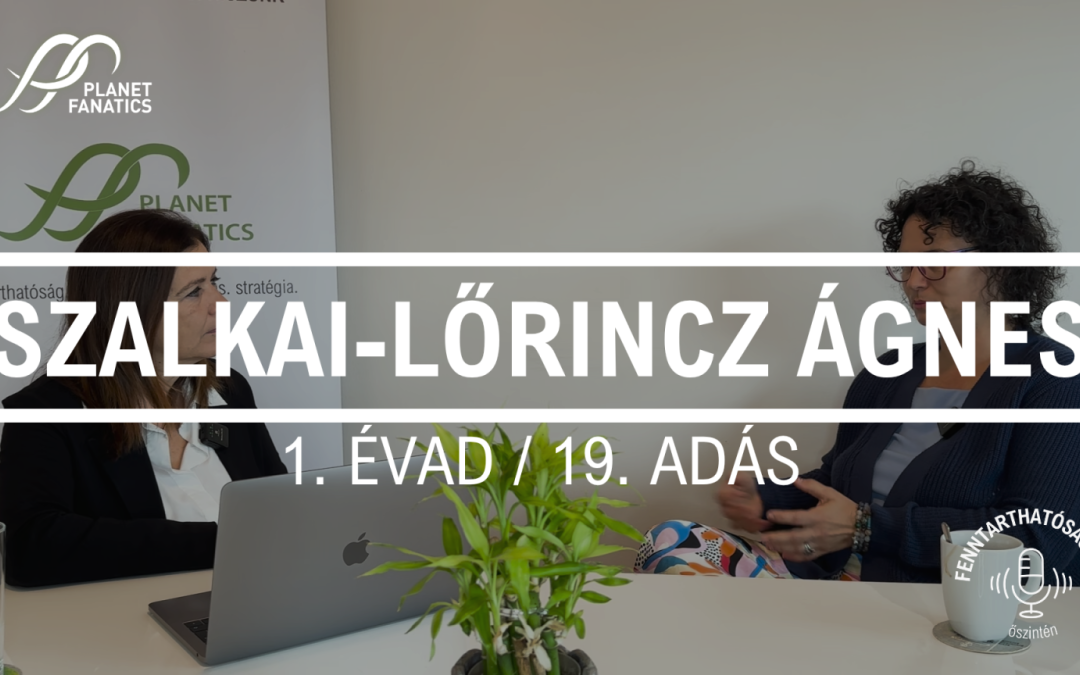
The latest episode of the Fenntarthatóságról őszintén podcast features Ágnes Szalkai-Lőrincz, an expert in the Community Energy Program of the National Society of Conservationists (MTVSZ), as well as a professional staff member at the Community Energy Service Provider Nonprofit Ltd. Ágnes originally comes from the communications and PR field and has been working in renewable energy and energy efficiency since 2016. Since 2022, she has been dedicated to developing and putting into practice energy communities in Hungary.
The podcast recording can be watched on our YouTube channel and listened to on Spotify.
In this episode, we explored the current state, opportunities, and challenges of energy communities in Hungary. Ágnes Szalkai-Lőrincz and Katalin Szomolányi discussed what community energy actually means, how it differs from a legally defined energy community, and why a nonprofit approach is essential for keeping the value created within the local community. They looked at international examples of good practice – from German initiatives that emerged in the aftermath of the Chernobyl disaster to century-old energy cooperatives in Italy and the United States – as well as the shared pioneering learning process between Hungarian regulators and authorities. They also discussed the first pilot projects of the Community Energy Service Provider (KESZ), including the solar PV system carried onto the roof of Jurányi House with the help of 40 volunteers, a glass workshop in Parádsasvár, and a kindergarten in Kóspallag. These projects illustrate both the challenges and the rewards of putting community energy into practice. The conversation also addressed the biggest barriers to its wider adoption in Hungary: the lack of organically formed local communities, overly top-down advisory models, legal uncertainty, and the crucial importance of building trust and translating between engineering and layperson’s language.
An episode about energy awareness within local communities, the practical challenges and successes of the green transition, and why trust and partnership-based communication are the foundation for building sustainable energy systems.
KS
Let’s start with the basics. What exactly is the difference between community energy and an energy community, and who can take part in such an initiative?
ASL
The relationship between community energy and an energy community can best be explained as the relationship between a larger set and a subset. Any energy-related initiative that is carried out collectively by a community, rather than by a single individual, can be considered community energy. The legally defined, official form of this is an energy community, which in Hungary is regulated by Section 60/B of the Electricity Act. It can operate as an association, a cooperative, or a nonprofit business entity, because its primary goal is not to generate profit, but to create environmental and social benefits. This can include energy generation, storage, electric vehicle charging, or even raising awareness. But it can be much simpler than that: if the two of us start talking about our consumption habits and work together to reduce our energy use, we are already forming a small energy community. In practice, anyone can start or join one.
KS
Where did this concept originate internationally, and what kind of history do energy cooperatives have?
ASL
The modern wave of energy communities began in the German town of Schönau following the 1986 Chernobyl nuclear disaster, when local engineers and residents decided to switch to clean energy from renewable sources. They installed solar panels, established a cooperative in 1994, and later took over the operation of the local grid as well. This wave of citizen investment laid the foundation for Germany’s energy transition, known as the Energiewende. In Italy and the United States, however, energy cooperatives have an even longer history, in some cases going back as far as 100 years. Local communities originally established them to bring electricity to areas that the market or the state had not yet reached. Under nonprofit models, the profits generated are not taken out by the owners; instead, they remain within the community and are used to finance further investments.
KS
KESZ Nonprofit Ltd. became the second officially registered energy community in Hungary. What did the registration and licensing process teach you?
ASL
It was an extremely close race to become officially registered. Since this regulatory framework was entirely new to Hungarian energy-sector stakeholders, we worked together with the authorities and lawmakers in a kind of “learning by doing” process to develop the criteria for registering an energy community. KESZ was established by four civil society organizations – the National Society of Conservationists (MTVSZ), the Ecological Studio Foundation, Consultants for Sustainable Development, and the Solidarity Economy Center. We chose a community investment model aimed at installing community-owned solar PV systems. Since transferring ownership shares is more complicated within this particular corporate structure, we established a working group within MTVSZ. This allows new members, simply by paying a membership fee, to gain insight into project data and returns, and to support investments according to their preferences.
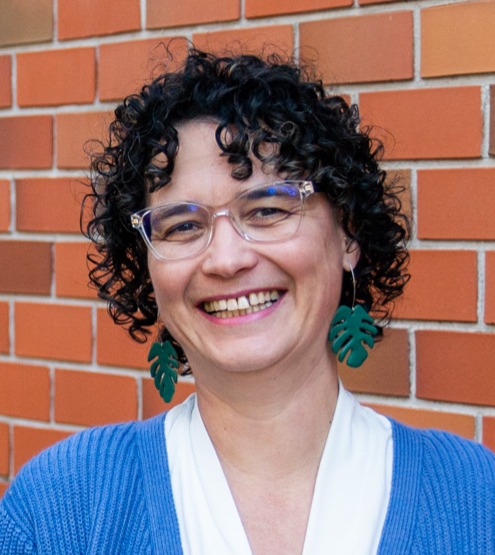
Ágnes Szalkai-Lőrincz
Ágnes Szalkai-Lőrincz is an expert in the Community Energy Program of the National Society of Conservationists (MTVSZ) and a professional staff member at the Community Energy Service Provider Nonprofit Ltd. (KESZ). Ágnes originally worked in communications and PR before turning her focus specifically to energy efficiency and renewable energy around 2016. Since 2022, she has been working on the development of energy communities in Hungary. KESZ, established by four civil society organizations – MTVSZ, the Ecological Studio Foundation, Consultants for Sustainable Development, and SZÖVET – launched one of Hungary’s first officially registered energy community pilot projects at Jurányi House in Budapest at the end of 2023. Our guest played a key role in preparing and implementing the project.
KS
Your first pilot project was the solar PV system installed on the roof of Jurányi House. What challenges did you face during the implementation, and what moments stand out in your memory?
ASL
Jurányi was our “guinea pig” – the project where we went through all the teething problems. We selected the site after assessing more than 20–30 potential locations. First, we had to spend six months negotiating with the City of Budapest, as the property owner, to obtain the necessary permits. We then raised HUF 5 million for the investment through MagNet Bank’s community fundraising program. However, the blockage of the Suez Canal and the resulting disruptions to global supply chains caused solar panel prices to suddenly increase by 30–40%, which led to significant delays. But the most memorable part was the installation itself: since we did not have the budget for a crane, we organized what we called the “Big Carry-Up.” Around 40 people – staff members and local volunteers – formed a human chain and manually carried the 20-kilogram panels up to the roof of the 25-metre-high building.
KS
Besides Jurányi, what other pilot projects is KESZ working on?
ASL
We currently have five operational solar PV systems. After Jurányi, we installed a 22 kW system at a local glass workshop in Parádszasvár, helping preserve the last remaining tradition of artisanal glassblowing in Hungary and providing power for its 1,800°C furnace. In Kispest, it took three years of negotiations to finalize the agreement with the municipality for the system at the Forrásház mental health centre. Our largest system, at nearly 65 kW, operates at the Pesti út residential care home run by the Budapest municipal government, where it helps meet the enormous energy demand of a facility providing 24-hour care. Most recently, we installed a system on the roof of the Csigabiga kindergarten in Kóspallag. It supplies electricity jointly with the kitchen of the local organic garden, and we also installed an EV charger, which will eventually be used by the shared community care bus serving the three neighboring villages.
KS
In your view, what is the biggest obstacle to the spread of energy communities in Hungary, and what could bring about a breakthrough?
ASL
One of the main problems is the lack of organically formed local communities. If a consulting company comes in from the outside with a top-down idea, it is unlikely to take root. Things work well where a functioning local group already exists – for example, a folk singing group or a cultural heritage association – and adds energy-related issues to its activities. Another major obstacle is legal uncertainty and a lack of trust. For energy communities to really take off, building trust and establishing a partnership with consumers are essential. I originally trained and worked as a PR and communications professional, and over the past ten years I have realized that, in a way, I am building the PR of community energy: I translate what engineers say into language that ordinary people can understand, so that they can see the impact of their own decisions and the real value of coming together as a community.
The podcast recording can be watched on our YouTube channel and listened to on Spotify.
In two weeks, we’ll be talking again with community energy expert Ágnes Szalkai-Lőrincz about community energy and related practices.
The Planet Fanatics’ Network Podcast
Welcome to our new series!
Sustainability, Honestly is the biweekly podcast of the Planet Fanatics’ Network. Our host, Katalin Szomolányi, sits down with renowned experts and decision‑makers to uncover the most pressing questions of our time.
What is the show about?
We don’t settle for surface‑level answers.
We look into what really drives markets and our planet—from global trends to shifting value systems and the technologies shaping our future.
Our aim is to provide an authentic picture of sustainability from both a business and a human perspective.
Where can you follow us?
Don’t miss the next episode!
Subscribe to our YouTube channel, follow us on Facebook and Spotify, and visit the Sustainable Headshot blog for background insights.
Join us on the journey toward the future!
If you missed it, you can access our previous episodes here:
Sustainability, Honestly with Péter Küllői (Episode 1)
Sustainability, Honestly with Péter Küllői (Episode 2)
Sustainability, Honestly with Éva Somorjai (Episode 3)
Sustainability, Honestly with Éva Somorjai (Episode 4)
Sustainability, Honestly with Zsolt Jamniczky (Episode 5)
Sustainability, Honestly with Zsolt Jamniczky (Episode 6)
Sustainability, Honestly with Sipos Katalin (Episode 7)
Sustainability, Honestly with Sipos Katalin (Episode 8)
Sustainability, Honestly with Dr. Ádám Guld (Episode 9)
Sustainability, Honestly with Dr. Ádám Guld (Episode 10)
Sustainability, Honestly with Dr. Andrea Czirók (Episode 11)
Sustainability, Honestly with Dr. Andrea Czirók (Episode 12)
Sustainability, Honestly with Viktor Lénárt (Episode 13)
Sustainability, Honestly with Viktor Lénárt (Episode 14)
Sustainability, Honestly with Miklós Mormer (Episode 15)
Sustainability, Honestly with Miklós Mormer (Episode 16)