
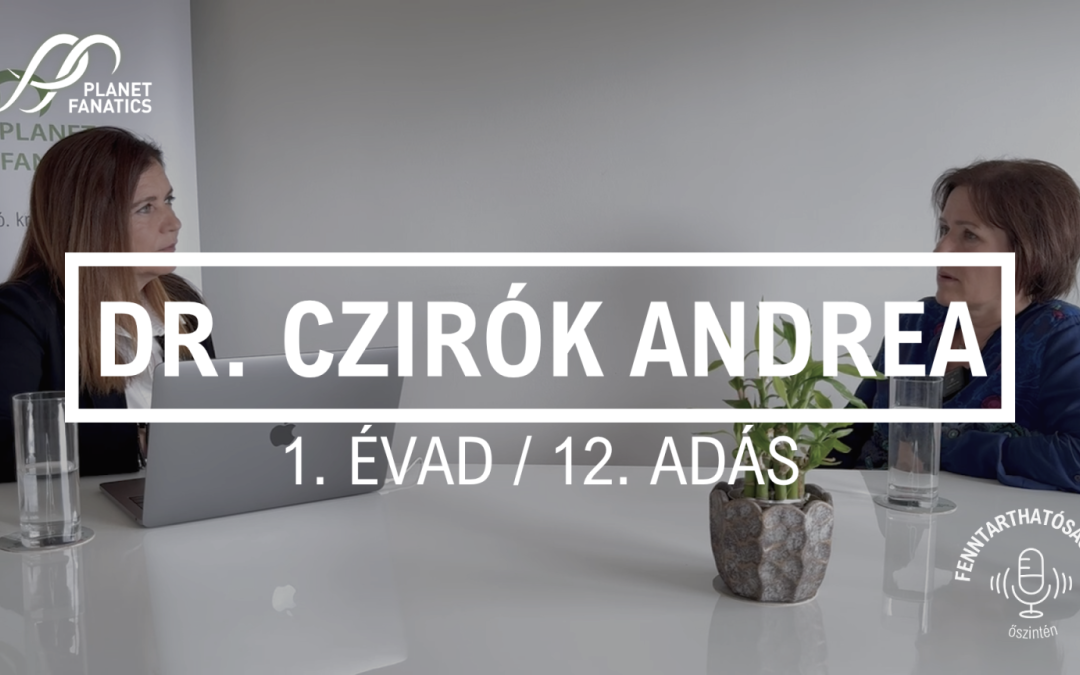
The latest episode of the Sustainability, Honestly podcast features Dr. Andrea Czirók, Employment Law Expert and Corporate Legal Counsel at Magyar Telekom, as well as one of the company’s most prolific legal authors and contributors.
The podcast recording can be watched on our YouTube channel and listened to on Spotify.
In this episode, we explored the employment-law challenges associated with the social (S) pillar of ESG, as well as practical issues related to supporting and protecting employees. Dr. Andrea Czirók and Katalin Szomolányi discussed the potential pitfalls of collecting data required for mandatory sustainability reporting and why purpose limitation is a key principle when processing employee data. They also examined what due diligence means in the context of supply chain assessments, how an anonymous whistleblowing system can make complaint handling safer, and under what conditions tools such as CCTV surveillance, GPS tracking, or email monitoring can be used while respecting human dignity. We also touched on the growing use of digital HR processes and electronic contracts, which make everyday operations more convenient but require continuous data protection reviews.
An episode about creating a safe and supportive workplace environment, protecting sensitive employee data, and why close cooperation between legal, HR, and compliance teams is essential to building a truly inclusive organizational culture.
[Editor’s note: This episode was recorded on 12 May 2026.]
KS:
What employment-law challenges and data collection pitfalls do companies face in connection with the social (S) pillar of ESG?
AC:
The social pillar covers a wide range of issues, including working conditions, equal opportunities, and diversity. The greatest challenge lies in handling the vast amount of sensitive data involved, as the GDPR provides strict protection for information such as ethnic origin or sexual orientation. Even though sustainability reporting may require us to present certain figures, in many cases we are not permitted to collect personally identifiable sensitive data at all. At most, we can rely on anonymous surveys, but not everyone is comfortable completing those.
KS:
The reports must assess not only a company’s own workforce but also workers in its supply chain. In practice, how can companies verify that employee rights are not being violated by a supplier? Is a simple declaration sufficient?
AC:
Much more sophisticated methods are required; obtaining a simple declaration is not enough. Under the new EU Corporate Sustainability Due Diligence Directive, companies must actively identify environmental and human rights risks throughout their entire supply chain. They can do so through questionnaires, contractual guarantees, and regular audits. Based on the principle of due diligence, companies are also expected to actively contribute to mitigating adverse impacts, such as unhealthy working conditions or non-compliance with working time rules.
KS:
Let’s turn to diversity within companies. More and more organizations have voluntary employee resource groups (ERGs). For example, you also have groups supporting LGBTQ+ employees, women, and employees with disabilities. How can these groups be operated in a data protection-compliant manner?
AC:
This is a very sensitive area. For example, when we keep records of members of the LGBTQ+ employee community, the only information we process is that the individual has joined that employee group. We do not record at all whether the person themselves possesses the protected characteristic—for example, what their sexual orientation is. The employer supports these communities both financially and by granting time allowances, but we are very careful to ensure that no one is required to disclose sensitive aspects of their private life.

Dr. Andrea Czirók
Dr. Andrea Czirók is an Employment Law Expert and Corporate Legal Counsel at Magyar Telekom Plc. Over the course of her professional career, she has gained more than 20 years of experience in a large corporate environment, primarily in the fields of employment law and employee data protection.
She regularly delivers employment law training and is the author and co-author of numerous professional publications. Her areas of expertise include the impact of digitalization, electronic HR processes, and remote work.
On behalf of Magyar Telekom’s legal team, she authors a regular column on the Arsboni legal portal. Through these articles, Andrea and her colleagues examine the relationship between modern information technology and the law.
KS:
The concept of positive discrimination often arises in connection with diversity programmes and quotas. Where is the line between lawful support measures and unlawful discrimination?
AC:
Positive discrimination is lawful when it is proportionate and specifically aimed at addressing a particular inequality of opportunity. Examples include providing accessible workplaces for employees with disabilities or offering part-time and hybrid working arrangements to women returning from maternity leave. The process becomes unlawful if it results in an automatic advantage and leads to the unjustified exclusion of someone outside the protected group who is actually better suited for the role in question.
KS:
Another important aspect of employee protection is data privacy. What can an employer lawfully monitor and how? I’m thinking of CCTV, GPS data from company cars, or emails.
AC:
The most important principles are respect for human dignity and privacy. As a general rule, cameras may only be installed for the protection of life, health, and property—for example, near a hazardous production line or in a server room. However, office employees cannot be subjected to continuous monitoring, and surveillance in changing rooms and restrooms is strictly prohibited. GPS tracking is also lawful only during working hours, and if the company permits the private use of its devices, the employer may not monitor the content of employees’ private emails.
KS:
Finally, let’s talk about whistleblowing systems. Many companies are now required to maintain such systems, and the ESG legislation has introduced additional requirements. What does a genuinely effective and trust-based reporting system look like?
AC:
In my experience, a closed IT system is far more effective and reliable than paper-based or email reporting channels. Through such a digital platform, employees can submit complaints completely anonymously, while the technology still enables feedback and communication with the whistleblower. This solution ensures strictly limited access to the data, making employees much more willing to report concerns or potential workplace misconduct.
The podcast recording can be watched on our YouTube channel and listened to on Spotify.
In two weeks, our guest will be Viktor Lénárt, Founder and Managing Director of ZEL, with whom we will discuss why leaders can be considered a sustainability risk.
The Planet Fanatics’ Network Podcast
Welcome to our new series!
Sustainability, Honestly is the biweekly podcast of the Planet Fanatics’ Network. Our host, Katalin Szomolányi, sits down with renowned experts and decision‑makers to uncover the most pressing questions of our time.
What is the show about?
We don’t settle for surface‑level answers.
We look into what really drives markets and our planet—from global trends to shifting value systems and the technologies shaping our future.
Our aim is to provide an authentic picture of sustainability from both a business and a human perspective.
Where can you follow us?
Don’t miss the next episode!
Subscribe to our YouTube channel, follow us on Facebook and Spotify, and visit the Sustainable Headshot blog for background insights.
Join us on the journey toward the future!
If you missed it, you can access our previous episodes here:
Sustainability, Honestly with Péter Küllői (Episode 1)
Sustainability, Honestly with Péter Küllői (Episode 2)
Sustainability, Honestly with Éva Somorjai (Episode 3)
Sustainability, Honestly with Éva Somorjai (Episode 4)
Sustainability, Honestly with Zsolt Jamniczky (Episode 5)
Sustainability, Honestly with Zsolt Jamniczky (Episode 6)
Sustainability, Honestly with Sipos Katalin (Episode 7)
Sustainability, Honestly with Sipos Katalin (Episode 8)
Sustainability, Honestly with Dr. Ádám Guld (Episode 9)
Sustainability, Honestly with Dr. Ádám Guld (Episode 10)
Sustainability, Honestly with Dr. Andrea Czirók (Episode 11)