
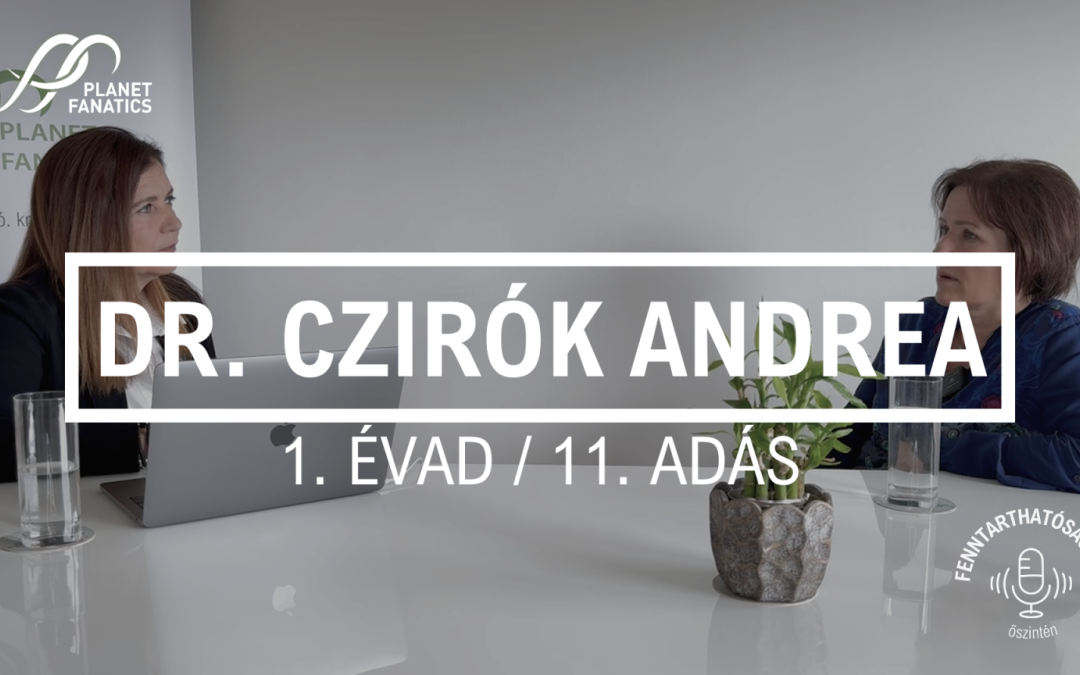
The latest episode of the Sustainability, Honestly podcast features Dr. Andrea Czirók, Employment Law Expert and Corporate Legal Counsel at Magyar Telekom, as well as one of the company’s most prolific legal authors and contributors.
The podcast recording can be watched on our YouTube channel and listened to on Spotify.
In this episode, we explored the upcoming EU Pay Transparency Directive, the new regulations concerning gender quotas, and their impact on corporate practice in Hungary.
Dr. Andrea Czirók and Katalin Szomolányi discussed why previous equal-opportunity regulations, which largely remained at the level of principles, failed to deliver the expected results—given that the gender pay gap in Hungary still stands at 18%—and why objective, gender-neutral evaluation of roles and performance will become indispensable in the future.
They also examined the paradigm shift represented by the abolition of salary confidentiality clauses, how companies should prepare for mandatory regulatory reporting requirements, and why simply ticking the box on female quotas is a misguided strategy compared to the conscious, long-term development of talent pipelines.
An episode about closing the gender pay gap, transparent compensation practices, and why the many new administrative requirements should also be viewed as a major opportunity to strengthen corporate culture and increase employee appreciation.
Editor’s note: This episode was recorded on May 12, 2026.
KSZ:
Why was this new regulation necessary in the first place, and what shortcomings of the previous legal framework does it address?
AC:
Over the past 20 years, several EU directives have been adopted concerning employment, equal treatment, and equal pay. However, these regulations were largely principle-based and did not achieve the desired impact in practice. When the 2023 Directive was adopted, the average gender pay gap across the European Union was 12%, while in Hungary it stood at 18%. The new Directive provides Member States with concrete enforcement mechanisms and sanctioning powers, making it much more effective in ensuring compliance with these principles and reducing pay disparities.
KSZ:
What specific new obligations does this legislation impose on employers? For example, does transparency mean that salary ranges will now have to be disclosed publicly?
AC:
I would highlight two key obligations: equal pay and transparency. To ensure equal pay, employers must review their job classification systems to ensure they are based on objective, gender-neutral criteria. Transparency is not primarily aimed at third parties or the general public; rather, it concerns employees and employee representatives. Employees will have the right to understand the methodology used to determine pay, to compare their own remuneration with relevant averages, and employers will be required to justify any unexplained differences.
KSZ:
You mentioned reporting obligations. When will companies have to submit their first official reports on pay data, and who will be affected first?
AC:
The deadline for transposing the Directive into national law is June 7, 2026. In the first phase, companies employing at least 250 people will be required to submit reports by June 7, 2027, covering their full-year pay data for 2026. The reporting obligations will then be introduced on a phased basis according to company size. Employers with 150–249 employees will report every three years thereafter, while companies with fewer than 100 employees will not be subject to this reporting requirement at all.

Dr. Andrea Czirók
Dr. Andrea Czirók is an Employment Law Expert and Corporate Legal Counsel at Magyar Telekom Plc. Over the course of her professional career, she has gained more than 20 years of experience in a large corporate environment, primarily in the fields of employment law and employee data protection.
She regularly delivers employment law training and is the author and co-author of numerous professional publications. Her areas of expertise include the impact of digitalization, electronic HR processes, and remote work.
On behalf of Magyar Telekom’s legal team, she authors a regular column on the Arsboni legal portal. Through these articles, Andrea and her colleagues examine the relationship between modern information technology and the law.
KSZ:
What about the size of the pay gap itself? The Directive establishes a 5% threshold for employees performing the same work. What happens if a company exceeds this threshold and cannot justify the difference?
AC:
If the pay gap between women and men within a particular employee category exceeds 5%, and the employer cannot justify it using objective, gender-neutral factors—such as professional experience or performance—the employer must initiate a joint pay assessment with employee representatives. Together, they must identify solutions to reduce the unjustified disparity. If the employer fails to take appropriate measures within the prescribed timeframe, it may face regulatory sanctions and financial penalties.
KSZ:
How will all of this reshape recruitment and salary negotiations? Will salary ranges have to be included in job advertisements, and will employers still be allowed to ask candidates about their previous salaries?
AC:
During the recruitment process—either in the job advertisement itself or before individual salary negotiations take place—employers will be required to inform candidates about the starting salary and any additional benefits associated with the position. The most significant paradigm shift is that starting salary will no longer be a matter of individual bargaining. Furthermore, employers will no longer be allowed to ask candidates about their previous compensation. The practice of offering only as much as a candidate is willing to accept will have to become a thing of the past.
KSZ:
Let’s move on to the other major topic: the new EU gender quota requirements for corporate leadership bodies. What exactly does the Directive require, and what can companies do if they want to avoid appointing so-called “quota women”?
AC:
This Directive seeks to improve gender balance within the leadership bodies of publicly listed companies employing more than 250 people. It sets a target of 40% female representation in non-executive positions, such as supervisory boards, or alternatively 33% representation across all leadership positions combined.
To avoid treating quotas as a mere box-ticking exercise that disregards merit, companies must build their approach from the ground up. They need long-term strategies to attract female talent, provide mentoring and leadership development opportunities, and support employees returning to work after having children—for example, through remote work arrangements and part-time opportunities. Achieving meaningful progress also requires a supportive and conscious organizational culture that enables these initiatives to succeed.
The podcast recording can be watched on our YouTube channel and listened to on Spotify.
In two weeks, our guest will be Dr. Andrea Czirók, Employment Law Expert and Corporate Legal Counsel at Magyar Telekom Plc. We will discuss how to create a safe and supportive workplace environment, as well as the protection and well-being of employees and the ways organizations can support them.
The Planet Fanatics’ Network Podcast
Welcome to our new series!
Sustainability, Honestly is the biweekly podcast of the Planet Fanatics’ Network. Our host, Katalin Szomolányi, sits down with renowned experts and decision‑makers to uncover the most pressing questions of our time.
What is the show about?
We don’t settle for surface‑level answers.
We look into what really drives markets and our planet—from global trends to shifting value systems and the technologies shaping our future.
Our aim is to provide an authentic picture of sustainability from both a business and a human perspective.
Where can you follow us?
Don’t miss the next episode!
Subscribe to our YouTube channel, follow us on Facebook and Spotify, and visit the Sustainable Headshot blog for background insights.
Join us on the journey toward the future!
If you missed it, you can access our previous episodes here:
Sustainability, Honestly with Péter Küllői (Episode 1)
Sustainability, Honestly with Péter Küllői (Episode 2)
Sustainability, Honestly with Éva Somorjai (Episode 3)
Sustainability, Honestly with Éva Somorjai (Episode 4)
Sustainability, Honestly with Zsolt Jamniczky (Episode 5)
Sustainability, Honestly with Zsolt Jamniczky (Episode 6)
Sustainability, Honestly with Sipos Katalin (Episode 7)
Sustainability, Honestly with Sipos Katalin (Episode 8)
Sustainability, Honestly with Dr. Ádám Guld (Episode 9)
Sustainability, Honestly with Dr. Ádám Guld (Episode 10)