
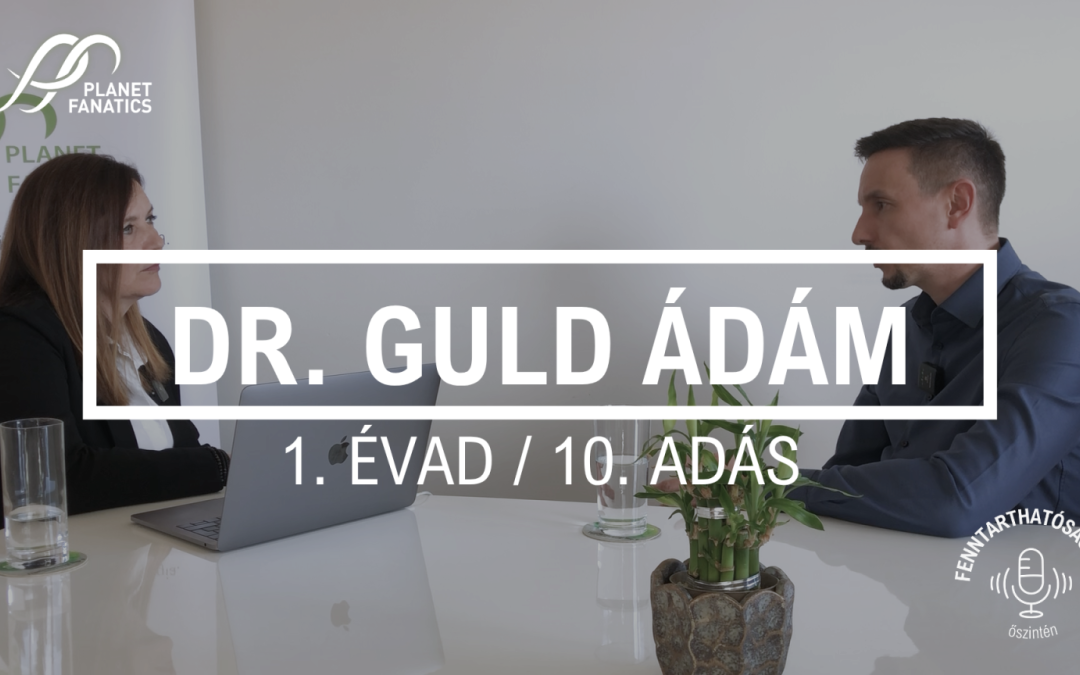
The guest of the ninth episode of the “Sustainability, Honestly” podcast is Dr. Ádám Guld, media researcher, communications expert, and associate professor at University of Pécs.
The podcast recording can be watched on our YouTube channel and listened to on Spotify.
In this episode, we explored the media’s reactions to the environmental crisis, the manipulability of content consumers, and the foundations of credible corporate sustainability communication. Dr. Ádám Guld and Katalin Szomolányi discussed why constant fearmongering paralyzes action, and why solution-oriented narratives focusing on small, achievable steps are far more effective. They also examined the dangers of greenwashing — increasingly scrutinized by the European Commission — why “not communicating,” or greenhushing, is a flawed strategy, and why internal employee communication is essential and cannot be reduced to a once-a-year sustainability campaign day.
An episode about the “mining of attention,” the growing trust gap between generations, and why honest, transparent, human-centered communication is becoming the most stable point in an era of nonstop visual content overload.
SZK
The media often communicates climate change through catastrophe narratives. Is this a good strategy, or does it simply increase climate anxiety?
GÁ
In short: it is not a good strategy. This phenomenon is rooted in the attention economy: fear and danger instinctively capture our attention because we are biologically wired to react to them. But constant shock tactics eventually lead to paralysis and escapism, which can even turn into climate skepticism, because after a while people simply want to escape the ongoing mental anxiety caused by negative news.
SZK
If fearmongering causes paralysis, could solution-oriented narratives be more effective in everyday communication?
GÁ
Absolutely. If an average consumer is constantly confronted with global carbon emission statistics, they can easily freeze up because they feel powerless to influence the situation. But when communication is translated into everyday actions — for example, showing how to compost or grow vegetables even in a tiny two-square-meter garden bed — it restores a sense of agency. The key is finding the right level of accessibility, and that is much easier to achieve through an authentic, personal tone.
SZK
Alongside greenwashing, we increasingly hear about greenhushing, where companies prefer not to communicate anything about sustainability at all. Is that a good strategy for them?
GÁ
Not at all. There is an old communication axiom: “not communicating is also communication” — and often the loudest kind. In today’s smartphone-saturated world of endless content streams, the chances of successfully hiding secrets are minimal. Younger generations are also incredibly critical: if they detect inauthenticity, they react very quickly and harshly using the tools of cancel culture. It is far more beneficial to communicate honestly and transparently, even if that means openly acknowledging certain environmental risks and challenges.
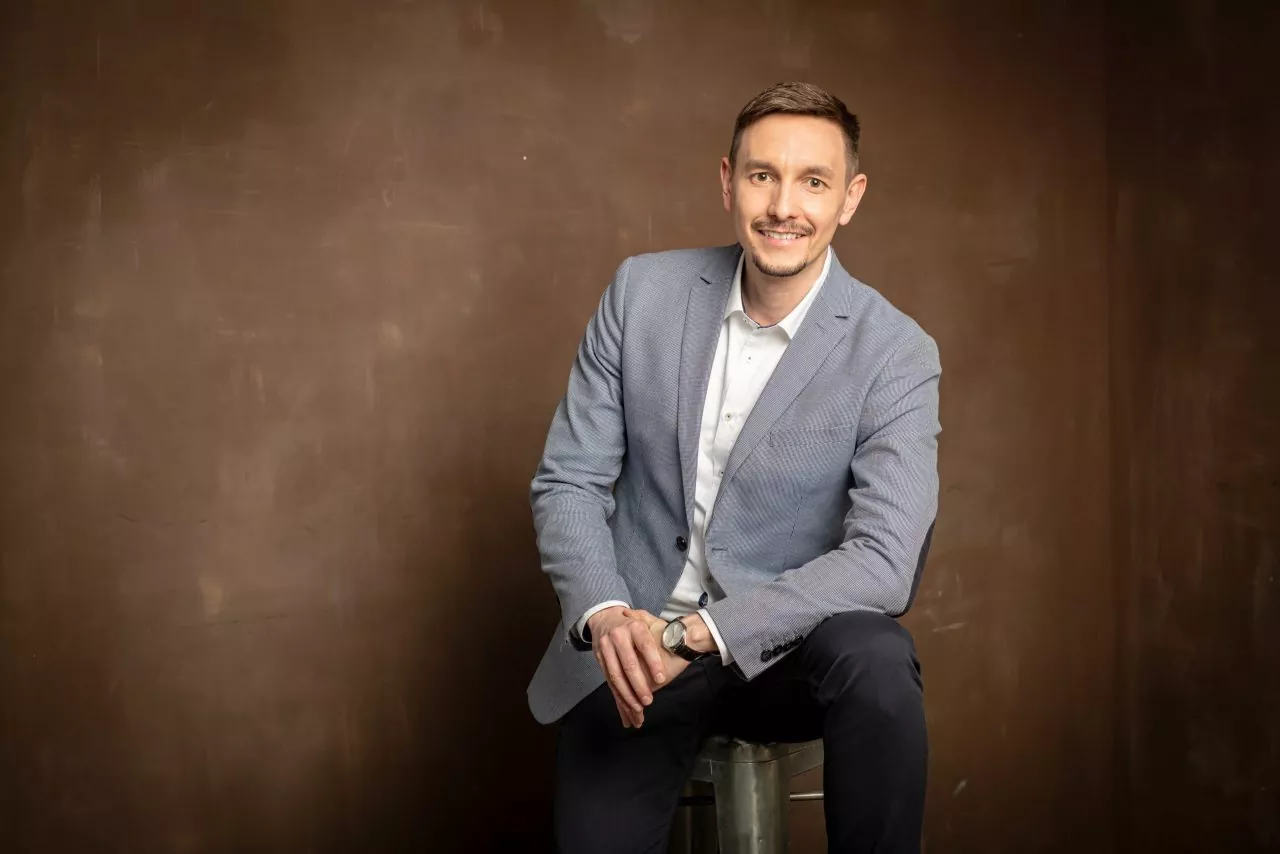
Dr. Ádám Guld
Dr. Ádám Guld is a media researcher, communications expert, and associate professor in the Department of Communication and Media Studies at University of Pécs. He is a regular speaker at professional conferences. His research results have appeared in two edited volumes and numerous academic journals.
His primary research areas include social sciences, media studies, media culture, youth cultures, and celebrity studies. Since 2012, he has focused on the communication and media usage habits of Generation Z, as well as fame dynamics and the communication and media habits of different generations. He has published four independent books on these topics.
SZK
How important is internal employee communication when it comes to sustainability if companies want to remain credible?
GÁ
In Hungary, this area is often still in its infancy, even though it is becoming increasingly important as younger generations enter the labor market. One crucial point is that it cannot be campaign-based. Young people do not find it credible if a company organizes a single mandatory “sustainability day” once a year and then remains silent about the topic for the other 364 days. Sustainability communication has to become an ongoing, organic part of corporate culture.
SZK
Which channels are most effective today for communicating about sustainability? Are there generational differences in content consumption?
GÁ
The differences are enormous. Older generations — Boomers and Generation X — tend to trust traditional media such as television, radio, newspapers, and formal institutional authority. Younger generations — particularly Generations Z and Y — have very little trust in large organizations. Instead, they respond better to relatable, human voices such as influencers and experts. They are most effectively reached through visual platforms like TikTok short videos, YouTube, or longer-form podcasts.
SZK
As a closing thought, what would you advise companies to change in their communication if they want to avoid falling behind in the coming years?
GÁ
A stable social media presence and professionally produced visual content — especially video — are now essential. Companies need to understand the media consumption and trust patterns of different generations. Beyond that, transparency and authenticity are the most important factors: communicating from behind corporate masks and using generic corporate messaging simply no longer works. My main advice is this: start communicating boldly in a human voice, and never treat sustainability communication as a mere campaign.
The full conversation is available on our YouTube channel and can also be listened to on Spotify.
In two weeks, our guest will be Dr. Andrea Czirók, labor law expert and in-house legal counsel at Magyar Telekom Nyrt., with whom we will explore labor law issues, including the new pay transparency regulations.
The Planet Fanatics’ Network Podcast
Welcome to our new series!
Sustainability, Honestly is the biweekly podcast of the Planet Fanatics’ Network. Our host, Katalin Szomolányi, sits down with renowned experts and decision‑makers to uncover the most pressing questions of our time.
What is the show about?
We don’t settle for surface‑level answers.
We look into what really drives markets and our planet—from global trends to shifting value systems and the technologies shaping our future.
Our aim is to provide an authentic picture of sustainability from both a business and a human perspective.
Where can you follow us?
Don’t miss the next episode!
Subscribe to our YouTube channel, follow us on Facebook and Spotify, and visit the Sustainable Headshot blog for background insights.
Join us on the journey toward the future!
If you missed it, you can access our previous episodes here:
Sustainability, Honestly with Péter Küllői (Episode 1)
Sustainability, Honestly with Péter Küllői (Episode 2)
Sustainability, Honestly with Éva Somorjai (Episode 3)
Sustainability, Honestly with Éva Somorjai (Episode 4)
Sustainability, Honestly with Zsolt Jamniczky (Episode 5)
Sustainability, Honestly with Zsolt Jamniczky (Episode 6)
Sustainability, Honestly with Sipos Katalin (Episode 7)