
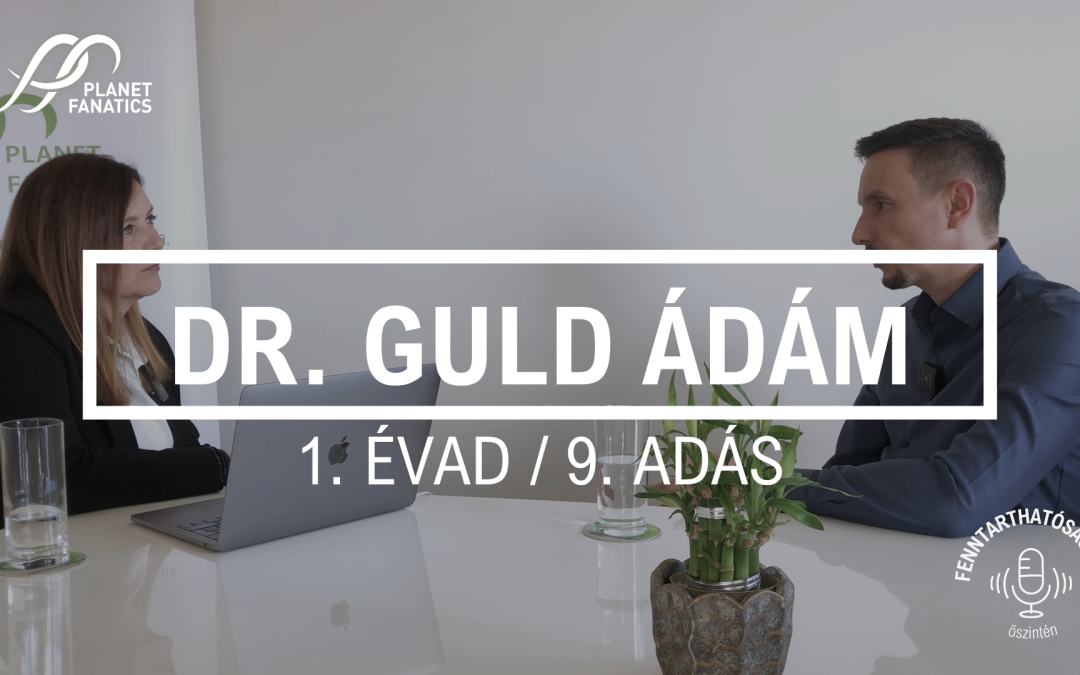
The guest of the ninth episode of the “Honestly About Sustainability” podcast is Dr. Ádám Guld, media researcher, communications expert, and associate professor at University of Pécs.
The podcast recording can be watched on our YouTube channel and listened to on Spotify.
In this episode, we explored the differences in media consumption across generations, the pitfalls of influencer communication, and the radical impact of artificial intelligence on the media landscape. Dr. Ádám Guld and Katalin Szomolányi discussed why the digitally native Generation Z cannot simply be deceived by greenwashing, the challenges posed by the rise of the attention economy and the lack of credible experts in the digital space, and the emergence of new “slow-down” trends among young people — such as the return of dumb phones and MP3 players — as a response to digital oversaturation.
An episode about the crisis of media credibility, the underlying causes of generational climate anxiety, and why an authentic voice, horizontal communication, and open partnerships are becoming the most important foundations of future corporate communication.
SZK
Let’s start with Generation Z! Who are they, and how do their media consumption habits differ from those of earlier generations, such as Generation X or Y?
GÁ
Generation Z — those born between 1995 and 2010 — is the first truly digitally native generation. While Generation Y pioneered the digital revolution, they still had an offline childhood. Gen Z, however, was born directly into a world built on networked communication. Traditional linear television often feels “cringe” to them, something associated with older generations. At the same time, they are extremely active consumers of television content in the digital space and are often the ones setting digital trends across platforms and devices.
SZK
We often hear that sustainability and companies’ environmental performance are among the most important factors for Gen Z when choosing a workplace. Is climate anxiety really that defining for them?
SGÁ
Climate anxiety is absolutely real, because this generation grew up amid a constant experience of crisis — from the 2008 global financial crisis to COVID and the threat of climate catastrophe. It shapes their thinking so deeply that many are even questioning starting families because of environmental concerns. In the past, sustainability genuinely ranked among the top priorities in career planning. However, today’s cost-of-living and housing crises have often pushed it further down the list, replacing it with concerns about “survival” and financial security.
SZK
How well can they recognize companies’ flashy greenwashing efforts, and how should businesses communicate with them?
GÁ
They are incredibly critical and very quick to see through confusing or manipulative messaging. Although Generation Z is not completely homogeneous, the more informed segments are very difficult to deceive. What matters most to them is an authentic voice and horizontal communication. They want to be treated as partners, because they react very negatively — and often disengage completely — if someone tries to lecture them from a dominant, top-down position.
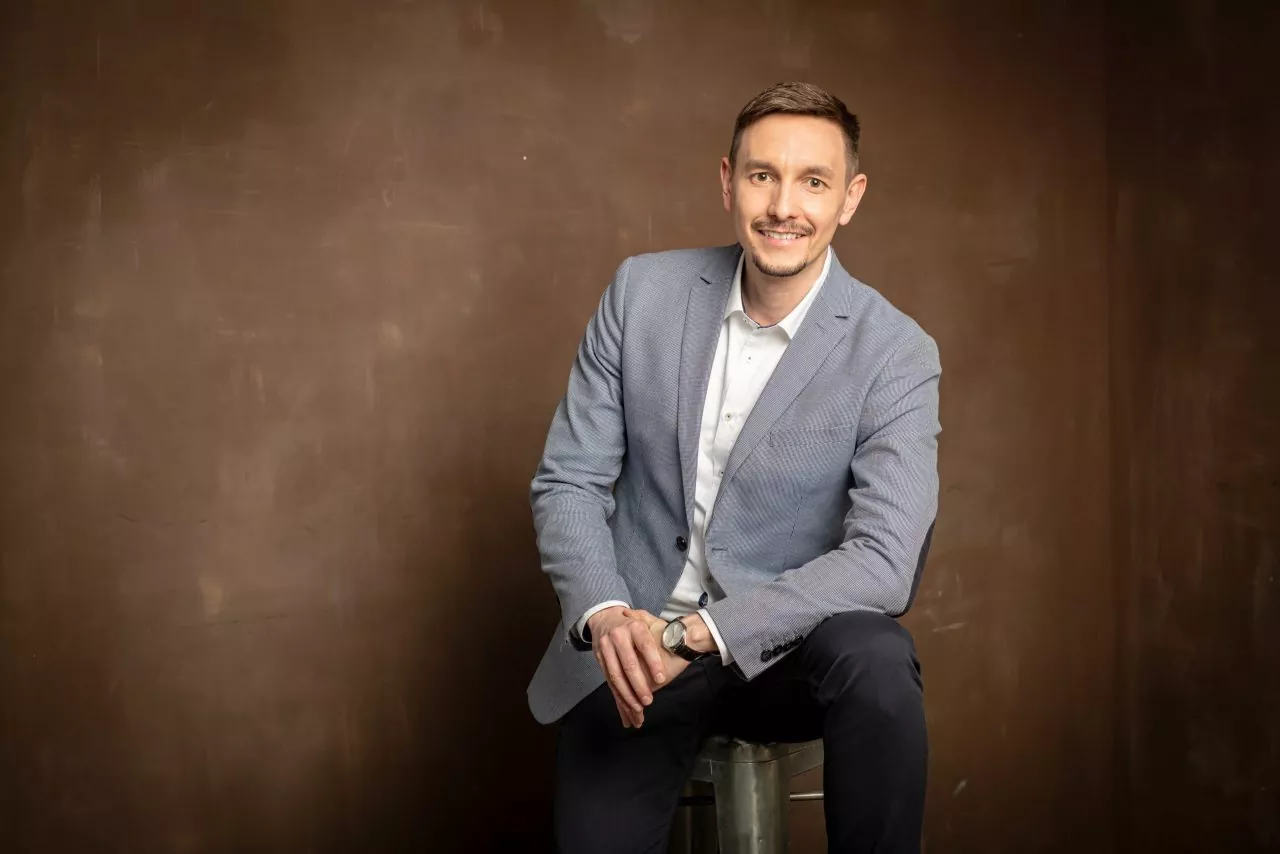
Dr. Ádám Guld
Dr. Ádám Guld is a media researcher, communications expert, and associate professor in the Department of Communication and Media Studies at University of Pécs. He is a frequent speaker at professional conferences. His research findings have been published in two edited volumes and numerous academic journals.
His main research areas include social sciences, media studies, media culture, youth cultures, and celebrity studies. Since 2012, he has focused on the communication and media usage habits of Generation Z, as well as the dynamics of fame and the communication and media habits of different generations. He has published four independent books on these topics.
SZK
The role of influencers is unavoidable for this generation. But what happens when companies rely on so-called “instant experts” or influencers in sustainability communication?
GÁ
This is one of the biggest problems of today’s attention economy. Countless influencers speak to millions about topics in which they actually have no real expertise. There are no credible verification mechanisms behind them, yet people still fall for the illusion that “visibility equals credibility.” This creates enormous room for greenwashing, and interestingly, research shows that members of Generations X and Y often fall into this trap even more easily than younger people.
SZK
You mentioned that alongside the overwhelming flood of content, there is also a trend toward slowing down. How does this appear in their everyday lives and media consumption?
GÁ
Every strong trend produces its own countertrend. A consciously slower, more reflective group has emerged among young people — one that seeks deeper, higher-quality content instead of endless superficial scrolling. I also see among university students that more and more people are deliberately returning to “dumb phones” or 10-year-old MP3 players in order to reconnect with the real world and escape digital oversaturation. This trend also includes the growing number of young adults in their twenties who see buying a rural farmhouse and pursuing a self-sufficient lifestyle as an attractive vision of the future.
SZK
Finally, how is the rapid development of artificial intelligence affecting media credibility and our mental well-being?
GÁ
Artificial intelligence has the potential to fundamentally shake trust in the media, because we are reaching a point where people barely believe even what they see with their own eyes. Another serious risk is the emergence of parasocial relationships with chatbots — such as ChatGPT. Many young people already use these programs almost as psychologists or even friends to discuss intimate personal problems. Since the machine is always adaptive, kind, and non-confrontational, there is a real danger that this could isolate them from learning how to handle genuine, real-life human conflicts in the physical world.
The full conversation is available to watch on our YouTube channel and can be listened to on Spotify.
In two weeks, our guest will once again be Dr. Ádám Guld, media researcher and associate professor at University of Pécs, with whom we will explore how to communicate authentically — whether about climate change or sustainability.
The Planet Fanatics’ Network Podcast
Welcome to our new series!
Sustainability, Honestly is the biweekly podcast of the Planet Fanatics’ Network. Our host, Katalin Szomolányi, sits down with renowned experts and decision‑makers to uncover the most pressing questions of our time.
What is the show about?
We don’t settle for surface‑level answers.
We look into what really drives markets and our planet—from global trends to shifting value systems and the technologies shaping our future.
Our aim is to provide an authentic picture of sustainability from both a business and a human perspective.
Where can you follow us?
Don’t miss the next episode!
Subscribe to our YouTube channel, follow us on Facebook and Spotify, and visit the Sustainable Headshot blog for background insights.
Join us on the journey toward the future!
If you missed it, you can access our previous episodes here:
Sustainability, Honestly with Péter Küllői (Episode 1)
Sustainability, Honestly with Péter Küllői (Episode 2)
Sustainability, Honestly with Éva Somorjai (Episode 3)
Sustainability, Honestly with Éva Somorjai (Episode 4)
Sustainability, Honestly with Zsolt Jamniczky (Episode 5)
Sustainability, Honestly with Zsolt Jamniczky (Episode 6)