
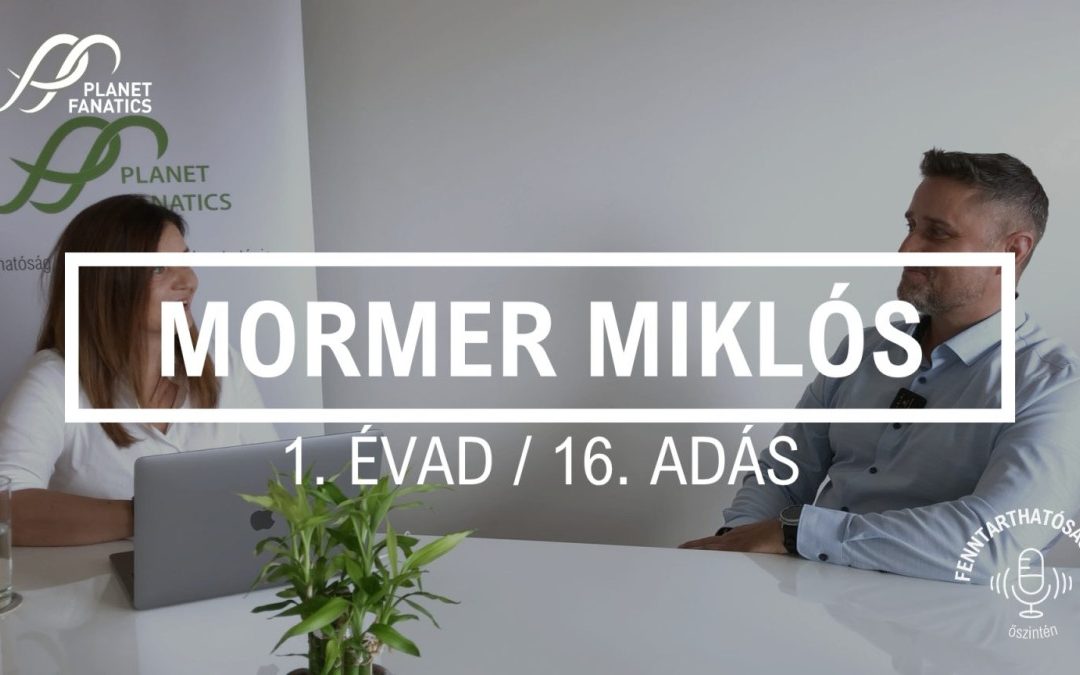
The latest episode of Sustainability, Honestly podcast features Miklós Mormer, Chief Technology Officer of the Solar Markt Group.
The podcast recording can be watched on our YouTube channel and listened to on Spotify.
In this episode, we explored technological resilience and the future challenges of energy security in the context of a changing climate. Miklós Mormer and Katalin Szomolányi discussed why power plants designed for a 30-year lifespan should not be planned solely on the basis of yesterday’s weather data, and what kind of physical and software-based protection is required to withstand extreme weather events. They examined how automated protection systems operate, including how solar-tracking rows automatically move into a wind-deflection position during storms, how a power plant can independently execute a snow-removal program by rotating the panels and utilizing the heating effect of bifacial technology, and how hail damage can be mitigated by changing the panels’ tilt angle.
The discussion also covered the deliberate reduction of the carbon footprint of key components, as well as promising technological breakthroughs such as advances in perovskite solar cells in the laboratory and the benefits of floating solar systems. The speakers discussed the advantages of agrivoltaics—the integration of agriculture and energy production—during periods of extreme drought, and used data to challenge the misconception that the green transition threatens Hungary’s agricultural land. They also explored the importance of decentralization and consumer choices, emphasizing that consciously timing our energy consumption is key to achieving collective success.
An episode about the self-protecting, intelligent power plants of the future, an energy market adapting to climate change, and why long-term technological and strategic resilience will be essential for survival in an era of extreme weather.
SZK
In our previous conversation, we clarified the fundamentals of the Smart IPP concept. In this episode, we focus on technological resilience and the future of energy. When we look at climate change, measurements show that Hungary is warming even faster than other parts of the continent. How can a solar power plant be prepared for the unpredictable weather conditions of the coming decades?
MM
A modern solar power plant must now be designed for a lifespan of at least 30 years. That is why it would be a major mistake to base the design solely on weather data from the past one or two decades—or even just the past year. Climate risk is now a very real physical threat that must be addressed from the construction phase onward. Our goal is to prepare power plants for the extreme weather stresses expected in the future through a combination of physical protection of the equipment and software-based solutions.
SZK
Speaking of extreme conditions, the heat-dome events of recent times have certainly made everyone sweat. How do solar parks respond to extreme heat above 40°C, and is there any way to cool the panels?
MM
This is a very important technological limitation, because a temperature of around 22°C is ideal for solar panels, which is why our production is typically highest in April and May. When the heat reaches its peak and the panels can heat up to as much as 65°C, their performance drops dramatically and suddenly. The main components of power plants generally operate reliably up to around 45°C; above that temperature, however, their performance begins to decline exponentially, while grid components also have a harder time handling the load. As part of the Smart IPP approach, we continuously monitor internal temperatures and, when necessary, reduce the load to protect critical components. As for spraying the panels with water, I do not believe this is a viable long-term solution: if a surface heated to 65°C is suddenly sprayed with water, thermal shock can cause microcracks in the panels, potentially resulting in serious damage.
SZK
In addition to heat, storms are also becoming increasingly intense. As I understand it, your power plants can withstand significantly higher wind speeds than is customary in the market. How does this work in practice?
MM
According to industry standards, support structures are generally designed for sustained wind speeds of around 80–90 km/h, based on historical data. In contrast, our solar parks are designed to withstand windstorms of up to 180 km/h. To achieve this, we have reinforced the structures in the outer rows. In addition, we use a fully automated software-based protection system: when the sensors detect strong winds, the solar-tracking rows automatically move into a protective position. They turn into the wind, forming a kind of wind-deflection wall or aerodynamic shield that redirects the airflow over the remaining inner rows. If the wind continues to strengthen, first every seventh row and eventually the entire power plant moves into the safest possible angle, minimizing the risk of physical damage.
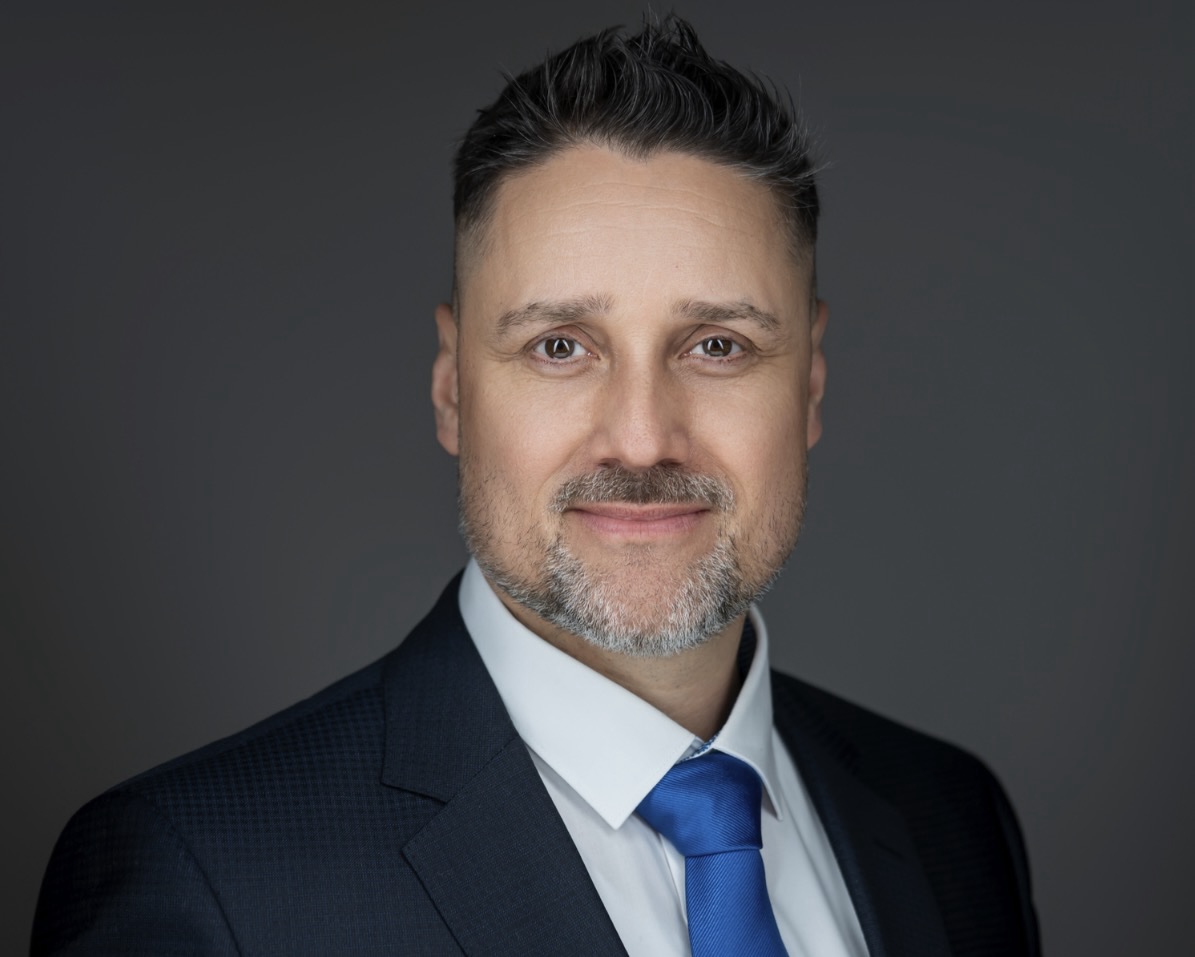
Miklós Mormer
With a degree in Agricultural Mechanical Engineering, an MBA, and professional experience in banking and real estate investment, Miklós Mormer entered the solar energy sector with a strong business and financial background. As Chief Technology Officer of the Solar Markt Group, he views a power plant as a business enterprise: it must not only generate energy efficiently but also create long-term value and competitive advantage.
SZK
What about winter snowfall and summer hailstorms? Do your power plants also have similar automated protection programs in place to deal with these conditions?
MM
Of course. We have also developed software-based solutions for these situations. In January, when snowfall brought the output of solar power plants across the country to a halt because of the snow covering the panels, our systems automatically launched a snow-removal program. Because our panels are bifacial, they can use light reflected onto the rear side to initiate internal electricity generation, which in turn produces heat. By coordinating the rotation of the panels with this internal heating effect, our 87-hectare power plant was able to completely melt and clear the snow from itself in less than an hour, while other parks remained affected by the problem for weeks. The system can also respond to hail: the panels can rotate by more than 100 degrees to find an angle at which the hailstones hit the reinforced glass surfaces edge-on rather than at a 90-degree angle, thereby preventing breakage.
SZK
You mentioned technological breakthroughs. Which new developments could fundamentally reshape the solar and energy-storage sectors over the next decade?
MM
One of the most exciting areas is the development of perovskite solar cells. While the efficiency of today’s conventional panels is typically between 22% and 25%, perovskite technology is already achieving efficiencies of 34–35% under laboratory conditions, with a theoretical limit that could reach as high as 45–47%. If we can achieve significantly higher energy yields using a less expensive material, this could dramatically improve energy supply even during periods of cloudy weather.
At the same time, in the field of batteries, lithium is gradually beginning to be replaced by sodium-based storage technologies, which could significantly reduce costs. Floating solar systems are also very promising: solar panels installed on the surface of lakes reduce water evaporation, while the water continuously cools the panels, meaning their performance declines much less during the summer heat.
SZK
Finally, let’s talk about a sensitive issue: land use. Many people are concerned that renewable energy will take land away from agriculture and food production. Is that really the case, and what does agrivoltaics have to offer?
MM
The essence of agrivoltaics is precisely the intelligent integration of energy production and agriculture on the same piece of land. Crops can be grown or livestock can be kept beneath the panels, while the structures provide shade during periods of extreme heat, reduce solar radiation and help with rainwater collection. Although this is a more expensive solution due to the higher mounting structures and the greater challenges involved in cultivating the land, preventing crops from being scorched and improving the local microclimate can, in some cases, even increase yields.
And if we look at the numbers: our 87-hectare power plant has a capacity of 50 megawatts. If we wanted to build Hungary’s entire current renewable generation capacity—approximately 11,500 MW—exclusively on arable land, it would require just 0.4% of the country’s agricultural land. If we were to hybridize these power plants by combining them with wind turbines and battery storage at the same grid connection point, the land requirement could be reduced to 0.25%.
So, in reality, we are not talking about any significant loss of agricultural land, particularly if we deliberately coordinate the technology and agricultural use through carefully considered compromises.
The podcast recording can be watched on our YouTube channel and listened to on Spotify.
In two weeks, we will be talking with Rita Fontányi (“P & B Aqua” Zrt.) about the state of our water resources.
The Planet Fanatics’ Network Podcast
Welcome to our new series!
Sustainability, Honestly is the biweekly podcast of the Planet Fanatics’ Network. Our host, Katalin Szomolányi, sits down with renowned experts and decision‑makers to uncover the most pressing questions of our time.
What is the show about?
We don’t settle for surface‑level answers.
We look into what really drives markets and our planet—from global trends to shifting value systems and the technologies shaping our future.
Our aim is to provide an authentic picture of sustainability from both a business and a human perspective.
Where can you follow us?
Don’t miss the next episode!
Subscribe to our YouTube channel, follow us on Facebook and Spotify, and visit the Sustainable Headshot blog for background insights.
Join us on the journey toward the future!
If you missed it, you can access our previous episodes here:
Sustainability, Honestly with Péter Küllői (Episode 1)
Sustainability, Honestly with Péter Küllői (Episode 2)
Sustainability, Honestly with Éva Somorjai (Episode 3)
Sustainability, Honestly with Éva Somorjai (Episode 4)
Sustainability, Honestly with Zsolt Jamniczky (Episode 5)
Sustainability, Honestly with Zsolt Jamniczky (Episode 6)
Sustainability, Honestly with Sipos Katalin (Episode 7)
Sustainability, Honestly with Sipos Katalin (Episode 8)
Sustainability, Honestly with Dr. Ádám Guld (Episode 9)
Sustainability, Honestly with Dr. Ádám Guld (Episode 10)
Sustainability, Honestly with Dr. Andrea Czirók (Episode 11)
Sustainability, Honestly with Dr. Andrea Czirók (Episode 12)
Sustainability, Honestly with Viktor Lénárt (Episode 13)