
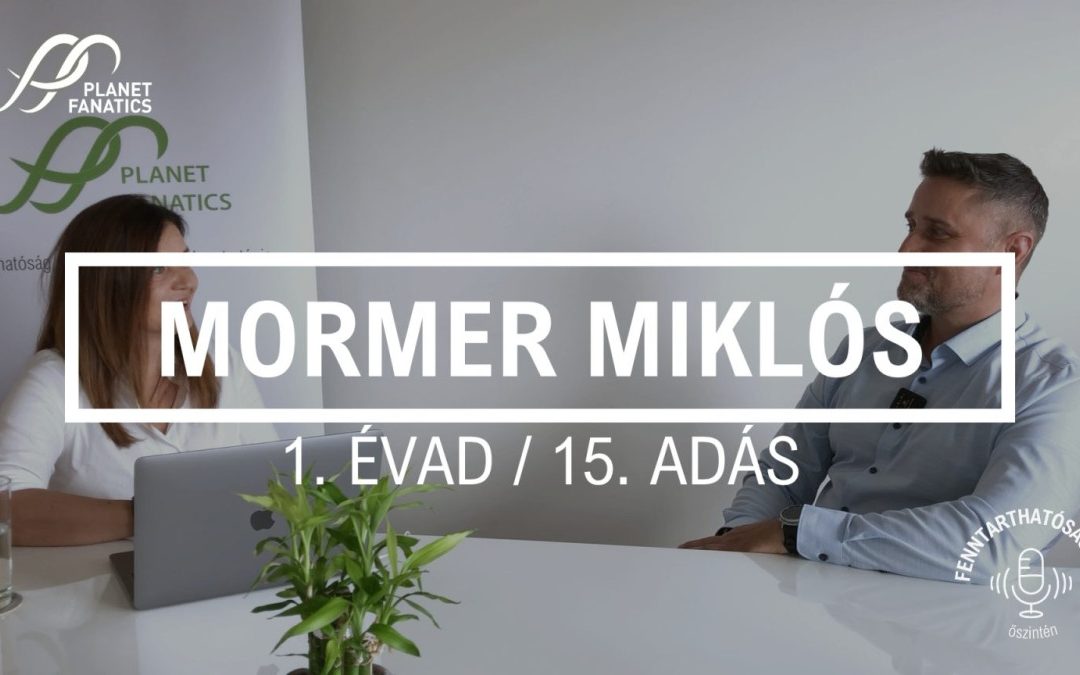
The latest episode of the Honest Conversations on Sustainability podcast features Miklós Mormer, Chief Technology Officer of the Solar Markt Group.
The podcast recording can be watched on our YouTube channel and listened to on Spotify.
In this episode, we explore the topic of energy independence and the new rules of the energy market. Miklós Mormer and Katalin Szomolányi discuss why the power plant development concepts of five years ago have become outdated and why maximizing the utilization of grid connection points has become a critical issue. They examine the Smart IPP (Independent Power Producer) model, which offers an active, market-driven approach focused on achieving the best possible business performance over a 30-year lifespan, rather than relying on subsidized, passive assets. The conversation also covers the benefits of solar tracking structures and bifacial panels, which can increase potential energy production by an average of 30–40%. They discuss the importance of hourly settlement systems in avoiding “greenwashing,” as well as the need to align consumers and producers and distribute risks appropriately within modern Power Purchase Agreements (PPAs). In addition, they explore why energy is becoming a strategic board-level issue for companies—much like digitalization was in previous years.
This episode looks at the future of intelligent, market-based co-located hybrid power plants, the flexible coordination of energy production and consumption supported by battery storage, and why a new business mindset is the key to gaining a competitive advantage in today’s energy market.
KS:
Let’s start with how the energy market has changed in recent years. What is the main difference between the concept of a solar power plant built five years ago and one being developed today?
MM:
Over the past five years, this industry has made enormous progress. Back then, development was relatively straightforward: the goal was to build a certain amount of capacity on a given site as cost-effectively as possible using proven technologies. Today, however, the way we think about projects has changed completely. Since the grid has reached the limits of its capacity, the efficient utilization of connection points has become a key issue. Modern power plants are far more sophisticated. The objective is no longer simply to add capacity but to monetize the electricity generated in the smartest possible way, ensuring the best return on investment and business performance.
KS:
You mentioned grid constraints and the fact that electricity prices can even turn negative at midday due to overproduction. How does this relate to the analogy of electricity as a “perishable commodity,” and how can smart planning or solar tracking technology help address this challenge?
MM:
If we keep building identical fixed-tilt power plants one after another, they will all reach peak production at the same time—around midday. During summer months or weekends, this creates an immediate oversupply in the market. Since electricity cannot, in its basic form, be stored directly at scale, it behaves much like a highly perishable product: if nobody needs it at that moment, its value can collapse almost instantly.
At Solar Markt Group, we use single-axis tracking systems that follow the movement of the sun, combined with bifacial solar panels. These solutions can increase potential energy production by an average of 30–40%, while also significantly improving output during the morning and evening hours. This allows us to begin peak production roughly two hours earlier and continue it two hours later than conventional systems. As a result, we can enter the market with a completely different generation profile and sell electricity at considerably more favorable prices.
KS:
Many people may not yet be familiar with the term Smart IPP. What exactly does this model mean, and how does it differ from traditional subsidized power plants?
MM:
IPP stands for Independent Power Producer—a company that operates under market conditions without relying on government support schemes, such as Hungary’s KÁT subsidy system. The “Smart” element reflects a proactive mindset.
Traditional subsidized power plants were essentially passive assets. The goal was to build them, generate electricity, and receive a fixed, guaranteed price, meaning there was little incentive to maximize performance. A Smart IPP, by contrast, is highly active and investor-focused from the very beginning. We design power plants with future hybridization in mind—for example, integrating battery storage systems later on. Throughout the entire 30-year lifespan of the asset, we continuously optimize operations to achieve maximum efficiency and the best possible business results in the market.
It is similar to a Formula 1 car: every single percentage point of efficiency matters.
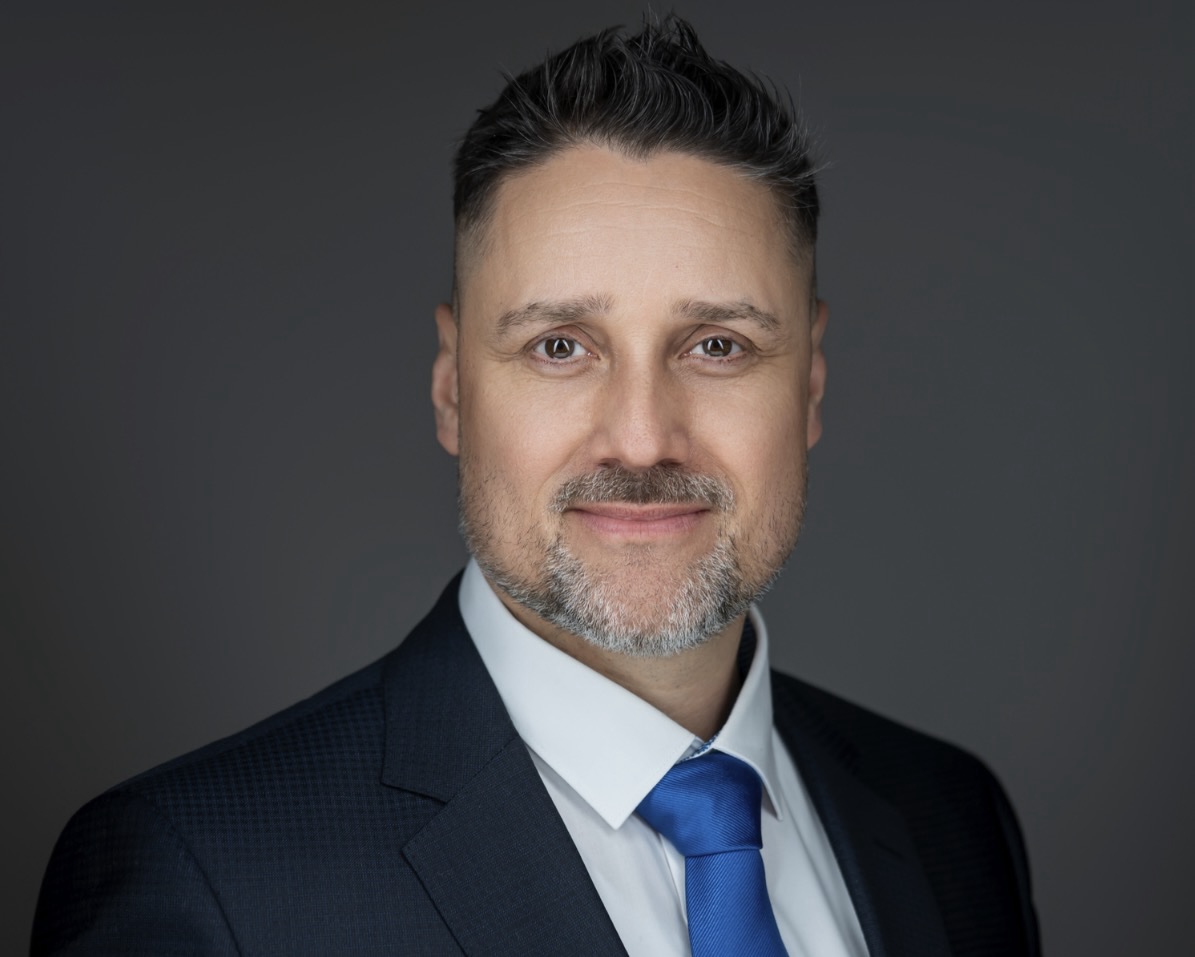
Miklós Mormer
With a degree in Agricultural Mechanical Engineering, an MBA, and professional experience in banking and real estate investment, Miklós Mormer entered the solar energy sector with a strong business and financial background. As Chief Technology Officer of the Solar Markt Group, he views a power plant as a business enterprise: it must not only generate energy efficiently but also create long-term value and competitive advantage.
KS:
From the perspective of large corporate energy consumers, why can it be a serious mistake for a company to pursue sustainability goals without a well-defined strategy?
MM:
Many companies fall into the trap of taking the easiest first step: purchasing inexpensive green electricity to cover the first 20% of their consumption from a passive power producer that is willing to sell its excess generation at almost any price. However, once the need arises to further decarbonize—whether because of increasingly stringent ESG and climate targets or the desire to secure long-term energy price stability—they encounter physical reality.
Additional power plants will generate electricity at the same midday hours, making each incremental unit of green electricity more expensive and riskier to procure. During the night or in winter, there will not be enough domestic renewable generation available, and counterparties will be unable to manage the uncertainty on both sides of the equation. This is why energy procurement can no longer be treated as merely a technical or purchasing issue—it is a critical strategic energy management challenge.
KS:
You mentioned the importance of hourly matching. How does this relate to corporate climate targets and battery storage solutions?
MM:
In the past, companies compared their electricity consumption and renewable energy production on an annual basis. This created opportunities for greenwashing: a company could claim to be fully powered by renewable energy even if it consumed electricity at night while purchasing renewable power that had been generated during the day.
Hourly matching eliminates this issue by measuring the actual share of renewable electricity on an hour-by-hour basis. This creates a major challenge for energy producers because weather-dependent solar generation requires oversized portfolios, sophisticated digital platforms, and operational flexibility to ensure that customers receive renewable electricity precisely when they consume it.
Battery storage introduces that flexibility directly into the heart of the power plant. While supplying electricity throughout the entire night from batteries alone would still be prohibitively expensive today, the Smart IPP solution lies in co-located hybrid power plants. In these systems, solar, wind, and battery storage assets are combined behind a single grid connection point. This approach enables reliable green electricity supply without major grid upgrades, while leveraging the complementary production profiles of wind and solar energy.
KS:
As a closing message, what would you say to CEOs and CFOs who have so far viewed energy as nothing more than a necessary cost of doing business?
MM:
The most important realization is that energy strategy is a board-level decision. Due to electrification, the construction of new industrial facilities, and the rapid growth of data centers, Hungary’s electricity demand could increase by as much as 20–30% by 2030. As a result, locally generated renewable electricity will become a scarce and highly valuable resource.
Today, energy strategy occupies the same position within companies that information technology once did. Organizations that recognize its importance early and proactively manage the associated risks can gain a significant competitive advantage. Those that continue to postpone strategic energy planning are exposing themselves to substantial and highly unpredictable risks in the years ahead.
The podcast recording can be watched on our YouTube channel and listened to on Spotify.
In two weeks, we will be speaking with Miklós Mormer (Solar Markt) again. This time, we will explore the topics of technological resilience and the future of energy.
The Planet Fanatics’ Network Podcast
Welcome to our new series!
Sustainability, Honestly is the biweekly podcast of the Planet Fanatics’ Network. Our host, Katalin Szomolányi, sits down with renowned experts and decision‑makers to uncover the most pressing questions of our time.
What is the show about?
We don’t settle for surface‑level answers.
We look into what really drives markets and our planet—from global trends to shifting value systems and the technologies shaping our future.
Our aim is to provide an authentic picture of sustainability from both a business and a human perspective.
Where can you follow us?
Don’t miss the next episode!
Subscribe to our YouTube channel, follow us on Facebook and Spotify, and visit the Sustainable Headshot blog for background insights.
Join us on the journey toward the future!
If you missed it, you can access our previous episodes here:
Sustainability, Honestly with Péter Küllői (Episode 1)
Sustainability, Honestly with Péter Küllői (Episode 2)
Sustainability, Honestly with Éva Somorjai (Episode 3)
Sustainability, Honestly with Éva Somorjai (Episode 4)
Sustainability, Honestly with Zsolt Jamniczky (Episode 5)
Sustainability, Honestly with Zsolt Jamniczky (Episode 6)
Sustainability, Honestly with Sipos Katalin (Episode 7)
Sustainability, Honestly with Sipos Katalin (Episode 8)
Sustainability, Honestly with Dr. Ádám Guld (Episode 9)
Sustainability, Honestly with Dr. Ádám Guld (Episode 10)
Sustainability, Honestly with Dr. Andrea Czirók (Episode 11)
Sustainability, Honestly with Dr. Andrea Czirók (Episode 12)