
+36 30 444 1067 mail@planetfanatics.hu

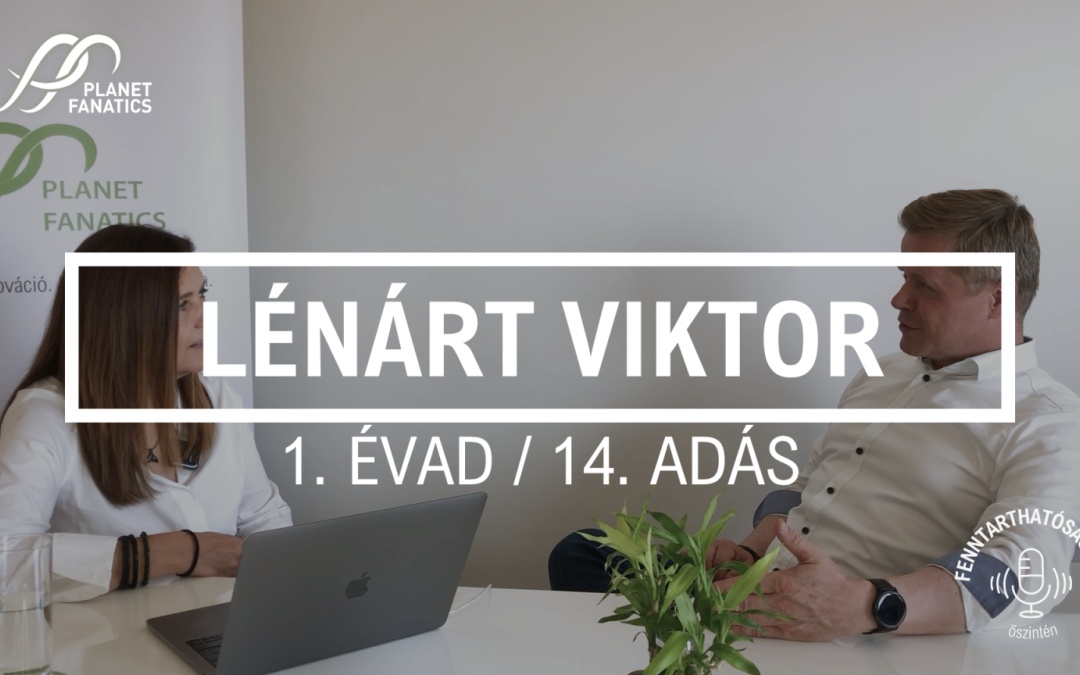
The latest episode of the Honestly About Sustainability podcast features Viktor Lénárt—Lutheran pastor, one of Hungary’s leading organizational and leadership development experts, Founder and CEO of Zero Emission Leadership (ZEL), with 27 years of experience in human development.

The podcast recording can be watched on our YouTube channel and listened to on Spotify.
In this episode, we explored the challenges facing sustainable organizations of the future and the role of artificial intelligence in organizational development. Viktor Lénárt and Katalin Szomolányi discussed why postponing AI integration may create an irreversible competitive disadvantage and why organizations need to fundamentally redesign their processes instead of merely layering automation onto existing workflows. They examined how leadership roles are changing, why new positions such as the AI Officer are becoming essential, and why providing human context to machines is critical for effective collaboration.

The conversation also addressed the synergies emerging from intergenerational collaboration, where experience and technological expertise meet through mentoring and reverse mentoring, as well as the importance of integrating neurodivergent employees into the workplace. Finally, they discussed why continuous hands-on experimentation with AI is indispensable and why leaders must deliberately allocate time and resources for learning—even when that learning involves frustration.

This episode explores the emergence of more autonomous learning organizations, the development of harmonious collaboration between humans and intelligent machines, and why systems-level human thinking will remain the most important leadership capability in the age of algorithms.

KS:
Many organizations are still taking a wait-and-see approach to AI, saying they’ll address it in a year or two. How risky is this delay?

VL:
Using artificial intelligence is no longer optional—it has become a necessity. Organizations that fail to adopt it will soon be unable to remain competitive. What currently appears in the market as hesitation or cautious observation will arrive like a tsunami around 2027–2028. Companies that postpone engaging with AI for two years will fall irreversibly behind.

As long as one company manages its information in spreadsheets or simple databases, an AI-enabled competitor will already have a system that transcribes conversations on the way back from a client meeting, automatically updates the CRM, and prepares the contract before the employee even returns to the office. That gap can no longer be closed through human effort alone.

KS:
How should organizations use AI in organizational development and everyday operations? Is it enough simply to perform existing tasks more quickly?

VL:
That is precisely one of the biggest mistakes. Many organizations simply add AI as another layer on top of existing processes, believing that they are now analyzing Excel spreadsheets faster. The real value of AI is not automation itself but augmentation—the expansion of human capabilities.

AI enables us to accomplish things that were previously impossible. In the past, integrating the results of a 360-degree leadership assessment with an organizational climate survey and the company’s strategic objectives required an enormous amount of manual work. Today, AI can analyze these massive datasets simultaneously, allowing us to identify exactly where interventions are needed and which leaders or teams should be developed to support strategic priorities.

KS:
Many people fear dehumanization—that machines will replace their jobs or undermine human relationships at work. How can organizations introduce AI without damaging their culture?

VL:
If we simply insert AI into old processes, we really do risk dehumanizing the workplace. Employees will naturally feel that the technology is there to replace them and eliminate their roles.

For AI to become a constructive force rather than a destructive one, its implementation cannot be treated merely as an IT project. It must be approached as a comprehensive organizational development and change management initiative. Organizations need to rethink how they operate from the ground up and create new roles, such as the AI Officer, whose responsibility is to orchestrate the integration of technological and human capabilities while ensuring that employees come to view AI not as a threat, but as a collaborative partner in thinking and problem-solving.

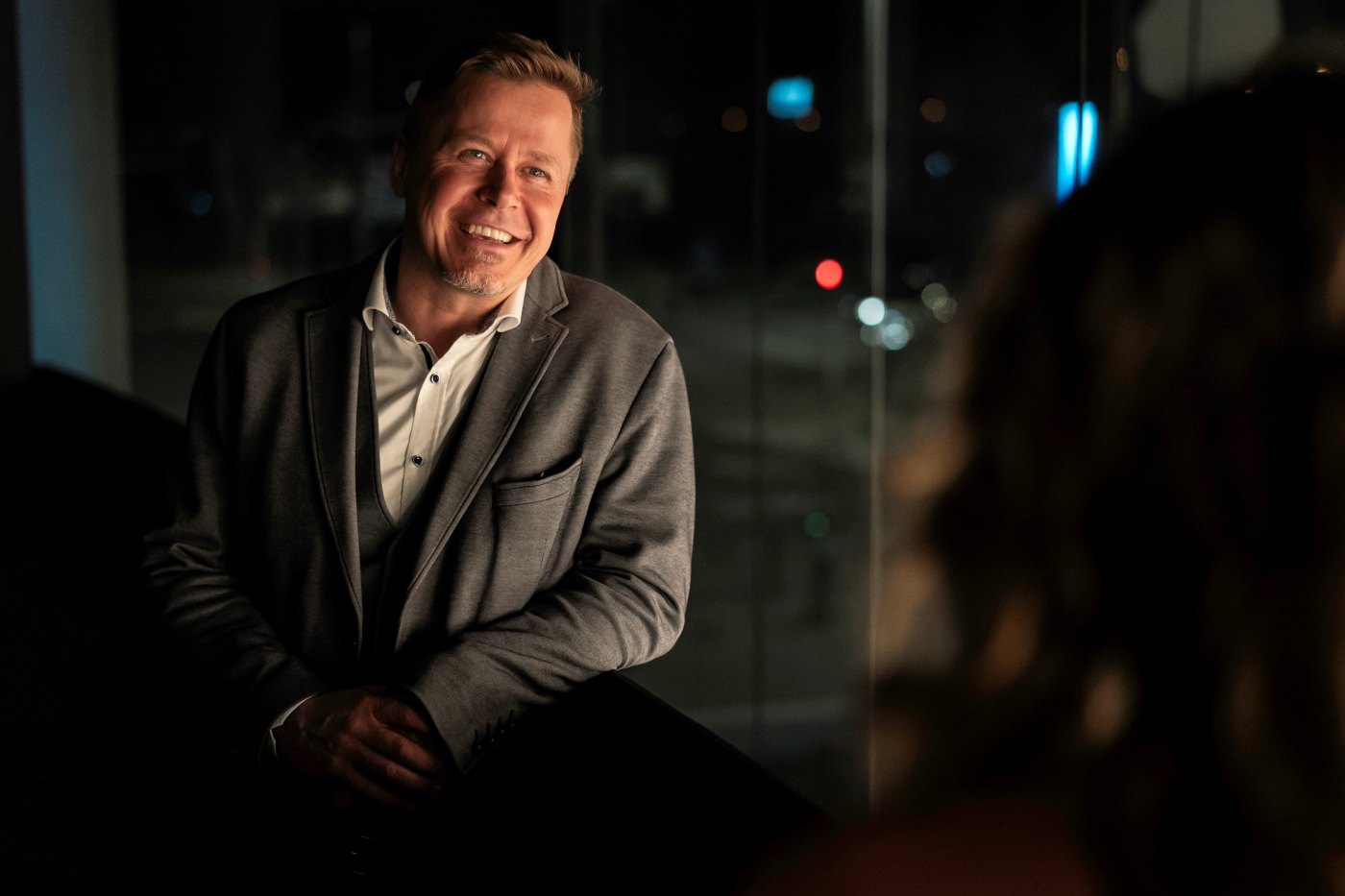
Viktor Lénárt

Viktor Lénárt began his career as a Lutheran pastor and has since become one of Hungary’s leading experts in organizational and leadership development. Following his work at the GROW Group, he founded Zero Emission Leadership (ZEL), where he serves as CEO, and is also Head of Leadership Development at the Forbes Business Club. With 27 years of experience in human development, he is dedicated to helping organizations build healthier, more sustainable leadership cultures. The name Zero Emission Leadership reflects this mission: creating leadership practices that do not waste human energy or generate unnecessary “emissions” within organizations.

KS:
In this rapidly changing, technology-driven world, how can organizations foster psychological safety? What new forms of stress are employees facing?

VL:
People are experiencing rapidly increasing uncertainty because they are being exposed to multiple, unprecedented sources of stress simultaneously. There is technological stress—such as FOMO, the fear of falling behind—alongside existential anxiety about the future of work. These pressures are compounded by geopolitical tensions, climate-related concerns, and the personal stresses of everyday life.

Moreover, for the first time in history, a technology is becoming embedded in our daily lives that does not merely function as a tool but is capable of making decisions. Humanity has never before had to adapt to this combination of pressures, and we are not yet adequately prepared for it.

KS:
You also mentioned generational differences. How can different generations—for example, younger people who have grown up alongside digital technologies and more experienced colleagues—work together successfully in this environment?

VL:
There is enormous potential in connecting generations. Younger employees, who have effectively grown up with these technologies, bring exceptional digital fluency. At the same time, professionals in their thirties, forties, and fifties possess the business experience and organizational context that allow them to immediately recognize how a new AI capability can solve real business problems.

When these two forms of knowledge come together, and organizations cultivate both mentoring and reverse mentoring, the resulting synergy can become a powerful driver of organizational transformation.

KS:
Looking ahead to 2030, what will be the most essential competencies for senior leaders in the age of algorithms?

VL:
The ability to learn will become dramatically more important than ever before. Leaders will need to dedicate one or two hours every day to hands-on experimentation so that they develop a first-hand understanding of both the possibilities and the limitations of AI.

Because AI operates statistically—it does not think about what is essential—the leader’s primary responsibility will be to maintain systems thinking and provide the precise context that artificial intelligence requires. Equally important, leaders must learn to tolerate the inevitable frustration that accompanies experimentation with intelligent machines, while ensuring that their teams are given both the time and the resources necessary for continuous learning.

The podcast recording can be watched on our YouTube channel and listened to on Spotify.

In two weeks, we’ll be talking with Miklós Mormer (Solar Markt) about the renewable energy market—its current challenges, emerging trends, and future opportunities.

The Planet Fanatics’ Network Podcast
Welcome to our new series!
​Sustainability, Honestly is the biweekly podcast of the Planet Fanatics’ Network. Our host, Katalin Szomolányi, sits down with renowned experts and decision‑makers to uncover the most pressing questions of our time.

What is the show about?
We don’t settle for surface‑level answers.
We look into what really drives markets and our planet—from global trends to shifting value systems and the technologies shaping our future.
Our aim is to provide an authentic picture of sustainability from both a business and a human perspective.

Where can you follow us?
Don’t miss the next episode!
Subscribe to our YouTube channel, follow us on Facebook and Spotify, and visit the Sustainable Headshot blog for background insights.

Join us on the journey toward the future!

If you missed it, you can access our previous episodes here:

Sustainability, Honestly with Péter Küllői (Episode 1)

Sustainability, Honestly with Péter Küllői (Episode 2)

Sustainability, Honestly with Éva Somorjai (Episode 3)

Sustainability, Honestly with Éva Somorjai (Episode 4)

Sustainability, Honestly with Zsolt Jamniczky (Episode 5)

Sustainability, Honestly with Zsolt Jamniczky (Episode 6)

Sustainability, Honestly with Sipos Katalin (Episode 7)

Sustainability, Honestly with Sipos Katalin (Episode 8)

Sustainability, Honestly with Dr. Ádám Guld (Episode 9)

Sustainability, Honestly with Dr. Ádám Guld (Episode 10)

Sustainability, Honestly with Dr. Andrea Czirók (Episode 11)

Sustainability, Honestly with Dr. Andrea Czirók (Episode 12)

Sustainability, Honestly with Viktor Lénárt (Episode 13)