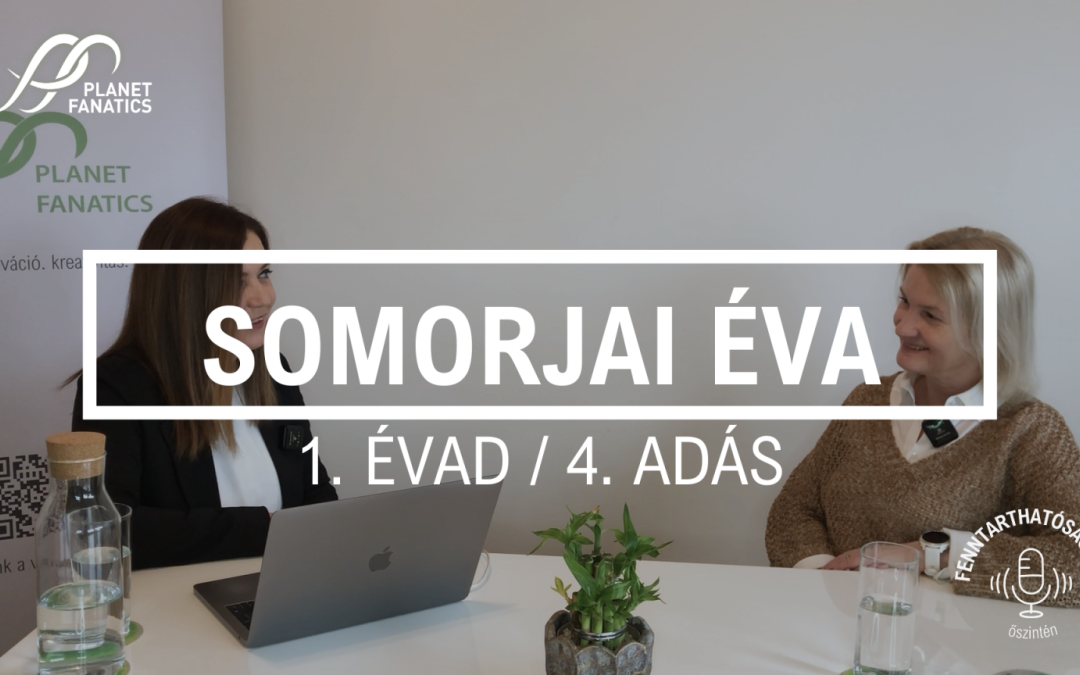
The guest of the fourth episode of the Honestly About Sustainability podcast was Éva Somorjai, former Deputy HR Director at Magyar Telekom and Deutsche Telekom, HR consultant, and founder of Patrónus Ház.
The podcast episode can be watched on our YouTube channel or listened to on Spotify.
In this episode, we explored the workplace of the future in the context of an aging society, Generation Z, and other individual needs and trends. Éva Somorjai and Katalin Szomolányi discussed why simply offering tax incentives is not enough to bring older employees back to the labor market instead of providing social recognition, how HR can respond to the unique needs of neurodivergent employees, and why flexible small and medium-sized enterprises may be the true winners of generational expectations compared to slower large corporations.
An episode about corporate flexibility that bridges generational divides, overcoming trends that pigeonhole individuals, and the increasing value of leaders who know how to ask questions and truly listen.
SZK:
In the future, Europe will face an aging society. What challenges does this pose in workplaces for intergenerational collaboration, and what could be the solution for retaining older employees?
ÉS:
There is a huge gap in expectations. Looking at Generation Z, many have learned during COVID how great it is to work from home—they don’t want to commute, and they are much more drawn to an entrepreneurial mindset rather than the constraints of large corporations. In contrast, the older generation hasn’t changed at all in this regard: commuting, social interaction, and daily face-to-face contact with their manager remain important to them. Bringing older employees back into the workforce cannot be achieved through tax breaks or financial incentives alone. What is needed is a shift in societal values, like we see in Japan or South Korea, where the experience and knowledge that comes with age is truly respected.
SZK:
From an HR perspective, what concrete tools could help promote this collaboration and the appreciation of older employees within companies?
ÉS:
There is a beautiful concept called “reverse mentoring.” The idea is to pair an older and a younger colleague. The older employee supports the younger one’s faster development with their experience and expertise, while the younger employee helps the older one adapt to new technologies. While this sounds fantastic on paper, in practice it hasn’t achieved breakthrough success yet—likely because leadership hasn’t fully committed to it.
SZK:
We hear more and more about neurodivergent employees (e.g., people with autism or ADHD), while labor shortages are also widespread. Has HR begun addressing their specific needs?
ÉS:
Honestly, almost not at all. I haven’t come across a comprehensive corporate strategy for this. Currently, mostly isolated, popular initiatives exist, like mindfulness, digital detox, or reduced screen time, but there’s no coherent system that truly supports them. Of course, it would be too much to expect a company to fully accommodate every individual’s unique needs, but flexible policies should be created that allow individuals to integrate more easily and increase tolerance within the community.
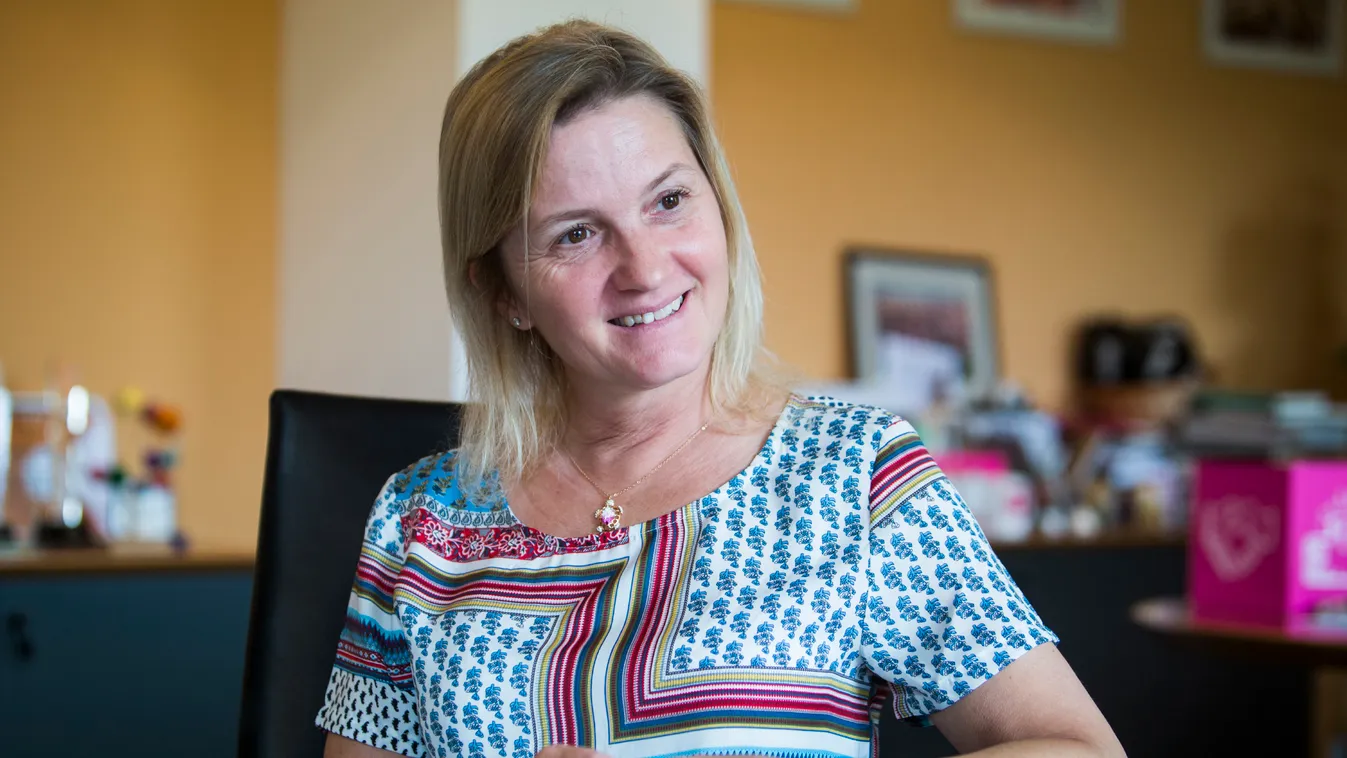
ÉVA SOMORJAI
Éva Somorjai began her career at the International Directorate of Magyar Hitelbank, then spent three years living in Melbourne, where she served as Administrative and Finance Manager at a real estate investment company. From 1996, she continued her professional career within Pepsi’s Hungarian organization, initially working in finance before being appointed HR Director of the Hungarian company in 2000.
She joined Magyar Telekom in 2001, where she worked for more than fifteen years. From 2007, she served as Chief HR Officer (Deputy CEO for Human Resources). In 2017, she was appointed Chief HR Officer at Deutsche Telekom’s European headquarters, where she was responsible for the full HR operations across 11 countries. At the same time, she founded Patrónus Ház, a residential home providing accommodation for 12 autistic residents.
She left Telekom at the end of 2022 and currently works as a consultant.
SZK:
You’ve mentioned flexibility several times. How well are current large corporations able to meet the increasingly individual expectations of employees, or specifically those of Generation Z?
ÉS:
Unfortunately, large corporations are very slow to become more flexible. There’s also a strong generational gap here: top management often belongs to Generation X or the baby boomers, and they struggle to find common ground with the expectations of younger employees. That’s why I foresee that small and medium-sized enterprises (SMEs) will gain more importance in the future. These companies can operate on a more human scale and offer more flexible conditions, which can be more attractive to those who don’t want to create within rigid corporate frameworks.
SZK:
Looking ahead to, say, 2030, what skills will future executives need in this rapidly changing environment?
ÉS:
I hope that leadership itself will be valued more. A leader doesn’t need to be the top expert in every area, as long as they surround themselves with excellent specialists. Far more important are foresight and a strong curiosity about the world. And perhaps most crucially: they must be able to listen more than they speak. It’s no coincidence that we have two ears and only one mouth. Leaders need to pay attention to others, prioritize tasks effectively, and be flexible enough to adapt yesterday’s goals to tomorrow’s changes.