
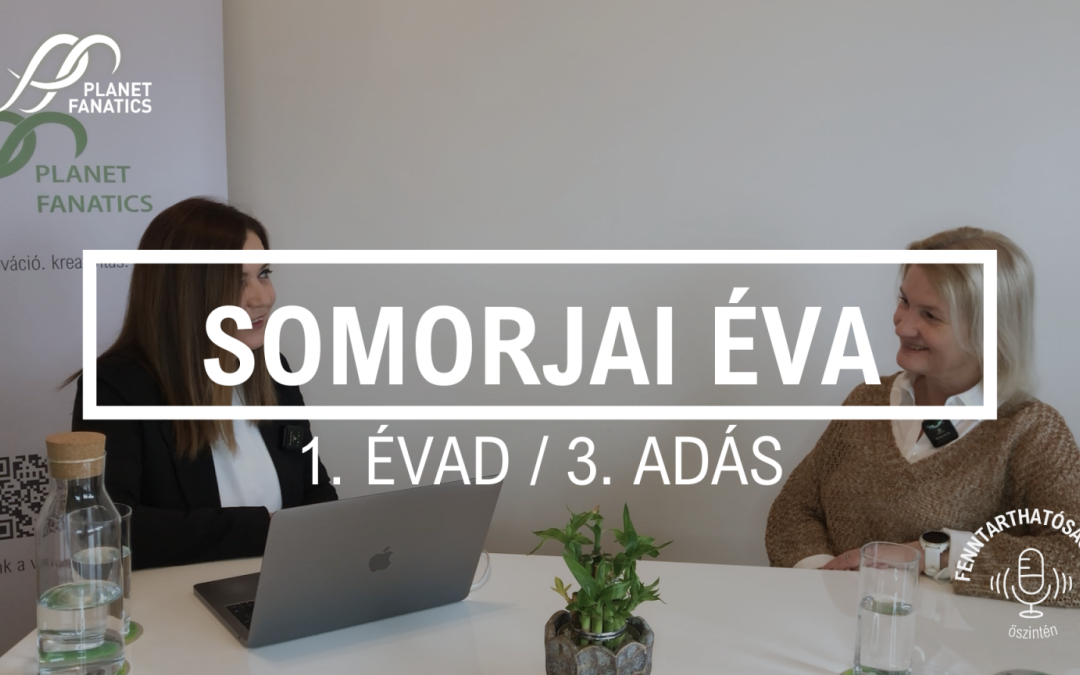
Is sustainability a fashionable hobby for top executives, or an authentic part of their personal brand? And how can corporate leadership remain human-centered in the age of artificial intelligence and mandatory quotas?
The guest of the third episode of the Honestly About Sustainability podcast was Éva Somorjai, former Chief HR Officer (Deputy CEO for HR) of Magyar Telekom and Deutsche Telekom, HR consultant, and founder of Patrónus Ház.
The podcast recording is available to watch on our YouTube channel and can be listened to on Spotify.
In this episode, the strategic role of HR in sustainability takes center stage. Éva Somorjai and Katalin Szomolányi discuss why German-style mandatory female quotas can be counterproductive, how the role of human “chemistry” can be preserved in AI-driven recruitment processes, and why authenticity — rather than following trends — is the most important currency of leadership.
An episode about moving beyond “salon sustainability,” the pitfalls of forced diversity, and the irreplaceable value of leading with heart and soul.
SZK
Sustainability is often seen merely as a trend. How do you see it — how genuine is this commitment in the corporate world?
ÉS
Honestly, in about 70–80 percent of cases, it is still viewed as a fashion or a hobby. Many people are proud of selectively collecting waste and feel that this alone settles the matter. But that is not necessarily a problem, because you have to start somewhere. The key moment is when a leader finds a unique cause — whether supporting sports or raising disease awareness — that becomes part of their personal brand. If it is not authentic and you are simply repeating a learned script, sooner or later it becomes transparent.
SZK
As an HR professional, can this kind of commitment or sustainability mindset be measured during a job interview?
ÉS
I wouldn’t put it among measurable factors. I would rather examine it as part of attitude. There’s a saying in HR that has stood the test of time: “we hire for professional competence (…) and we let people go because of attitude.” If we took attitude more seriously during the selection process, we would be far more successful. A good method is to spend the last fifteen minutes of the interview talking about who the person is outside of work and what brings them joy. You often learn much more from this than from professional questions.
SZK
At Deutsche Telekom’s European headquarters, you were responsible for 11 countries. Diversity and female quotas have been a topic there for quite some time. What were your experiences with the German system?
ÉS
In my opinion, one of the biggest mistakes of German legislation was introducing the minimum 30 percent female quota in top management. It often proved counterproductive: some people were labeled as being there only because of the quota, while other proud women did not want to be seen as “quota women,” so they chose to step back instead. The solution is not top-down enforcement but bottom-up support: enabling the reconciliation of family and career — for example through part-time work or childcare solutions — as is already common in many parts of Western Europe.
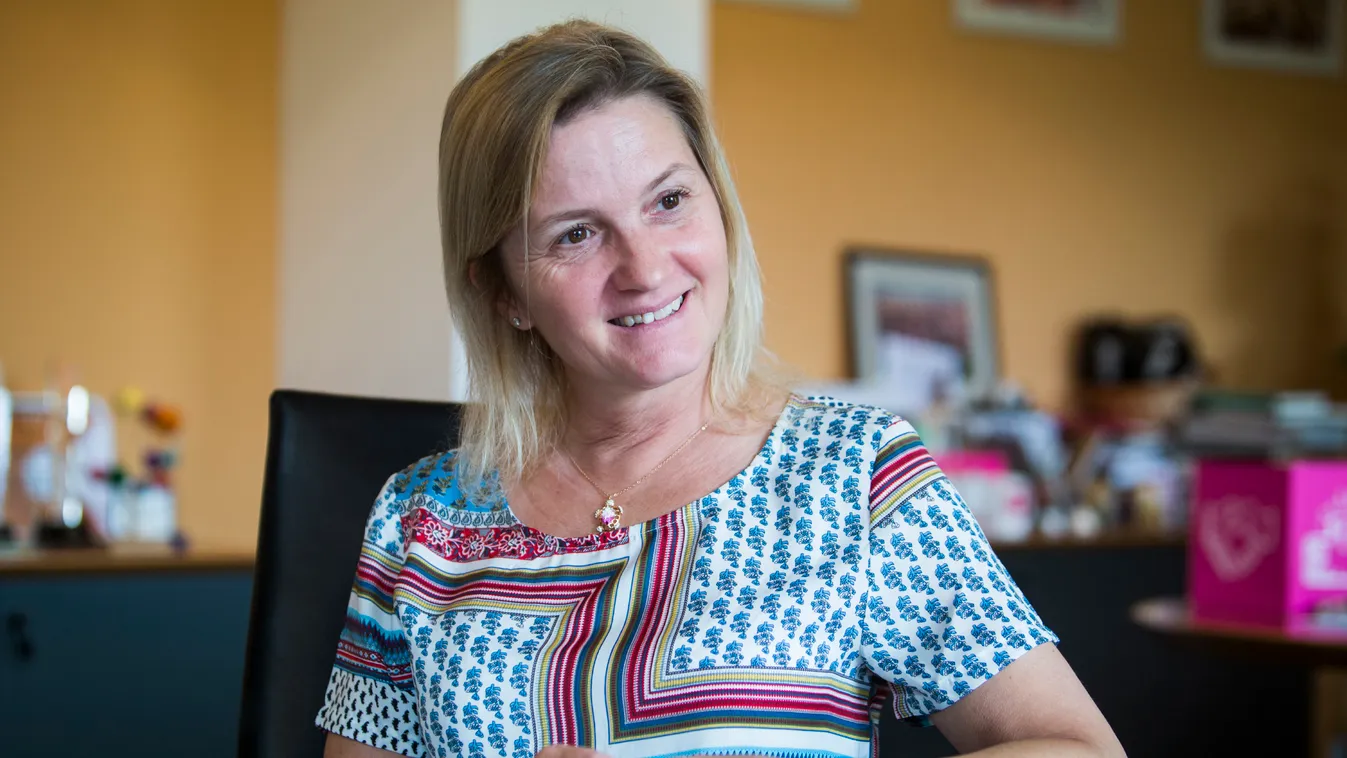
ÉVA SOMORJAI
Éva Somorjai began her career at the International Directorate of Magyar Hitelbank, then spent three years living in Melbourne, where she served as Administrative and Finance Manager at a real estate investment company. From 1996, she continued her professional career within Pepsi’s Hungarian organization, initially working in finance before being appointed HR Director of the Hungarian company in 2000.
She joined Magyar Telekom in 2001, where she worked for more than fifteen years. From 2007, she served as Chief HR Officer (Deputy CEO for Human Resources). In 2017, she was appointed Chief HR Officer at Deutsche Telekom’s European headquarters, where she was responsible for the full HR operations across 11 countries. At the same time, she founded Patrónus Ház, a residential home providing accommodation for 12 autistic residents.
She left Telekom at the end of 2022 and currently works as a consultant.
SZK
When talking about the workplace of the future, artificial intelligence is unavoidable. How much do you think AI will take over recruitment and selection?
ÉS
AI is incredibly good at analytics and analysis, but it will not replace the heart. The “chemistry,” intuition, and sense of alignment that emerge during personal meetings cannot yet be replicated by algorithms. It may replace monotonous tasks, but the human factor in recruitment and leadership will remain irreplaceable.
SZK
Global political trends and more conservative shifts often mean setbacks in terms of equal opportunities. What can a corporate leader do in such situations?
ÉS
Since political activity is — rightly — prohibited in most companies, the most authentic thing a leader can do is to consistently represent their own values, independent of trends and politics. If you truly believe in something and stand by it, you carry those values forward, even when the world seems to be moving in a different direction.
The Planet Fanatics’ Network Podcast
Welcome to our new series!
Sustainability, Honestly is the biweekly podcast of the Planet Fanatics’ Network. Our host, Katalin Szomolányi, sits down with renowned experts and decision‑makers to uncover the most pressing questions of our time.
What is the show about?
We don’t settle for surface‑level answers.
We look into what really drives markets and our planet—from global trends to shifting value systems and the technologies shaping our future.
Our aim is to provide an authentic picture of sustainability from both a business and a human perspective.
Where can you follow us?
Don’t miss the next episode!
Subscribe to our YouTube channel, follow us on Facebook and Spotify, and visit the Sustainable Headshot blog for background insights.
Join us on the journey toward the future!
If you missed it, you can access our previous episodes here: