
Author:
After nearly a year of back‑and‑forth negotiations, Omnibus I has finally reached the finish line: the European Parliament has just adopted the compromise on CSRD and CSDDD.
Simplified Sustainability Reporting and Due Diligence Rules for Businesses
Who is required to report under CSRD?
Only companies that:
- employ more than 1,000 people, and
- have an annual net turnover exceeding €450 million (approx. HUF 173 billion)
will fall under the updated EU sustainability reporting obligations.
➡️ Smaller companies with fewer than 1,000 employees are protected from being indirectly forced into reporting obligations by larger partners.
Who is obligated under CSDDD?
Only large companies that:
- employ more than 5,000 people, and
- have an annual net turnover exceeding €1.5 billion
will be subject to mandatory due diligence.
➡️ The due diligence obligations enter into force from July 2029.
EP Approval (16 December 2025)
On Tuesday (16 December 2025), the European Parliament approved the provisional agreement between MEPs and EU governments on the amended sustainability reporting and due diligence rules for companies.
The updated rules apply to fewer businesses, reduce several obligations, and aim to strengthen the EU’s competitiveness.
Simplified Sustainability Reporting
Only EU companies that:
- employ more than 1,000 employees, and
- generate net annual turnover above €450 million
must prepare sustainability reports.
The rules also apply to non‑EU companies with:
- more than €450 million turnover generated inside the EU,
- and their subsidiaries/branches generating more than €200 million in EU turnover.
Key simplifications:
- Sector‑specific reporting becomes voluntary
- Overall reporting requirements are significantly simplified
- Obligated companies may not transfer reporting obligations to smaller business partners
- SMEs (<1,000 employees) cannot be required to provide information beyond voluntary standards
To support compliance, the European Commission will launch a digital portal with templates and guidance on EU and national reporting requirements.
Due Diligence Obligations for Corporate Giants (5,000+ employees)
Fewer companies will need to conduct due diligence to identify and reduce negative social and environmental impacts.
Under the amended rules, the obligation applies only to:
- EU companies with more than 5,000 employees and €1.5 billion+ turnover, and
- non‑EU companies meeting the same EU turnover threshold.
These companies must conduct risk‑identification assessments across their value chain and may only request information from smaller partners (<5,000 employees) if the required details cannot be sourced elsewhere.
Preparing transition plans is no longer mandatory, though companies remain liable at national level for misapplication and can face fines of up to 3% of global net turnover.
The due diligence directive applies from 26 July 2029 for all affected companies.
Statement from the Legal Affairs Committee Rapporteur
Jörgen Warborn (EPP, Sweden):
“Parliament has listened to the concerns raised by Europe’s job creators. With broad majority support, today’s vote delivers historic cost reductions while keeping Europe on track to meet its sustainability targets. This is an important first step in the ongoing effort to simplify EU rules.”
Next Steps
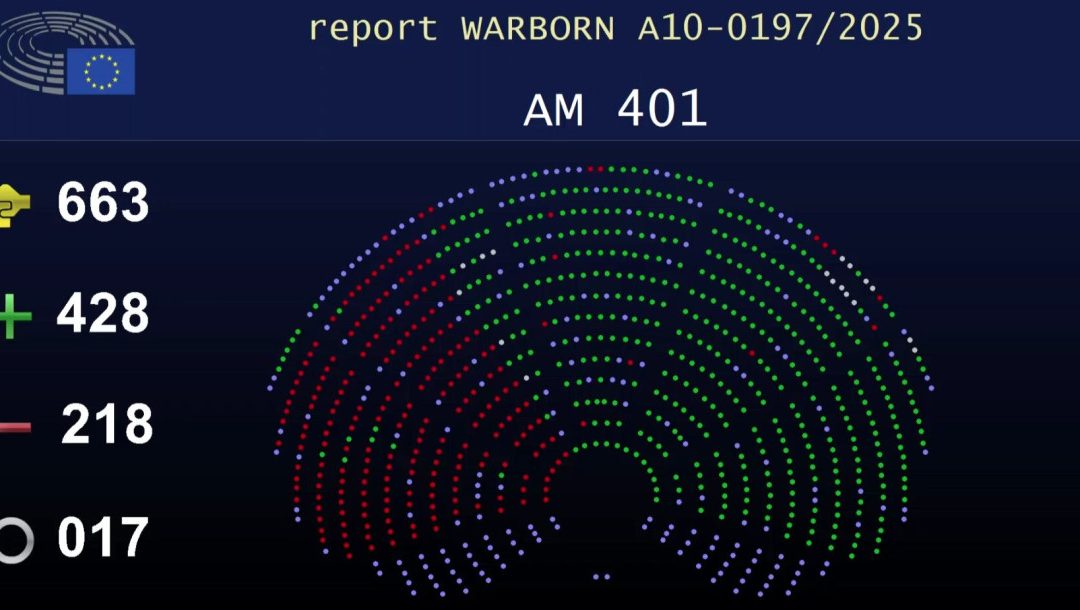
The proposal was adopted with:
- 428 votes in favour
- 218 against
- 17 abstentions
The final text must now be formally adopted by the Council.
The directive will enter into force on the 20th day following publication in the Official Journal of the EU.
Background
The updated sustainability rules form part of the European Commission’s Omnibus I simplification package, introduced in February 2025 to:
- reduce administrative burdens,
- make compliance easier for businesses,
- and strengthen EU competitiveness.
Following earlier delays to reporting and due diligence obligations, this proposal focuses on simplification and reduced administrative load.
Hungarian Regulatory Context
In Hungary, sustainability reporting (CSRD) is currently regulated by the:
- Accounting Act (Act C of 2000 on Accounting)
Due diligence obligations are regulated by the:
- ESG Act (Act CVIII of 2023 on sustainable finance and corporate responsibility)
At present, the two laws do not cover the same obligated company groups.
Under the Accounting Act, companies are required to report if, in the two previous consecutive financial years, at least two of the following thresholds were exceeded:
- Balance sheet total: HUF 10 billion
- Annual net turnover: HUF 20 billion
- Average number of employees: 250
Under the ESG Act, obligations apply to:
- Public‑interest entities exceeding:
- Balance sheet total HUF 10 billion,
- Net turnover HUF 20 billion, and/or
- 500 employees,
or
- Non‑public‑interest large companies whose primary activity falls under the TEÁOR sector list in Annex 1 and exceed:
- Net revenue HUF 90 billion,
- Average employees 500
➡️ Based on these differences, both the Accounting Act and the ESG Act are expected to be amended soon to align with EU simplification goals. We will report on the changes as soon as they are published.
Free 30‑Minute Consultation
You know you need to act — but not sure what exactly? We’re here to help.
Corporate sustainability is complex, and regulations change rapidly.
Many companies have just exited the obligated category, while others now face new expectations.
If you’re unsure whether CSRD applies to you, whether you must prepare an ESG report, or simply want clarity on what your organisation needs—this is your chance.
Book your free 30‑minute online consultation
During the call:
- we help you interpret the regulations relevant to your company,
- assess your specific needs,
- and outline clear next steps.
No commitment. No cost. Only clarity and informed decisions.
👉 BOOK NOW