

The Directive (EU) 2024/825 of the European Parliament and of the Council introduces stricter rules on environmental advertising and sustainability communication within the European Union.
From 27 September 2026, these requirements will become legally binding across the EU. The EmpCo Directive applies to companies of all sizes that communicate with consumers within the EU. Its aim is to prevent greenwashing and provide consumers with better protection against misleading environmental and sustainability claims.
For companies, this may result in far-reaching changes – from packaging and websites to marketing materials and public communications.
In this article, we focus on green claims, but the EmpCo Directive has a broader scope. In a future article, we will also look at the requirements introduced by the regulation regarding information on the durability and repairability of products. The new blacklisted practices, for example, include presenting a software update as necessary when it only adds functionality, advertising a non-repairable product as repairable, or encouraging consumers to replace consumables earlier than is technically necessary.
Who does the Directive apply to?
The EmpCo Directive applies to all companies, regardless of the number of employees or turnover, that communicate with consumers within the EU – whether in writing, verbally, at public events, digitally, or in print. This means that companies without a physical presence in the EU may also be affected if their communications are directed at customers living in an EU Member State.
There is currently no transition period planned. For companies, this means that claims made across all communication materials must be revised by the 27 September 2026 deadline.
What does the EmpCo Directive regulate?
Environmental and social claims (green claims)
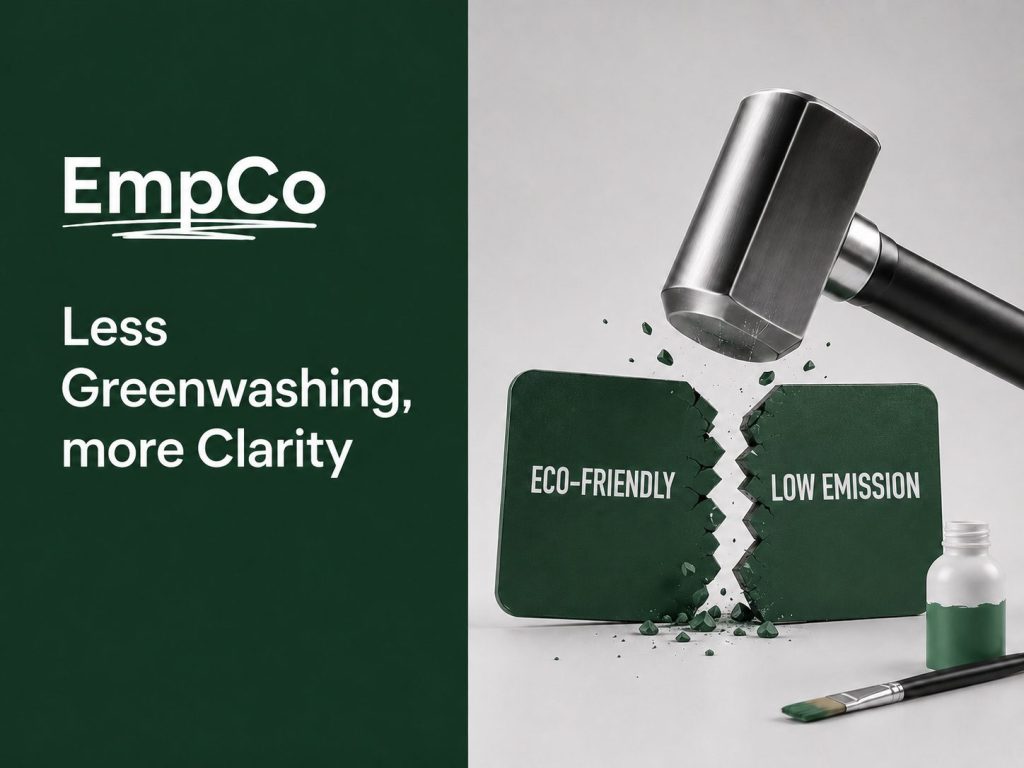
- General environmental claims: Non-specific environmental claims will be prohibited. Examples include terms such as “green,” “sustainable,” or “environmentally friendly.” In the future, such claims must be specific, substantiated, and verifiable.
- Forward-looking environmental claims: Such claims must be based on clear, publicly available, and verifiable targets, as well as a realistic implementation plan. The plan must also be supported by adequate funding and resources, and progress must be communicated transparently.
- Ambiguous claims: Misleading environmental claims will be prohibited, including presenting partial characteristics as an indication of overall performance, portraying standard industry practices as a unique selling point, or using characteristics that are unrelated to the product to present it in a positive light.
- Comparisons: Comparisons between products within the same product category will only be permitted if the methodology, data sources, and assumptions are transparent and objective.
Sustainability seals and labels
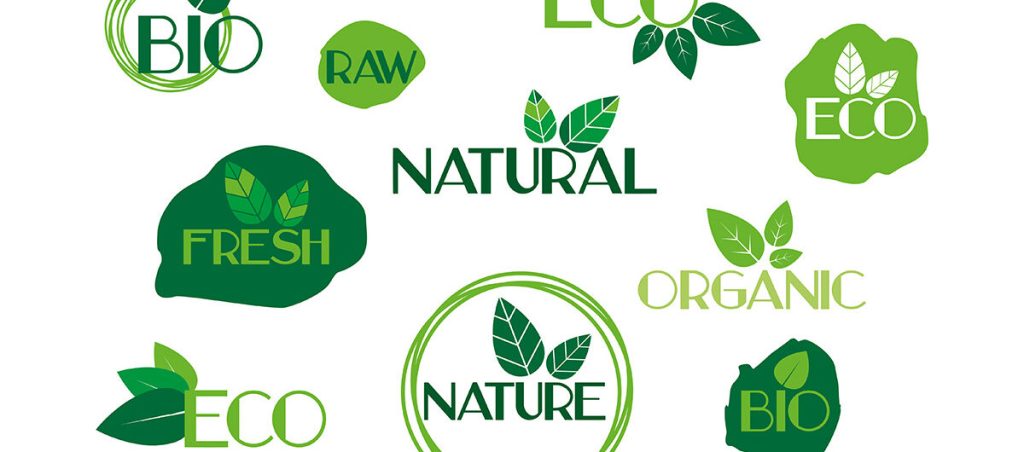
A sustainability seal is a voluntary public or private approval mark, quality label, or similar designation intended to highlight the environmental or social characteristics of a product, process, or business activity. Such seals may only be used if they have been awarded by a public authority or are based on a transparent, audited certification scheme. Company-owned labels or graphics that give the impression of an official label or seal will not be permitted.
Emissions-based financing for climate protection
The EU clearly emphasizes that corporate financing for climate protection remains both possible and desirable. However, the financing of climate protection projects must be communicated accurately, transparently, and in a verifiable manner. To this end, the following requirements must be met:
- An auditable accounting system for greenhouse gas emissions must be implemented and maintained.
- All data must be verifiable, traceable, and documented in such a way that the availability of appropriate evidence can be guaranteed at all times.
- Only accurate facts may be communicated in relation to environmental claims.
- Corporate-level and product-level emissions accounting must be clearly distinguished in communications.
- If an assessment relates only to one aspect of a product, such as its packaging, it must not be presented as applying to the product as a whole. The same applies to companies if only a specific department or part of the company has been assessed.
- Additional information on the calculation methodology, system boundaries, emission levels, and the projects actually financed must be made available, for example via a website.
Neutrality claims such as “climate-neutral/carbon-neutral,” “100% offset,” or “reduced carbon footprint” are not permitted if they are based on offsetting emissions outside the value chain. Such claims are only permitted if they are based on the actual impacts on the life cycle of the product in question.
What happens if the Directive is violated?
Violations may result in penalties, such as fines, the forfeiture of profits, temporary exclusion from public procurement procedures, or being denied access to public funds.
What do companies need to do to ensure that their communications comply with the EmpCo requirements?
Under the EmpCo Directive, companies will in future need to provide clear evidence supporting their environmental and sustainability claims, formulate them accurately, and communicate them transparently. Claims such as “climate-friendly” or “carbon-neutral” qualify as environmental claims and are therefore subject to strict requirements regarding substantiation and clarity.
Recommended actions:
- Identify environmental and sustainability claims and link them to reliable supporting evidence.
- Make targets and measures transparent and document them in a publicly accessible manner.
- Have forward-looking claims independently verified by third parties.
- Critically review labels and seals and use only approved certifications.
What should be avoided:
- Climate-neutrality or offsetting claims that are not based on actual reductions within the company’s own value chain.
- Ambiguous statements that apply only to certain aspects but are presented as general claims.
- Vague or general statements such as “sustainable” or “environmentally friendly” without specific supporting evidence.
- Comparisons without a transparent methodology or verifiable database.
The new provisions can be found in the Hungarian Unfair Commercial Practices Act (Fttv.), as applicable from 27 September 2026. It is important to note that these stricter requirements apply not only to certain product groups or industries, but across the board.
The Hungarian Competition Authority (GVH) recommends that companies that have not yet done so consult legal advisors with expertise in this area in order to avoid potential violations.
The GVH has summarized its guidance for businesses in its Green Marketing Guidelines, which it plans to update following the entry into force and practical application of the EmpCo Directive, based on its latest enforcement experience. The competition authority also helps consumers navigate green claims through its Think It Through Calmly! campaign.