
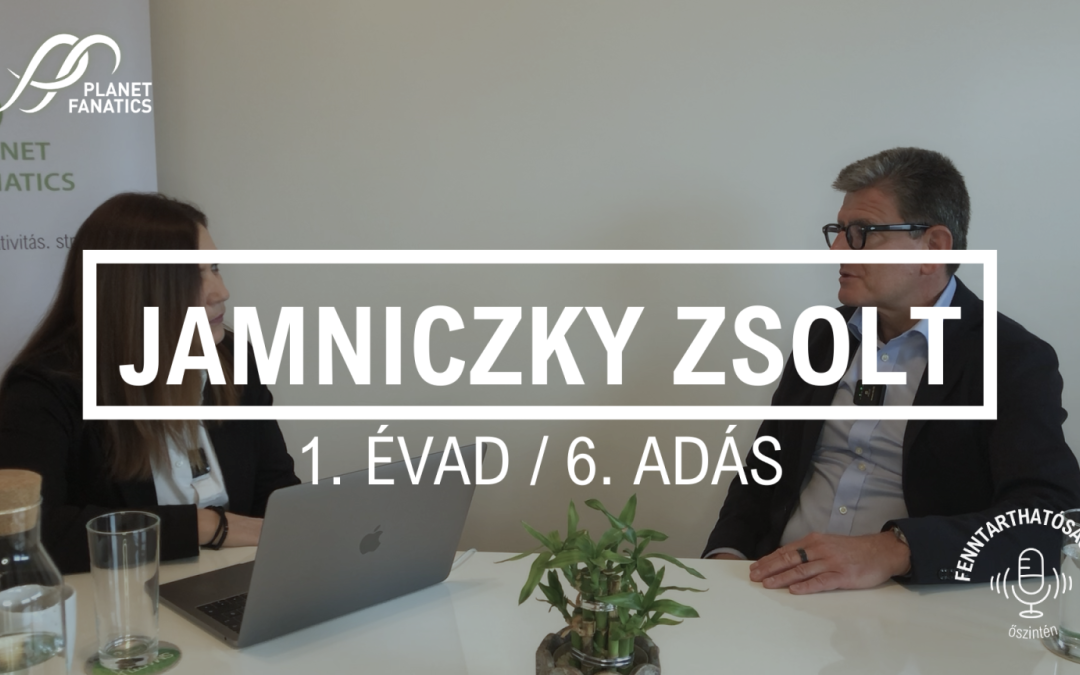
The sixth episode of the Sustainability Honestly podcast once again features Zsolt Jamniczky, Deputy CEO of the E.ON Hungária Group.
The podcast recording is available on our YouTube channel and can be listened to on Spotify.
In this episode, we explored artificial intelligence as an “energy monster” and the global state of green innovation in the shadow of the technological boom. Zsolt Jamniczky and Katalin Szomolányi discussed the growing social resistance to the construction of new data centers due to their massive water and electricity consumption, how Asia has overtaken European markets with electric vehicles that can be charged in just 4 minutes and with gigantic solar power plants, and what obstacles the wind and solar energy sectors are currently facing in Hungary, with particular regard to new agrivoltaic investments.
An episode about the tensions between digitalization and climate neutrality, the reasons behind Europe’s lag in green innovation, and why decades-long, cross-sector corporate partnerships provide the most reliable foundation for the energy transition.
SZK
Let’s start with the growing energy and water demand of artificial intelligence. How prepared is the energy sector today to meet this suddenly surging, exponential demand?
JZS
The short answer is: not at all. There is no structured response to this challenge, and due to the ever-increasing energy demand, social acceptance is also becoming a serious obstacle. For example, a German city has already banned the construction of a data center because of environmental concerns and the required expansion of the energy grid.
SZK
By 2030, the water demand of data centers could reach 1.2 billion cubic meters, roughly equivalent to the annual consumption of a city with 7.5 million inhabitants. Meanwhile, Elon Musk has even suggested that, due to the enormous cooling needs, these energy-hungry centers should be moved into space. Is this feasible, or just a dream?
JZS
As for Musk’s idea, he is known for thinking big, but for now this belongs more to the realm of science fiction. Even if we could move them into space for better cooling, transmitting such massive amounts of data back to Earth would be an incredibly complex and almost unsolvable challenge. You simply cannot broadcast that volume of data via Wi-Fi.
SZK
Let’s turn to China. What green innovation and mobility developments did you see there that Europe could learn from?
JZS
The most important difference is consistent planning and strict execution. In Shenzhen, for example—unlike the suffocating smog of the past—almost every vehicle is now electric, from scooters to buses, and the air is clean again. They have built charging hubs where 150 cars can be charged simultaneously with the help of robots, and there are already vehicles that can be charged with enough energy for 100 kilometers in just 4 minutes. In addition, they are building gigantic 1 GW pumped storage facilities and 40 GW offshore solar power plants. Europe can only dream of such technologies and capacities for now, so it would be wise to abandon the belief that they are copying us. What they have already successfully achieved could often be replicated more easily and cheaply than developing everything from scratch.
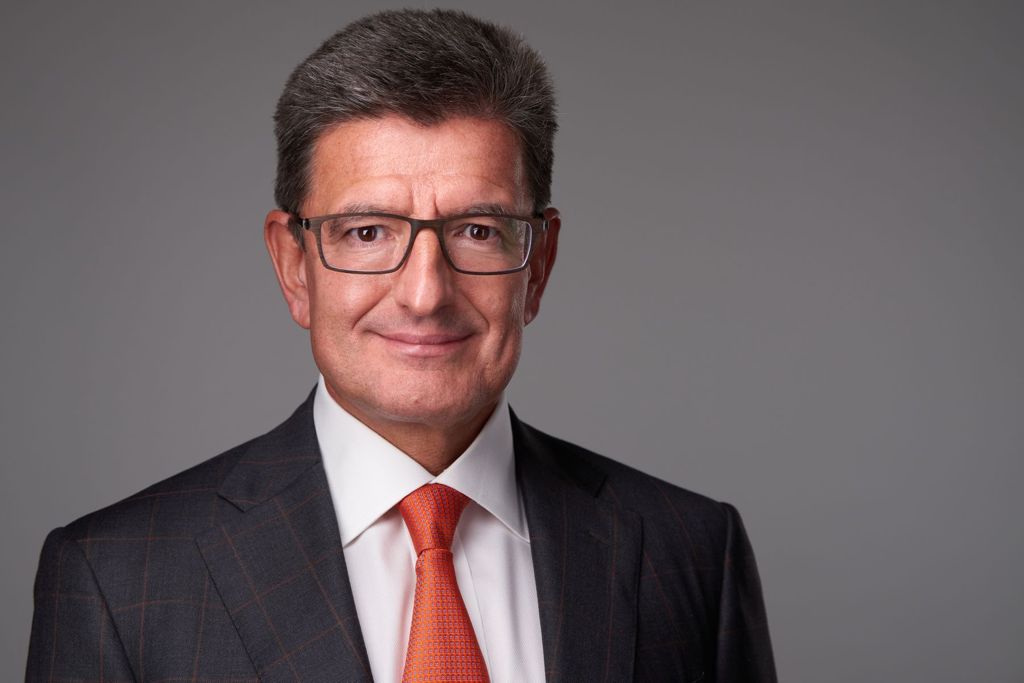
ZSOLT JAMNICZKY
He began his career at the Foreign Affairs Office of the Hungarian Parliament, then from 1996 held leadership positions for more than a decade in Budapest, Brussels, and Zagreb.
He joined E.ON Hungária in 2007 and has been Deputy CEO since 2010. His responsibilities include energy markets, sales, customer solutions, and brand management.
He is actively involved in professional organizations related to energy and sustainability, serving on the boards of Eurelectric and the Business Council for Sustainable Development in Hungary.
He has played a key role in advancing e-mobility, developing charging networks, and implementing the Szolnok Smart City Energy Model.
His work has been recognized with the Knight’s Cross of the Hungarian Order of Merit and the “Manager of the Year for an Environmentally Conscious Economy” award.
SZK
Let’s return to Hungary. We are doing well in solar energy utilization, but why are agrivoltaic systems—combining agriculture and energy production—spreading so slowly?
JZS
There are several reasons. First, regulatory anomalies make investments difficult; administratively, it is currently hard to register the dual use of land. Second, construction costs are much higher because the panels must be installed at a greater height, requiring more robust and expensive structures. This is also necessary due to extreme weather; last July’s 160 km/h windstorm in Debrecen caused serious damage even to conventional ground-mounted power plants. Third, 80–90% of these projects are financed by banks, which still need to learn how to price the new types of risks associated with agrivoltaic technology.
SZK
You previously stated that green hydrogen is currently not cost-effective. Where do we stand today, and when might this change?
JZS
I stand by my earlier view: it may become broadly viable in the second half of the 2030s. Right now, the numbers simply don’t add up. Electrolysis is extremely energy-intensive, the equipment is expensive, and hydrogen transport is also highly complex. Only so-called “onsite” or “near-site” solutions seem rational, where production and use occur in the same location, avoiding transport costs. Currently, Japan and Australia are taking this more seriously, where energy constraints and economic conditions justify it. But as I often say about expensive innovations: “believing is not enough.”
SZK
You mentioned that individual commitments are not always sufficient. What good practices and partnerships do you see in the corporate sector where industries collaborate?
JZS
The real breakthrough comes from long-term, cross-sector collaborations. A great example is our partnership with BMW. In Germany, we recently launched a joint project where E.ON manages electricity generated from bidirectional smart charging—meaning surplus energy fed back into the grid from vehicle batteries. In Hungary, we are building a 43 MW solar power plant at their Debrecen factory, on the ground, walls, and rooftops. What makes this cooperation special is that it is a 30-year partnership, where we invest in and operate the system. This completely removes the energy and maintenance burden from our partner, which requires a high level of mutual trust.
The full conversation is available to watch on our YouTube channel and can be listened to on Spotify.
In two weeks, our guest will be Katalin Sipos, Director of WWF Hungary, with whom we will discuss the state of biodiversity and its financial value.
The Planet Fanatics’ Network Podcast
Welcome to our new series!
Sustainability, Honestly is the biweekly podcast of the Planet Fanatics’ Network. Our host, Katalin Szomolányi, sits down with renowned experts and decision‑makers to uncover the most pressing questions of our time.
What is the show about?
We don’t settle for surface‑level answers.
We look into what really drives markets and our planet—from global trends to shifting value systems and the technologies shaping our future.
Our aim is to provide an authentic picture of sustainability from both a business and a human perspective.
Where can you follow us?
Don’t miss the next episode!
Subscribe to our YouTube channel, follow us on Facebook and Spotify, and visit the Sustainable Headshot blog for background insights.
Join us on the journey toward the future!
If you missed it, you can access our previous episodes here:
Sustainability, Honestly with Péter Küllői (Episode 1)
Sustainability, Honestly with Péter Küllői (Episode 2)
Sustainability, Honestly with Éva Somorjai (Episode 3)