
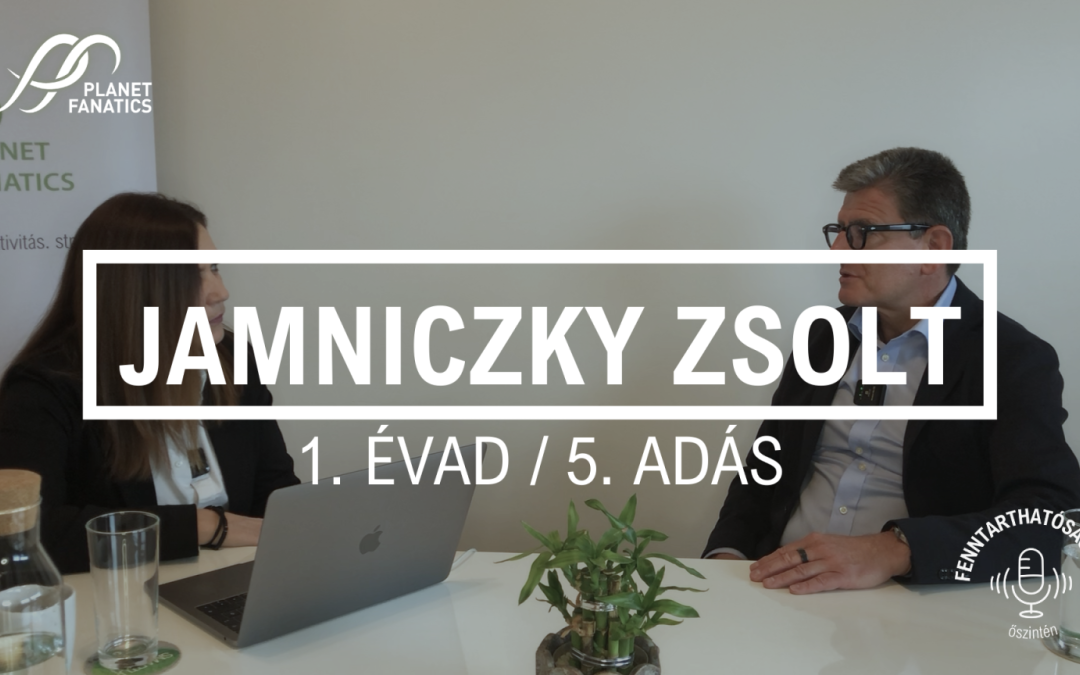
The fifth episode of the Honestly About Sustainability podcast features Zsolt Jamniczky, Deputy CEO of the E.ON Hungária Group.
The podcast recording is available to watch on our YouTube channel and can be listened to on Spotify.
In this episode, we explored the current and future state of energy, focusing on the energy transition, grid development needs, and European competitiveness. Zsolt Jamniczky and Katalin Szomolányi discuss why Hungary is considered a global leader in solar energy utilization—surpassing even Chile and Greece—why seasonal electricity storage remains an unsolved challenge during winter periods, and how multi-year PPA agreements integrating green energy (such as Green Cloud) can provide long-term stability for companies, compared to the more familiar but riskier short-term fixed-price contracts.
An episode about the global transformations reshaping energy markets, the pitfalls of Europe’s green transition, and why the cheapest and greenest energy is always the energy that is not consumed.
SZK
Over the past five to ten years, enormous changes have taken place globally and in Hungary as well. What has characterized the domestic energy market most in recent years, and what major milestones have we achieved?
JZS
We have gone through tremendous changes, most notably an incredible solar boom over the past five years. Today, Hungary has become a global leader in solar energy utilization—surpassing even Chile and Greece. Domestic solar power capacity now exceeds 8 gigawatts, which is more than our daily consumption. During sunny hours, we can almost fully supply ourselves, and this total capacity already surpasses that of Paks Nuclear Power Plant.
Another major milestone was managing the price explosion in 2022 and the market reshuffling caused by the Russia-Ukraine War, which led, for example, to the emergence of liquefied natural gas (LNG) in Europe. In addition, electrification and electromobility have accelerated dramatically. Today, there are technologies that can charge enough electricity into a car for 100 kilometers in just four to five minutes.
SZK
There is often a demand for domestic energy independence. During a cold, dark January period—when solar production drops to a fraction—electricity imports can rise to as much as 40%. How realistic is it for Hungary to ever become independent from electricity imports?
JZS
It is not realistic at all—because, as I usually say, not even “all the money in the world” would be enough. The biggest issue is that electricity cannot currently be stored seasonally at this scale—from summer to winter. Hungary does not have the geographical conditions—such as abundant hydropower like the Norwegians—that would allow flexible regulation of electricity production.
If extra energy is needed, gas remains the solution here. But it would not be logical to build and maintain massive gas power plants just to cover extreme cold and dark January weeks that occur perhaps once every seven years. Instead, a much more rational solution is to have well-connected European systems, allowing energy to flow freely between countries.
SZK
The energy sector is responsible for 38% of global carbon dioxide emissions. How can strict European climate targets be maintained while keeping energy affordable and ensuring companies do not completely lose their competitiveness on the global market?
JZS
In Europe, affordability and industrial competitiveness are currently the biggest challenges. Compared to the United States, energy prices are about twice as high, and compared to China, roughly three times higher. I am convinced that emission reduction and stable energy supply cannot be achieved without nuclear energy. Baseload power is essential—it must complement weather-dependent renewables.
Europe will likely be able to meet its 55% emission reduction target by 2030, although the current stagnation of the European economy unfortunately contributes significantly to this. The real challenge will be achieving the 90% reduction target by 2040. We must find a way to regain global competitiveness while enabling economic growth to resume.
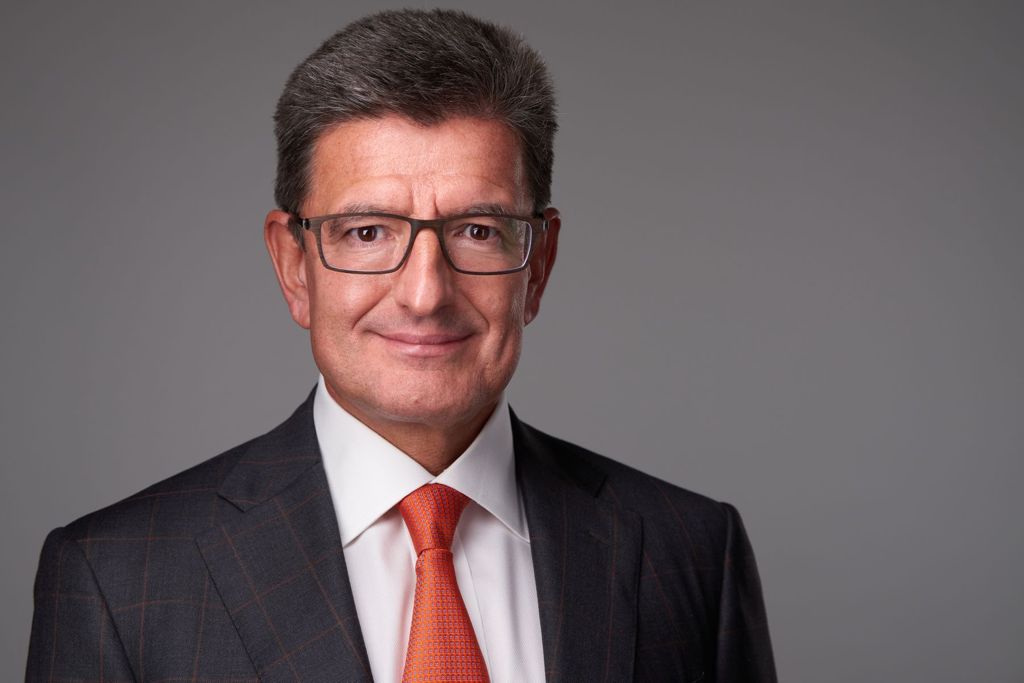
ZSOLT JAMNICZKY
He began his career at the Foreign Relations Office of the Hungarian National Assembly, and from 1996 spent more than ten years in leadership positions in Budapest, Brussels, and Zagreb.
He joined E.ON Hungária in 2007 and has been Deputy CEO since 2010. His responsibilities include energy markets, sales, customer solutions, and the management of the E.ON Hungária brand.
He is actively involved in energy and sustainability professional organizations, serving on the boards of Eurelectric and the Hungarian Business Council for Sustainable Development.
He has driven initiatives in e-mobility development, the deployment of EV charging networks, and the implementation of the Szolnok Intelligent Urban Energy Model.
His work has been recognized with the Hungarian Order of Merit, Knight’s Cross and the “Manager of the Year for an Environmentally Conscious Economy” award from the National Association of Managers.