
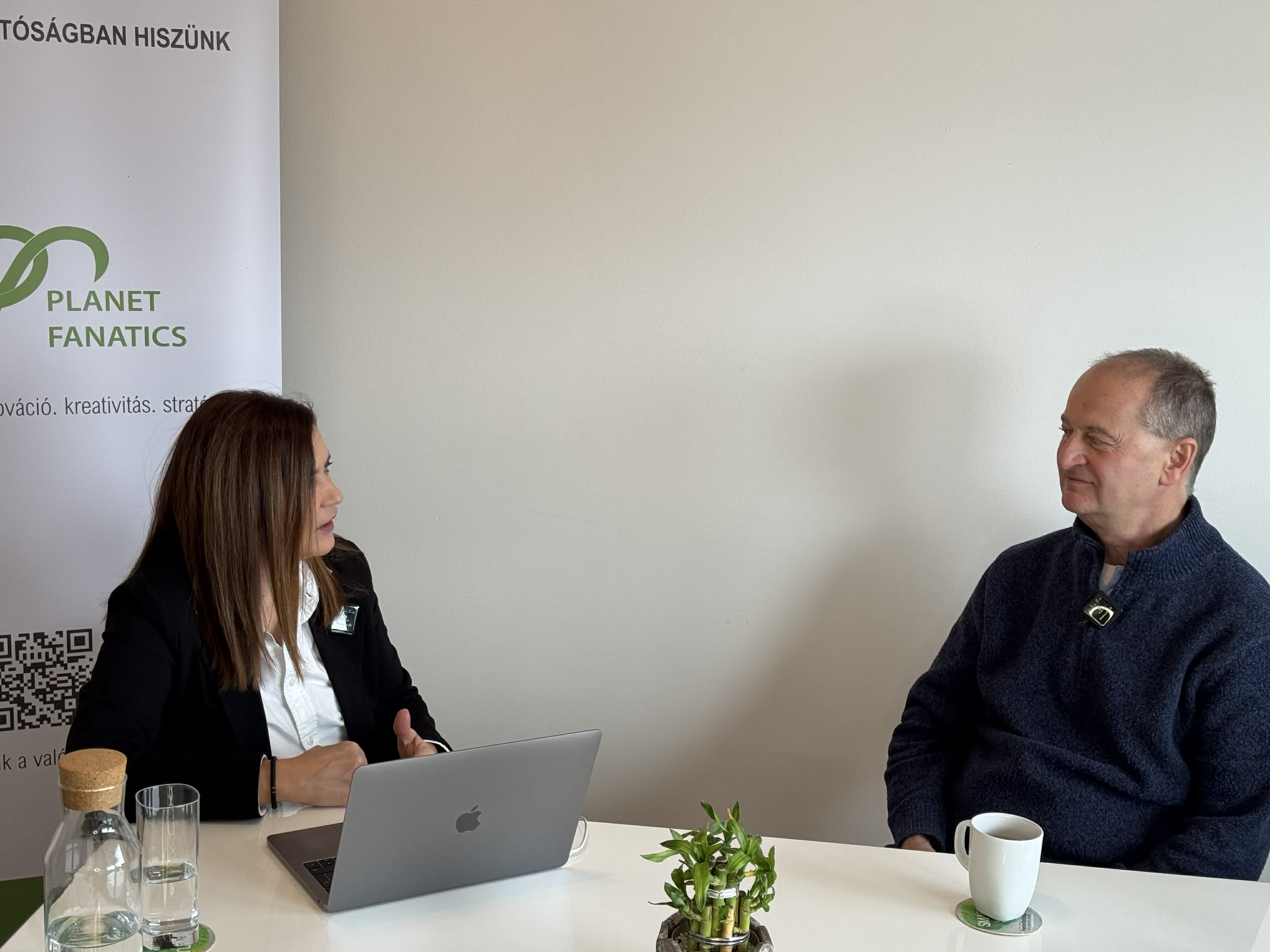
Why would someone walk away from the top of London’s banking world at age 40 to devote their life to meaningful causes? And how does that person see the world today, when multiple crises are pressing on our everyday lives? The very first episode of Sustainability, Honestly features former banker Péter Küllői, founder of the Smiles Foundation and former leader of Bátor Tábor.
Two weeks ago, in the first episode of the Honestly About Sustainability podcast, Katalin Szomolányi and Péter Küllői took a deep dive into global trends: they discussed why it’s dangerous that artificial intelligence has no “traffic rules,” why most of our problems stem from a moral crisis, and who the winners of 2026 will be. Péter not only offered a diagnosis but also a solution: he shared three key areas of knowledge that, in his view, we will need most to survive and thrive by 2030. The podcast recording is available to watch on our YouTube channel and listen to on Spotify. Today, the second episode is being released, and its key insights are summarized below.
In the second episode of the Honestly About Sustainability podcast, the corporate and leadership challenges of the 2030s were explored. Péter Küllői and Katalin Szomolányi discussed why traditional strategy-making is dead, how the “pendulum effect” influences sustainability, and why cultural intelligence will be the most important tool for the leaders of the future.
An episode about continuous iteration replacing traditional strategic planning, the “pendulum effect” of stakeholder capitalism, and the rising value of leaders with cultural intelligence.
SZK
The key to continuous adaptation is renewal. As a leader and as a person, what advice would you give on how to approach this?
KP
The most important factor is who you surround yourself with. If everyone around you just nods along, you won’t make progress. You need people who challenge you, put you in front of difficult questions, and see things from a different perspective. In addition, a “helicopter view” is essential: a leader must see the system from above, rather than trying to piece the house together brick by brick.
SZK
You’ve mentioned several times the importance of “adult-to-adult” relationships instead of hierarchical ones. Are people ready to be treated as adults?
KP
The key is honesty. The moment what I say turns out to be untrue, I lose credibility. You shouldn’t paint a rosier picture than reality or hide the struggles; you need to present an honest picture from the start. Experience shows that where people are treated this way, they rise to the occasion.
SZK
You mentioned uncertainty. Today, in 2026, what does strategy mean? Are we still planning 5–10 years ahead?
KP
The era of fixed, long-term strategic planning is over. Today, it’s more about guiding principles — “stakes” between which we continuously iterate. This is the MVP (Minimum Viable Product) approach known from the startup world: you start with a good enough solution and then adjust based on feedback. If a path turns out to be a dead end, you must be able to pivot quickly.
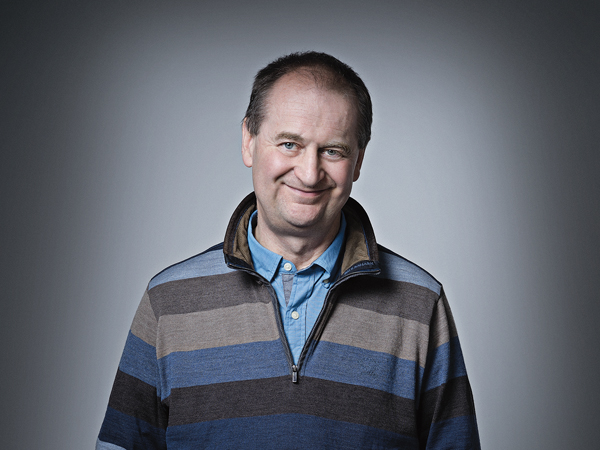
Péter Küllői
A former banker who turned his back on the world of finance at age 40 to devote his life to meaningful causes.
In the 1990s he worked as a director at an international investment bank, eventually becoming head of its London office. Later he decided to end his managerial career, return to Hungary, and use his energy to support those in need—especially children.
He founded the Smiles Foundation in 1996 and served as chairman of the board of Bátor Tábor Foundation from 2002 to 2023.
He is a dedicated supporter of the Liszt Academy of Music, and co‑chair of the Tate’s Central European Acquisitions Committee.
A founder or investor in more than 30 startups, he supports only ventures that aim to make the world a better place.
The core of his philosophy:
letting go—to make room for new beginnings—
and courage—to choose unconventional paths when necessary.
SZK
How do you see the state of “stakeholder capitalism”? It sometimes feels like sustainability and social goals take a back seat to short-term profits.
KP
It’s like a pendulum. Sometimes we swing too far — for example, with certain communications around “woke” movements or environmental issues — which triggers a correction, a swing back. But in the long run, economic realities still push us in that direction. Just think about the fact that insurers no longer cover some coastal homes due to climate risks, or that renewable energy is often cheaper. The direction is right; it’s just a question of speed.
SZK
What skills will a successful leader need in 2030?
KP
In the past, people were hired for IQ and fired for a lack of EQ, but today cultural intelligence is also essential. A leader must be capable of synthesis and of bringing in people who are better than them in a given field. In practice, the 50-50 principle wins: half logic, half heart, so decisions are not only rational but also authentic and lovable.
SZK
Finally, what is the true measure in a leader’s life?
KP
I would quote Professor Clayton Christensen: true success cannot be measured by shareholder profit. The question is, “How many people’s lives do you change for the better?” — in other words, how many lives have you made better? That is the real responsibility of a leader.
The full conversation is available to watch on our YouTube channel and listen to on Spotify.
The Planet Fanatics’ Network Podcast
Welcome to our new series!
Sustainability, Honestly is the biweekly podcast of the Planet Fanatics’ Network. Our host, Katalin Szomolányi, sits down with renowned experts and decision‑makers to uncover the most pressing questions of our time.
What is the show about?
We don’t settle for surface‑level answers.
We look into what really drives markets and our planet—from global trends to shifting value systems and the technologies shaping our future.
Our aim is to provide an authentic picture of sustainability from both a business and a human perspective.
Where can you follow us?
Don’t miss the next episode!
Subscribe to our YouTube channel, follow us on Facebook and Spotify, and visit the Sustainable Headshot blog for background insights.
Join us on the journey toward the future!