Author:
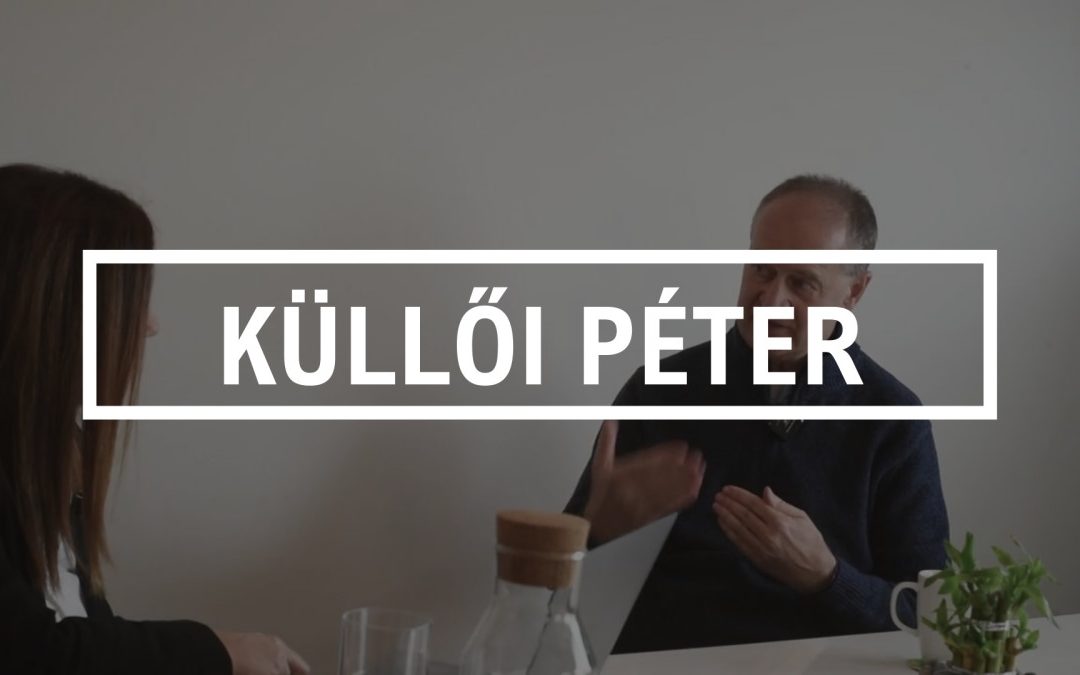
Why would someone walk away from the top of London’s banking world at age 40 to devote their life to meaningful causes? And how does that person see the world today, when multiple crises are pressing on our everyday lives? The very first episode of Sustainability, Honestly features former banker Péter Küllői, founder of the Smiles Foundation and former leader of Bátor Tábor.
It feels like yesterday that we asked Péter about crises—back in February 2020, before the pandemic broke out in Hungary, before the lockdowns, and before the slow process of reopening began. You can read that interview here.
What has happened in the six years since?
We explored exactly this in the first episode of our new podcast series, Sustainability, Honestly. The episode is available on our YouTube channel, on Spotify, and the key takeaways are summarized below.
During the conversation, Katalin Szomolányi and Péter dig deep into global trends:
why it’s dangerous that artificial intelligence has no “traffic rules,”
why a moral crisis lies at the root of most of today’s problems,
and who the potential winners of 2026 will be.
Péter doesn’t just diagnose—he offers solutions too, sharing the three core skills he believes we will need most in order to survive and thrive by 2030.
This episode is about letting go, about courage, and about the necessity of building “adult‑adult” societies.
SZK
In 2020, you described the crisis as having three layers: economic, ecological, and moral.
If the situation was complex in 2020, then what is it now?
KP
It’s just as complex—if not more. And one of the root causes is the moral crisis: values have disappeared, or mostly disappeared, because the supremacy of money and power is not a value system.
It leads to answers shaped by short‑term thinking and quick profit. Meanwhile, a complete global realignment is underway.
SZK
Can we add technology as a fourth layer? New technologies are emerging rapidly.
KP
Yes. And it’s crucial that these technologies have a code of conduct, a framework.
If you look at the nuclear industry or aviation, they have clear rules, they follow them, and major disasters are rare. Wherever we board a plane, the rules are the same.
But new technologies—like AI—do not have such a framework. Silicon Valley believes in the “winner takes all” model of the online world. And since policymakers have adopted the mindset that AI will be dominated either by the U.S. or China, no global agreement will emerge.
I am convinced, however, that rules will eventually develop—if only after human catastrophes.
SZK
Are we climbing out of the economic crisis, or sinking deeper since 2020?
KP
We’re sinking deeper in the sense that debt levels are rising, and we’re living at the expense of the next generation.
Where this leads depends on whether AI can generate enough economic surplus to genuinely improve living standards.
To me, AI is both a bubble and a real transformational force—just like the internet once was.
SZK
And the ecological crisis?
KP
We haven’t started moving upward. Things are happening, yes, but not enough to stop us from going deeper. Again, the question is: how many solutions can technology really provide?
SZK
I’m not a big believer in the idea—especially common in the U.S.—that technology will solve everything.
KP
We can’t expect technology alone to solve it, but it will certainly play a role.
SZK
How do you see Europe’s position in this new world order?
KP
Much of Europe stands for respect for the individual and the importance of the rule of law. Long term, I don’t believe any other model is sustainable.
But economically, especially when it comes to risk‑taking, Europe lags far behind.
Now, however, Europe has received a push. The question has always been whether Europe is on the menu or at the table.
Right now, it has an opportunity to pull itself together.
Péter Küllői
A former banker who turned his back on the world of finance at age 40 to devote his life to meaningful causes.
In the 1990s he worked as a director at an international investment bank, eventually becoming head of its London office. Later he decided to end his managerial career, return to Hungary, and use his energy to support those in need—especially children.
He founded the Smiles Foundation in 1996 and served as chairman of the board of Bátor Tábor Foundation from 2002 to 2023.
He is a dedicated supporter of the Liszt Academy of Music, and co‑chair of the Tate’s Central European Acquisitions Committee.
A founder or investor in more than 30 startups, he supports only ventures that aim to make the world a better place.
The core of his philosophy:
letting go—to make room for new beginnings—
and courage—to choose unconventional paths when necessary.
SZK
In 2020, we talked about the “pumped economy.”
Is the pumping still going on?
KP
It is, but economic problems are increasing. The gap is widening too much: creating a type of growth that benefits a small group while the majority becomes worse off.
For this system to function, you need belief—belief in growth, belief in financial sustainability.
That belief is now breaking.
SZK
How can we turn this anxiety into hope? What do you advise for the future?
KP
I have three daughters, and I told them this:
I believe there are three essential skills in this new world:
- The ability to struggle and, at times, to suffer.
- The ability to live life well, even while you struggle and suffer.
- Curiosity about constant change and the ability to learn from mistakes.
If you have these three, you’ll be okay—even in uncertainty.
SZK
What should we prepare for in 2026?
KP
It will be a very intense year. AI is now spreading horizontally, and it will shake everyone’s lives.
And due to geopolitical tensions, the likelihood of “eye‑opening” disasters is increasing.
Reality will confront us: the idea that politicians will fix everything for us is an illusion.
SZK
And if we look ahead to 2030?
KP
The AI‑based world will require lots of energy, hardware, and mineral resources.
The U.S. is highly focused, and China is preparing systematically.
I hope that by 2030, we’ll also see European champions who come out strong.
For that, Europe must understand this: individual countries are just “rounding errors”—only together do we have weight.
SZK
Who will be the winners of the future?
KP
The adults.
Those who can behave like adults in times of change.
At the corporate level: organisations that dismantle hierarchy—like Netflix with its “no rules” culture.
Today, companies need to be cool, lovable, and responsible to attract the best talent.
Anyone thinking long term must move in this direction.
The full conversation is available on our YouTube channel and on Spotify.
Coming Up Next
In two weeks, Péter Küllői returns for another episode, where we’ll discuss the role of companies and leaders in light of global trends.
The Planet Fanatics’ Network Podcast
Welcome to our new series!
Sustainability, Honestly is the biweekly podcast of the Planet Fanatics’ Network. Our host, Katalin Szomolányi, sits down with renowned experts and decision‑makers to uncover the most pressing questions of our time.
What is the show about?
We don’t settle for surface‑level answers.
We look into what really drives markets and our planet—from global trends to shifting value systems and the technologies shaping our future.
Our aim is to provide an authentic picture of sustainability from both a business and a human perspective.
Where can you follow us?
Don’t miss the next episode!
Subscribe to our YouTube channel, follow us on Facebook and Spotify, and visit the Sustainable Headshot blog for background insights.
Join us on the journey toward the future!