
Author: Katalin Szomolányi
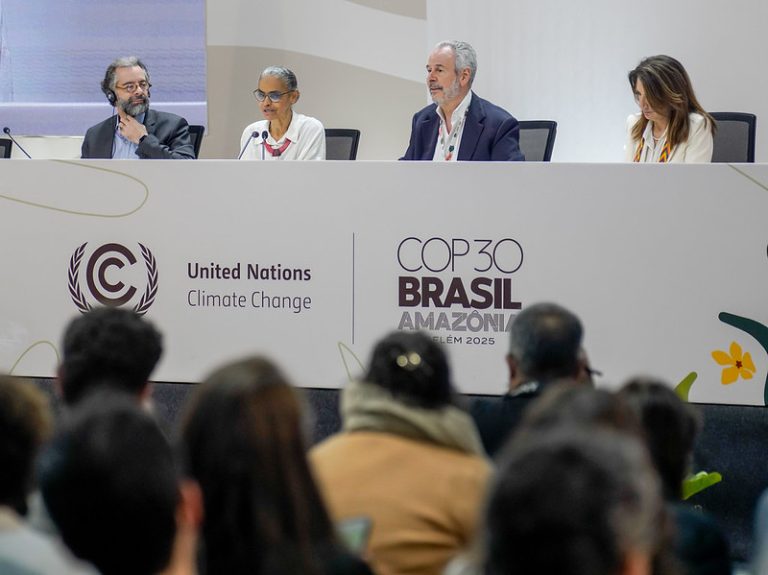
With a one-day delay, but ultimately with an agreement, the UN climate conference in Belém, Brazil, has come to an end.
The COP30 summit concluded with a final text that contains no roadmap for the gradual phase-out of fossil fuels, prompting criticism that labeled the result an “empty deal” and a “moral failure.” Participating countries whose economies depend heavily on fossil fuel production openly opposed objectives or roadmaps aimed at phasing out fossil fuels.
One day before the end of COP30, the EU threatened not to support the final text, which required consensus approval from nearly 200 countries. In the end, the EU gave in but acknowledged that the text was not ambitious enough.
Results based on the COP30 press release
Although the package adopted as the Mutirão Decision showed that countries can still unite for the climate despite the absence of the United States and global challenges, the text, lacking specifics, does not ensure that this will be done with sufficient speed and efficiency.
195 parties adopted the Belém Package on the afternoon of November 22, 2025, which, despite the circumstances, demonstrates determination rather than surrender to turn urgency into unity, and unity into action in addressing climate change. The 29 consensus-approved resolutions reached agreements on topics such as just transition, adaptation finance, trade, gender equality and technology, a renewal of collective commitment to accelerated action, and a climate system more connected to people’s lives.
“When we leave Belém, we must remember this moment not as the end of a conference, but as the start of a decade of turning points,” said André Corrêa do Lago, President of COP30.
Resolutions approved in the Belém Package include a commitment to triple adaptation finance by 2035, emphasizing the need for developed countries to significantly increase climate finance for developing countries. The parties agreed on the Baku Adaptation Roadmap, which approves and defines work for the 2026–2028 period until the next Global Stocktake of the Paris Agreement.
The climate conference also finalized a comprehensive set of 59 voluntary, non-prescriptive indicators designed to track the achievement of the Global Goal on Adaptation. These indicators cover all sectors, including water, food, health, ecosystems, infrastructure, and livelihoods, and integrate cross-cutting issues such as finance, technology, and capacity building.
The parties approved a Just Transition Mechanism, placing people and equality at the center of the fight against climate change. The initiative aims to enhance international cooperation, technical assistance, capacity building, and knowledge sharing, as well as to ensure a fair, inclusive, and just transition.
Among other things, countries adopted a Gender Action Plan, which enhances support for national gender and climate change focal points. The initiative promotes gender-responsive budgeting and financing and fosters the leadership of indigenous, Afro-descendant, and rural women, among others.
Another adopted document, the Mutirão Decision, reaffirms the parties’ determination to increase their collective ambition over time, moving from negotiations to implementation so that the Paris Agreement and its cycles are fully operational. The following implementation mechanisms will help accelerate this process:
-
The Global Implementation Accelerator: A collaborative and voluntary initiative launched by the COP30 and COP31 presidencies to support countries in implementing their Nationally Determined Contributions (NDCs) and National Adaptation Plans (NAPs).
-
The Belém Mission to 1.5: An action-oriented platform within the COP29-COP31 Troika aimed at promoting increased ambition and international cooperation in mitigation, adaptation, and investment.
The Action Plan structures the work of over 480 initiatives, bringing together 190 countries and tens of thousands of businesses, investors, local governments, and civil society organizations to support the implementation of the Global Stocktake (GST).
Corrêa do Lago emphasized that the work is only just beginning, as Brazil will hold the COP presidency until November 2026. He reaffirmed Brazil’s commitment to promoting climate action, focusing on the three main pillars of COP30:
-
Strengthening multilateralism and the climate regime,
-
Connecting climate initiatives with people’s daily lives,
-
Accelerating the implementation of the Paris Agreement.
Implementation COP
According to the press release, these results confirm Belém as the Implementation COP. More than 122 countries submitted new or updated Nationally Determined Contributions (NDCs), a decisive step toward creating a new climate economy.
Through the COP30 Action Agenda, the Global State of Play was made the compass for multi-sectoral climate action, bringing together cities, regions, businesses, investors, civil society, and nations. Approximately 120 plans were announced aimed at accelerating solutions that drive change, including initiatives focusing on energy systems, forests, oceans, and people’s daily lives.
Within the framework of the Action Agenda, numerous announcements and initiatives demonstrated that implementation is already underway, including:
-
The Fostering Investibility (FINI) initiative was launched to make National Adaptation Plans (NAPs) investable. By bringing together countries, development banks, insurers, and private investors, FINI aims to unlock $1 trillion in adaptation projects within three years, 20% of which will be mobilized by the private sector. This represents a structural shift from plan development to the rapid and large-scale implementation of resilience.
-
The Inter-American Development Bank (IDB) and the Green Climate Fund (GCF) highlighted several existing mechanisms to promote adaptation, and the Gates Foundation pledged $1.4 billion to support smallholder farmers.
-
Supported by over 30 countries and 50 organizations, the Belém Health Action Plan highlighted health as a top climate priority. With $300 million in support from the Climate and Health Funders Coalition, it strengthens climate-resilient health systems, hospitals, surveillance, and disease prevention, particularly in the Global South.
-
Ten countries announced support for the RAIZ Accelerator, a new initiative to restore degraded farmland and mobilize private capital. Building on Brazil’s Green Way and EcoInvest programs, which mobilized nearly $6 billion to restore 3 million hectares, RAIZ will help countries map priority landscapes and develop blended finance solutions to increase the scale of restoration through forest protection.
President Corrêa do Lago also announced the creation of the Belém Roadmaps.
-
The Forest and Climate Roadmap aims to bring parties together to discuss ways to halt and reverse deforestation.
-
The Transitioning Away From Fossil Fuels Roadmap addresses the fiscal, economic, and social challenges of the transition, presenting credible methods for expanding zero- and low-carbon options, taking into account national and regional circumstances.
Nature-based Actions at COP30
The Tropical Forests Forever Facility (TFFF) provides long-term, results-based payments to countries with tropical forests for the verified preservation of existing forests. In its first phase, the facility mobilized over $6.7 billion with the support of 63 countries, creating a permanent capital fund for forest protection.
Additional nature-based announcements within the Action Plan included expanded support for the United for Our Forests initiative, strengthening regional and indigenous leadership in ecosystem protection, legal land tenure, and sustainable development. Large-scale agroecological and restoration initiatives were also launched to expand biodiversity-positive climate solutions.
Seventeen countries joined the Blue NDC Challenge, pledging to integrate ocean climate solutions into national plans. The Five Ocean Breakthroughs launched a joint plan to accelerate solutions, aligning marine protection, ocean renewable energy, aquatic foods, shipping, and tourism with the goals of the Rio Convention. Under the One Ocean Partnership, partners committed to catalyzing $20 billion for regenerative seascapes by 2030 and creating 20 million blue jobs, building ocean equity into climate resilience and prosperity.
Together, these efforts demonstrate that the protection and restoration of nature—from forests to coasts and seascapes—is a cornerstone of climate resilience and implementation.
Aligning Capital with Climate Goals
COP30 made progress in transforming the international financial architecture to align with the urgency and scale of the climate crisis. The parties noted the Baku to Belém $1.3 Trillion Roadmap, a framework created in collaboration with the COP29 presidency aimed at increasing climate finance flows to at least $1.3 trillion annually by 2035, with a special focus on mobilizing the public and private sectors and improving access for developing countries. New commitments under the Mutirão Decision called for accelerating reforms of multilateral development banks, increasing the role of concessional and grant-based finance, and expanding innovative instruments such as guarantees, blended finance, and debt-for-climate swaps. COP30 also launched the Global Climate Finance Accountability Framework to strengthen transparency, credibility, and trust in climate finance.
To strengthen global coherence, COP30 also reaffirmed the need for an open and supportive international economic system, emphasizing that climate measures should not become hidden restrictions on trade. The COP launched a new dialogue process on climate change and trade under the subsidiary bodies, with the participation of the World Trade Organization (WTO), UNCTAD, and the International Trade Centre, to examine how trade policy and cooperation can better support just, equitable, and effective climate action.
The COP30 Dissatisfied
The next decisive decade begins now. Following the conclusion of the climate negotiations, the MEPs leading the European Parliament delegation reacted to the results as follows:
“At COP30, despite our persistent efforts and the European Parliament’s clear mandate on mitigation and the phase-out of fossil fuels, we faced a united BRICS-Arab front and a presidency that was unwilling to meet our level of ambition, and unfortunately, based on the final outcome, we did not move forward. Nevertheless, we achieved recognition of the response to the emissions gap, a high-level event on implementation, and multilateral initiatives like the Belém Mission to 1.5°C, the Global Implementation Accelerator, and a roadmap on transitioning away from fossil fuels. On adaptation, we defended financing under the new collective quantified goal on climate finance (NCQG) and achieved a recommendation to at least triple support by 2035, reinforcing solidarity with the most vulnerable. The trade elements of the negotiations remained unchanged with a supplementary report. And although the momentum of global climate action is slower than it should be, multilateralism has survived, and we remain determined to enforce the ambitions required by science.” – said Lídia Pereira (EPP, PT), Chair of the delegation.
“The outcome of COP30 provides a minimal basis for global climate action, but the pace remains insufficient to meet the urgency of the climate crisis. This result confirms that the gap between climate ambition and concrete emissions reductions remains large. This is not the major step the world needs right now. President Lula set the bar high, and the EU arrived with the intention of leading a coalition of ambitious countries. However, the resistance from petrostates, among others, was too great, and geopolitical balances have clearly shifted. Together with the UK, the EU had to swim against the tide to save ambition. This increasingly isolates Europe from the rest of the world. The EU must now urgently build coalitions to prevent us from being isolated again in future negotiations.” – said Mohammed Chahim (S&D, Netherlands), Vice-Chair of the delegation.
Ignoring Science and Law
According to Nikki Reisch, Director of the Climate & Energy Program at the Center for International Environmental Law, the COP outcome is an “empty deal” that ignored repeated calls from science and the law to agree on a transition plan to bury fossil fuels and make “polluters pay.”
“No matter how much big polluters try to insulate themselves from accountability or whitewash the science, it does not place them above the law,” added Reisch.
Putting Out the Fire with a Half-Empty Glass
What happened at this summit is certainly more than nothing. After all, the United States’ withdrawal, combined with existing geopolitical tensions, could have resulted in the entire Paris Agreement being trashed. Instead, the other countries did not stay away. And sure, Brazil might be a nice place, and countries had to protect their own economic interests, but they were there, and they negotiated. From here, from my desk, this is a success. There is room for further bargaining on who contributes what and how much more. Until then, instead of an empty one, the parties can put out the fire with a half-full glass.
One can, of course, think of the empty text lacking specifics—which the parties agonized over for days—as something we don’t have time for. And we really don’t. But it is precisely the circumstances that make me think everyone is even more cautious right now. And as long as no one holds a solution they can hand over to countries living off fossil fuels, saying “use this from now on, and you will have the same economic security as before,” this remains a difficult topic. until then, the bargaining continues on who turns onto the harder path first and why.
But who holds the glass?
I don’t want to preach the truth from afar. I don’t know the truth. Therefore, I will just leave a brief half-truth here regarding who actually holds that certain half-empty or half-full glass, and refer back a bit to when I wrote that the key to change lies in the hands of leaders, or when I tried to draw attention earlier this year to the fact that we are not living in times of simple situations, and those who want to act cannot back down right now. The intellectual is the one who is responsible. Responsibility is not about evasion, but about action. Not about glitter, but about results. So when we try to emphasize the responsibility of others, let us think a little about our own, and the following sentence:
Politics is directed by the economy, and the economy by demand.