

A significant portion of the Yerevan negotiations focused on how to mobilize the resources needed to support conservation efforts in developing countries.
During the nearly 12-hour closing plenary session, participating countries voted for Quito, Ecuador, to host the COP18 biodiversity summit in 2028.
Finance
At COP17, financial discussions had to achieve several objectives. The first task was to take stock of the biodiversity resources mobilized so far to achieve the goals of the nature conservation agreement. Developed countries failed to meet their commitment to provide “at least $20 billion per year” by 2025 for nature conservation.
The second task was to agree on mobilizing resources for the coming years to meet the targets of the Global Biodiversity Framework (GBF). Countries agreed on a resolution under which nations wishing to be added to the list of developed donors can indicate their intent prior to COP18.
Finally, countries also agreed on criteria to establish and finance a new, permanent post-2030 biodiversity finance mechanism.
The original goal of the GBF mid-term resource mobilization negotiations was to agree on closing the “biodiversity finance gap” and “increasing resources from all sources” to at least $200 billion per year by 2030. However, discussions were largely dominated by the push from developed nations to “expand the contributor base.“
Although the final resolution “recognizes” that “contributions from a broader range of parties would improve the mobilization of biodiversity resources,” it stopped short of setting specific criteria for expanding the list of donor countries. No one will be added to the list without an invitation to the countries concerned and confidential consultations with them.
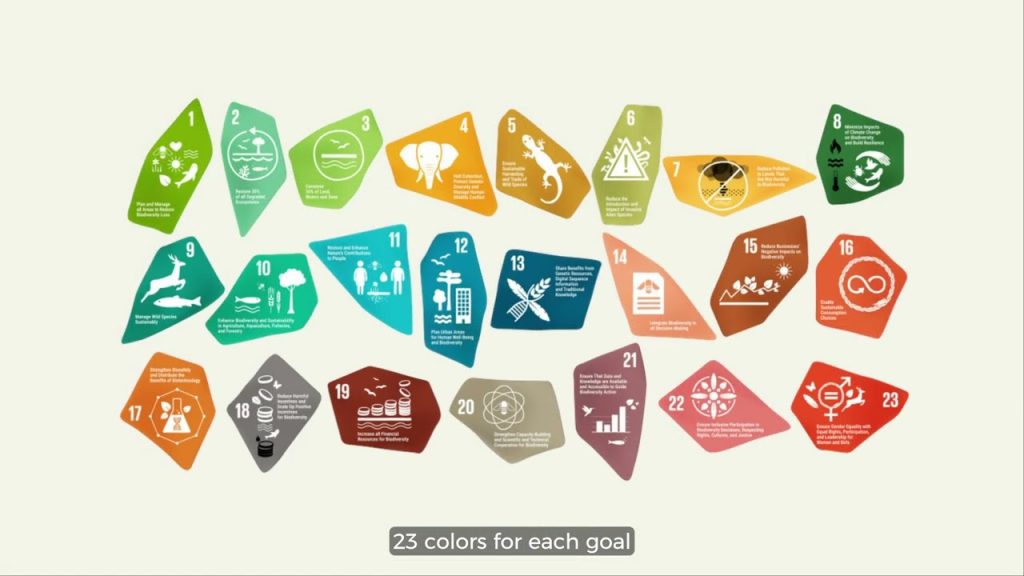
The 23 Action Targets for 2030 of the Kunming-Montreal Global Biodiversity Framework (GBF)
Reducing threats to biodiversity (Targets 1–8)
-
Biodiversity-inclusive spatial planning: Bringing the loss of areas of high ecological value close to zero through integrated land-use planning.
-
Ecosystem restoration: Effectively restoring at least 30% of degraded terrestrial, inland water, coastal, and marine ecosystems by 2030.
-
Protected areas (30×30 target): Conserving at least 30% of terrestrial and marine areas through protected areas and other effective area-based conservation measures (OECMs).
-
Species conservation and human-wildlife conflicts: Halting the extinction of threatened species, maintaining genetic diversity, and ensuring human-wildlife coexistence.
-
Sustainable use of wild species: Ensuring that the harvesting and trade of wild species of plants and animals is sustainable, legal, and safe.
-
Control of invasive alien species: Reducing the introduction and establishment of invasive alien species by at least 50% and mitigating their impacts.
-
Pollution reduction: Halving nutrient loss and the overall risk from pesticides, and working towards eliminating plastic pollution.
- Climate change mitigation: Minimizing the impact of climate change and ocean acidification through nature-based solutions and ecosystem-based approaches.
Meeting people’s needs through sustainable use (Targets 9–13)
-
Management of wild species for human benefit: Ensuring sustainable use for the nutrition, food security, and livelihoods of people—especially indigenous and local communities.
-
Sustainable agriculture, forestry, and fisheries: Enhancing the sustainability and resilience of production sectors while protecting biodiversity.
-
Enhancing ecosystem services: Restoring, maintaining, and enhancing nature’s contributions to people (water and air regulation, pollination, soil health).
-
Urban green and blue spaces: Expanding the coverage, quality, and accessibility of urban green and blue spaces.
-
Fair and equitable benefit-sharing (ABS): Ensuring fair and equitable sharing of benefits arising from the utilization of genetic resources and associated traditional knowledge.
Tools and solutions for implementation (Targets 14–23)
-
Biodiversity mainstreaming: Integrating biodiversity values into policies, planning, development processes, and accounting at all levels of government and economy.
-
Corporate responsibility and transparency: Mandating businesses and financial institutions to regularly assess, disclose, and reduce their biodiversity risks and impacts.
-
Sustainable consumption: Encouraging responsible consumption choices, halving global food waste, and drastically reducing waste generation.
-
Biosafety: Regulating and managing potential adverse impacts of biotechnology on biodiversity and human health.
-
Phasing out harmful subsidies: Identifying and eliminating, phasing out, or reforming incentives harmful to biodiversity, reducing them by at least $500 billion per year.
-
Resource mobilization: Increasing financial resources for biodiversity to at least $200 billion per year from public and private sources by 2030.
-
Capacity-building and technology transfer: Strengthening scientific and technical cooperation, technology transfer, and joint research, particularly for developing nations.
-
Access to data and knowledge: Ensuring that relevant ecological data, research findings, and traditional knowledge are readily accessible for decision-making.
-
Inclusive and equitable participation: Guaranteeing the full, equitable participation and rights of Indigenous peoples, local communities, women, and youth in decision-making.
-
Gender equality: Ensuring women and girls equal rights, access, and leadership in biodiversity conservation actions.
Global Review
Global Report
Digital Sequence Information (DSI)
Contributions and disbursements
Industry Initiatives
Harmful Subsidies
Marine Biodiversity
-
The High Seas Treaty (BBNJ): The agreement on the conservation and sustainable use of marine biological diversity of areas beyond national jurisdiction—known as the “High Seas Treaty”—entered into force this January, having been ratified by more than 100 countries. However, proposed references to it were strongly opposed by Russia, which rejected the treaty’s entry into force. Ultimately, most of these references were deleted from the preamble.
-
Ecologically or Biologically Significant Marine Areas (EBSAs): The process for the scientific description of these areas was resolved at COP16. In Yerevan, debate flared over the naming of the guidance on peer review: instead of more legally suggestive “guidelines,” parties finally settled on the compromise term “voluntary guidance.”
-
Recognition of Indigenous Peoples, Women, and Youth: Explicit mentions of these groups in the marine texts were also contested by Russia, leading to the removal of most bracketed references to them.